
All Hallows Eve: The Catholic History Behind Halloweens Origins

Introduction
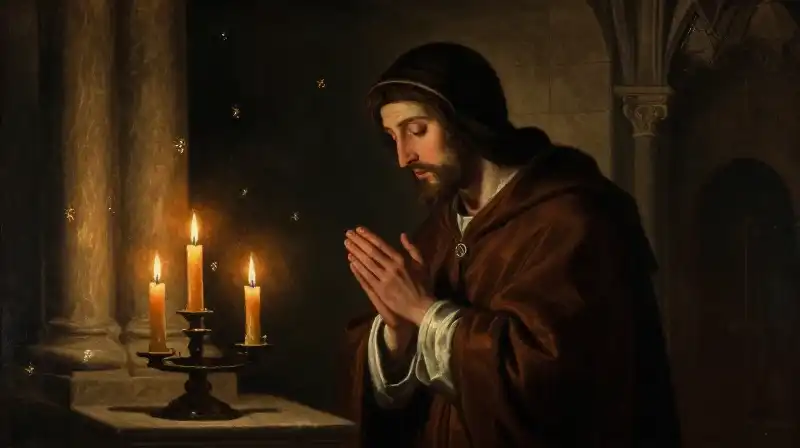
The image of Halloween—ghouls, candy, and masquerade—often dominates modern perception, reducing a deep seasonal transition to a secular spectacle. Yet, tracing the cultural roots of this holiday leads far beyond the modern “fright fest.” At its core, the tradition of All Hallows Eve (or October 31) has a profoundly Catholic foundation, acting as the sacred vigil leading into the celebration of All Saints’ Day. For those seeking to understand the living culture of this holiday, it is essential to recognize that the traditional ethos of All Hallows Eve was, and remains, rooted in honoring the faithful departed and the communion of saints.
The Catholic Roots of All Saints’ Day
The spiritual lineage of Halloween is tied directly to the Catholic liturgical calendar. All Saints’ Day, observed on November 1, is a designation that honors all those deemed holy—the saints—and those faithful departed who await resurrection. This celebration was historically formalized by Pope Gregory III in the 8th century (S3). All Hallows Eve is simply the vigil—the preceding evening—where the faithful prepare to enter this day of remembrance. The foundational practice of this holiday is rooted in the idea of a communion of the faithful. One historical perspective suggests that the practice of dedicating a day to honor the whole communion of saints may have roots in ancient traditions, referencing practices like the consecration of the Pantheon around 609 AD (S1). This is closely tied to the reverence shown on November 2, All Souls’ Day, which is a designated Catholic feast honoring all who have passed from this life (S3).
Separating Sacred Vigil from Modern Custom
It is a frequent point of debate whether the popular modern celebration is truly Catholic or if it has evolved into a separate entity. While some argue that the true “substance” of Halloween belongs to the Catholic Church, drawing a clear distinction between its ancient cultural ethos and its current secular iteration, scholars caution against sweeping historical generalizations (S1). Historically, the Christian observance was intended to be a sober, reflective vigil. The emergence of modern, highly visible customs—such as elaborate costumes and the practice of trick-or-treating—occurred over the span of the last 500 years following the establishment of the Christian feast (S3). These later developments are often understood as cultural appropriations or adaptations onto the existing religious framework, allowing the tradition to live and evolve in diverse communities.
The Historical Debate: Paganism vs. Christianization
The most persistent question surrounding Halloween is its connection to ancient rituals, particularly the Celtic festival of Samhain. However, cultural and scholarly analysis reveals a nuanced picture. Many perspectives link the holiday to ancient ancestral spirit festivals, suggesting a possible appropriation of pre-Christian traditions by the Church when claiming sacred sites (S1). Conversely, a significant scholarly challenge argues that the popular narrative linking Halloween definitively to ancient Celtic Paganism or a specific Samhain religious holiday is not supported by solid historical evidence, but rather by modern conjectures (S2). Furthermore, the cultural shift in North America is attributed by some to the tension between religious traditions. According to 1, the perceived conflict between competing Protestant and Catholic festivals led to a cultural transformation where the distinctly Catholic nature of the observance began to mute, allowing the more ghoulish, secular version to take hold (S1). While debates persist, the consensus among proponents is that the holiday is fundamentally a Christianized observance that incorporates diverse, later cultural practices (S2).
Addressing Common Questions in Modern Practice
For those navigating the living culture of Halloween today, several practical and theological questions often arise:
What do Catholics call October 31?
Catholics refer to the evening as All Hallows Eve, or the Vigil of All Saints, which precedes the November 1st feast.
What does the Vatican say about Halloween?
The Catholic Church views All Hallows Eve and All Saints’ Day as sacred feasts focused on honoring the faithful departed and the saints. While the Church does not mandate the celebration of specific modern secular activities like trick-or-treating, it encourages the spiritual and communal observance of the underlying religious meaning.
Is November 1 a Holy Day of Obligation?
The observance of All Saints’ Day is a significant feast within the Catholic liturgical year, honoring the saints and the faithful departed.
Beyond the Candy: The Living Meaning
To understand the tradition fully is to move beyond the sugary facade and recognize the spiritual intent. The life of this tradition, whether observed in its historical form or its modern iteration, is about memory and community. It is a time dedicated to the cycle of life and the memory of those who have passed, linking the living generation to the enduring history of the faithful. While modern practices have shifted the focus, the core narrative remains one of remembrance. For those who appreciate cultural history, recognizing All Hallows Eve as a sacred vigil—a time rooted in the liturgical discipline of the Catholic Church—allows for a deeper appreciation of how ancient traditions are preserved, transformed, and continually reinterpreted by the communities that live and breathe them.
References
Footnotes
Frequently Asked Questions
What do Catholics call October 31?
Catholics refer to the evening of October 31st as All Hallows Eve, or the Vigil of All Saints, which precedes the November 1st feast.
What does Vatican say about Halloween?
The Catholic Church views All Hallows Eve and All Saints Day as sacred feasts dedicated to honoring the faithful departed and the saints. While the Church does not mandate modern secular activities like trick-or-treating, it encourages the spiritual and communal observance of the underlying religious meaning.
Is November 1 a Holy Day of Obligation?
All Saints Day on November 1 is described as a significant feast within the Catholic liturgical year, honoring the saints and the faithful departed.
Related Articles