
Dia de los Muertos: The Ancient Traditions of the Mexican Altar

Introduction
The observance of Día de los Muertos is often reduced to a bright, colorful celebration, but for the people who maintain this living tradition, it is far more than a cultural festival. It is a profound act of ancestral reverence, a structured bridge between the worlds of the living and the dead. Centered around the elaborate *ofrenda*, or altar, the tradition connects contemporary celebrations back to the deep, spiritual heritage of the Zapotecs and Mixtecs of Oaxaca, where ceremonial practices stretch back as far as 500 BC. This complex practice is not merely about remembrance; it is a sophisticated ritual designed to welcome, guide, and honor the souls of departed loved ones for a temporary visit.
The Altar as a Convergence of Worlds
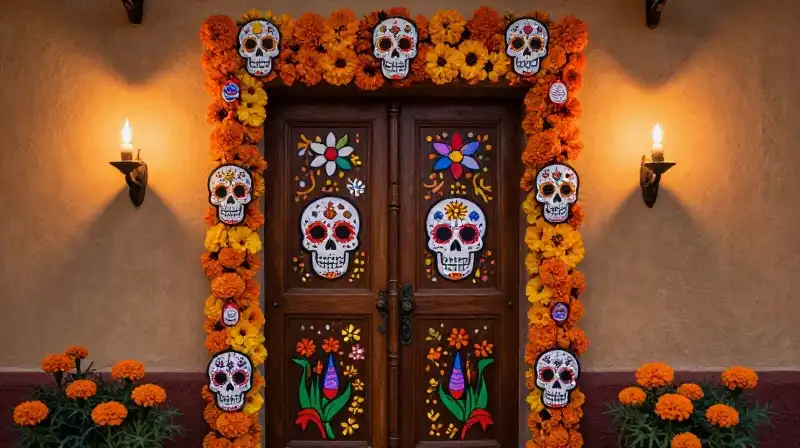
The *ofrenda* is the heart of the holiday, far surpassing the role of simple decoration. It functions as a spiritual convergence point, where the physical needs of the living meet the spiritual needs of the departed. The creation of such an altar is a thoughtful, nuanced process that blends indigenous spiritual practices with modern ceremonial components. This setup is traditionally conceived as a gathering of nine essential elements, each placed with deliberate meaning to ensure the safe and respectful passage of the souls back to their ancestral home (Source 1). By assembling these elements—from scent to light to substance—the community creates a sacred pathway that facilitates this vital return.
Material Language: Clay, Resin, and Ancient Craft
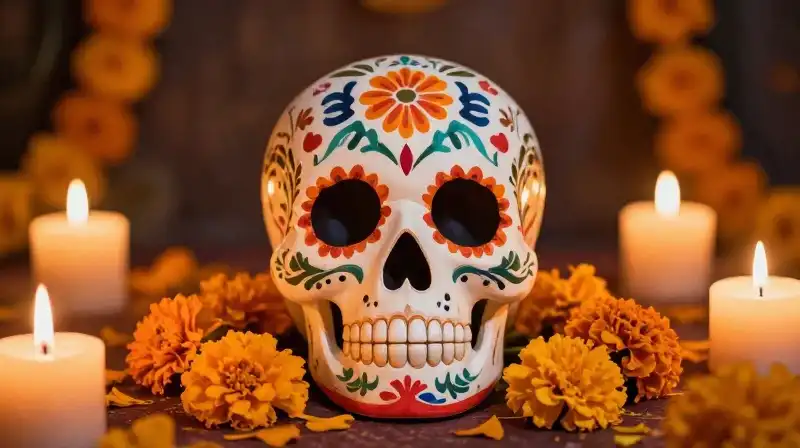
The materials chosen for the *ofrenda* are not arbitrary decorations; they are tools of ritual and heritage. One of the most striking elements is the use of *Barro Negro*, the traditional black clay craft originating in the central valleys of Oaxaca. This highly valued craft serves as a magnificent showpiece on the altar. The intricacy of the *Barro Negro*—seen in its floral carvings and unique designs—is often modeled after the traditional facial painting used during the holiday, reinforcing the deep connection between ancient craft and modern ceremony (Source 1).
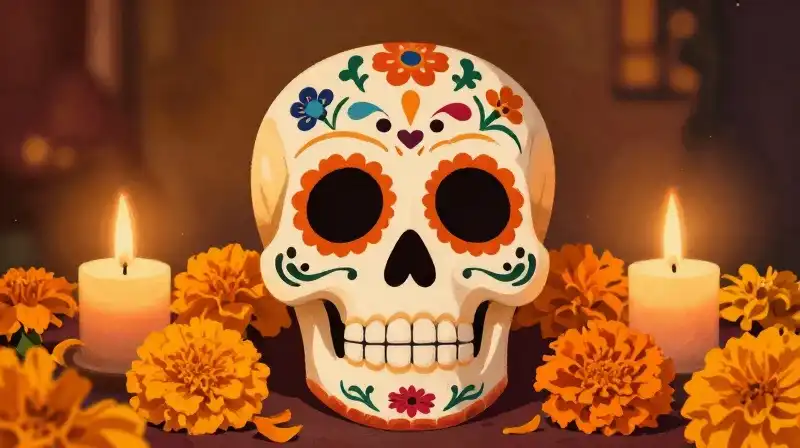
Beyond the pottery, specific natural elements play a vital role. The burning of Copal—a fragrant resin or sap—is central to the observance. Culturally, Copal is not merely for aroma; it is understood to cleanse the entire location, purifying the environment to safely guide the visiting souls (Source 1). Similarly, salt, used within the altar, serves a practical spiritual purpose rooted in tradition: keeping the visiting souls pure while they are within the realm of the living (Source 1). Even functional items reflect this heritage; the various designs on the *calaveras* (skulls), the *copalero* (incense burner), and the *velero* (candle holder) are informed by the ancient Zapotec and Mixtec aesthetic traditions (Source 1).
The Sensory Path: Guiding the Soul Home
The tradition utilizes the five senses to create a navigational guide for the deceased. The light provided by candles is a crucial component of this path. Often, these candles are scented with *Cempasuchil*, a flower whose scent is integral to the holiday. Culturally, the act of lighting these candles is a powerful symbolic gesture of providing a guiding light, helping the departed find their way back to their home (Source 1).
The air, texture, and movement around the altar further contribute to this guiding purpose. *Papel picado*—hand-stamped paper cut into intricate designs, originating from artisans in San Salvador Huixcolotla, Puebla—is suspended above or around the *ofrenda* (Source 1). This delicate paper carries a spiritual significance: culturally, it is believed that when the *Papel Picado* moves, swaying in the air, it signals the welcome and entry of the spirits of loved ones into the home (Source 1). Alongside the incense and salt, historical ceremonies have consistently employed Copal and charcoal to ensure the purification of both the person and the event, clearing the way for the sacred encounter (Source 1).
The Living Tradition: Meaning and Respect
To understand the tradition of Día de los Muertos is to understand a community actively maintaining a living history. This is not a static, historical relic, but a continuous dialogue between past and present. The act of creating an *ofrenda* is an act of immense cultural respect—it is an acknowledgment of the bond that persists even after death. While many modern celebrations involve commerce and display, the genuine cultural practice centers on the deep spiritual meaning of these objects. Each element—the *Barro Negro*, the Copal, the light of the Cempasuchil-scented candles—is a functional piece of a spiritual map, meticulously designed to ensure the successful and pure passage of the departed soul (Source 1).
Navigating the Nuances of the Holiday
Outsiders often seek a “definition” of Día de los Muertos, but its true richness lies in its practice. Rather than viewing it as a simple holiday, consider the purpose of the specific elements:
- Copal: A purifying scent and guide for the souls.
- Salt: A keeper of purity, ensuring the souls remain untainted during their visit.
- Candles: A light to aid navigation back home.
- Papel Picado: A visual sign and herald of the spirits’ arrival.
By viewing these elements through a cultural lens, the reader moves beyond a list of decorations to see a cohesive spiritual system rooted in ancient Zapotec and Mixtec reverence.
In conclusion, the Mexican tradition of honoring the departed is a profound synthesis of earth, scent, light, and spirit. The *ofrenda*, anchored by the enduring craftsmanship of traditions like *Barro Negro*, serves as more than a display; it is a meticulously crafted vessel of memory and a testament to the enduring cultural belief that the lives of those who came before continue to be a guiding force in the lives of those who remain.
Related Articles