
Día de los Muertos: Traditions, Culture, and History of Mexicos Festival

Introduction
Día de los Muertos—the Day of the Dead—is a deeply resonant cultural phenomenon that transcends a simple holiday. It is a vibrant, multi-day celebration rooted in Mexican heritage that functions as a bridge between worlds, inviting the departed back into the sphere of the living. Rather than a somber memorial, this observance is centered on the belief that death is an integral and often humorous part of the continuous cycle of life [1, 3]. By creating spaces of remembrance, families don’t just mourn those who have passed; they actively welcome their spirits home, celebrating the enduring relationship between community and shared memory.
The Ritual of Welcome: Constructing the Ofrenda
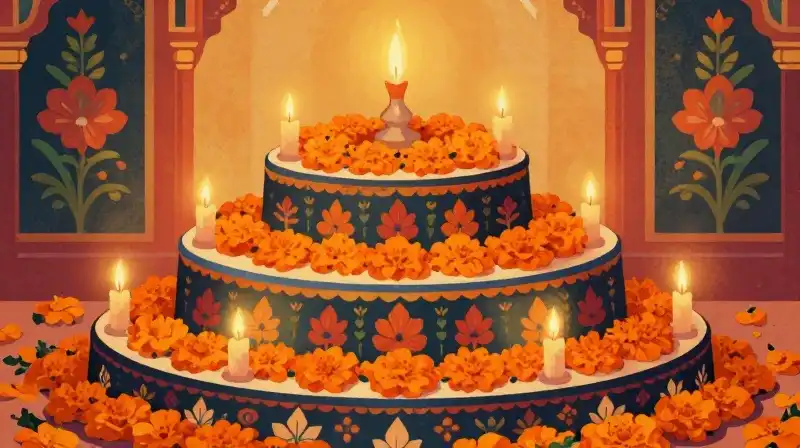
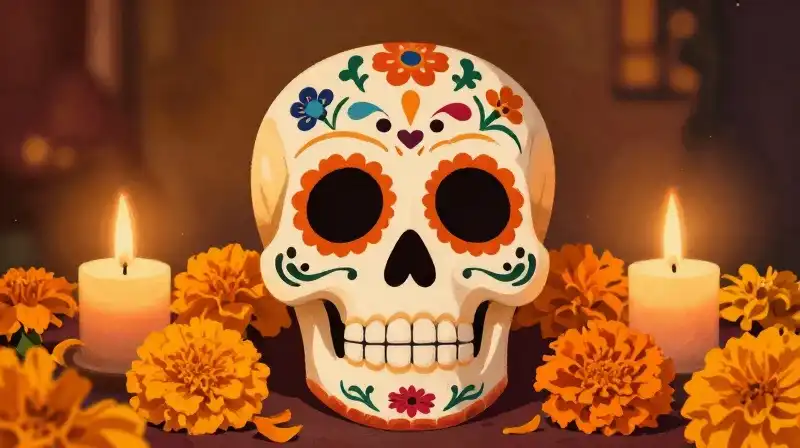
The heart of the Day of the Dead tradition occurs within the domestic sphere, centered around the creation of the ofrenda, or home altar [1, 2, 3]. These elaborate tributes are not merely decorations; they are meticulously planned portals designed to facilitate the welcoming visit of spirits from the land of the dead [2]. Each ofrenda is a personalized narrative, reflecting the life and tastes of the loved one being honored.
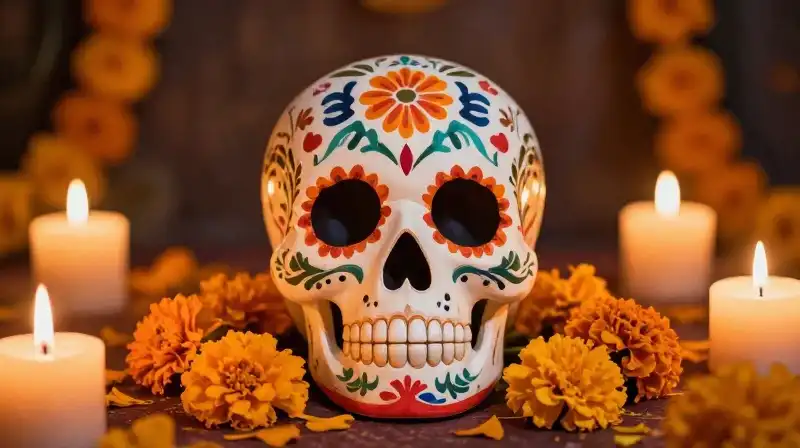
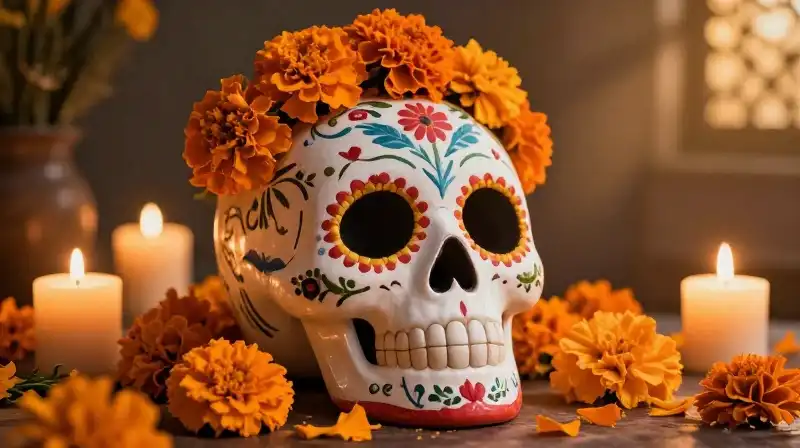
The construction of these altars involves gathering the most cherished personal elements of the deceased. These include favorite books, personal photographs, favorite musical instruments, and specific beverages or foods [1, 3]. A defining and symbolic element is the use of marigold flowers, known as cempazúchitl. Their bright color and distinct scent are central to the ritual, as spirits are believed to be naturally drawn to the scent of these offerings and the sound of the prayers offered by the living [2, 3].
Beyond the home, families extend this observance to the communal space of cemeteries. During these multi-day gatherings, the act of remembering is intensely social. Communities congregate to clean and maintain family tombstones, share large communal feasts, sing traditional songs, and engage in festive interactions with their ancestors [3]. The presence of calaveras—sculptures of skeletons, ranging from intricate miniature art to life-size paper figures—reinforces the idea that death should be regarded not as a finality, but as a fundamental facet of the journey of life [1, 3].
The Cultural Language of Memento Mori
The Day of the Dead possesses a distinctive cultural tone that intentionally blurs the line between sorrow and joy. Unlike traditions focused solely on mourning, the Mexican tradition adopts a light-hearted and often irreverent approach, encouraging the living to recall and share amusing anecdotes about their departed loved ones [1]. This cultural perspective is perhaps best embodied by the creation of calaveras literarias. These are unique and clever literary pieces—often short, humorous poems or mock epitaphs dedicated to living friends or community members—that playfully reflect on the inevitability of death [1].
This approach is not a superficial choice; it is a reflection of a philosophy where the acknowledgment of death is intertwined with a celebration of life itself. It is a collective agreement to face mortality not with fear, but with communal warmth and a rich tapestry of memory [1, 3].
Historical Context and the Living Debate
Understanding the contemporary celebration requires navigating its complex historical narrative. Scholarly research offers several varying perspectives on the origins of the holiday. Some perspectives suggest that the observance genuinely stems from deep Mesoamerican beliefs, particularly those of the Aztecs [1]. However, other historians present a more blended view, arguing that the modern celebration is a synthesis of those pre-Hispanic indigenous roots and Spanish Catholic traditions [1].
Further academic debate has even positioned the holiday as a product of 20th-century political and cultural shifts. Some scholars have framed the Day of the Dead as a “Cardenist invention,” where the focus was deliberately shifted toward indigenous iconography and the veneration of death to align with broader leftist ideals at the time [1]. Conversely, certain historical arguments suggest that the modern practices bear a greater resemblance to European customs, such as the Danse macabre, than to purely native rituals [1]. Regardless of which academic theory holds sway, it is undeniable that the celebration has become an immensely powerful national symbol in Mexico and is taught as an essential part of the national school curriculum [1].
Timing and Practical Traditions
A common point of confusion for those unfamiliar with the holiday is the exact date. The tradition is primarily celebrated as a multi-day observance, traditionally beginning on October 31 and running through November 2nd [1, 2]. While October 31 is often recognized as a starting point, the entire period is dedicated to the ritual. The holiday differs from European Halloween in its fundamental purpose; Halloween is often viewed as a night for playful spookiness, while Día de los Muertos is a sincere, joyful celebration of remembrance and family reunification [1, 2, 3].
The Enduring Significance of Community
The Day of the Dead serves as a reminder of the profound interconnection between life, memory, and the community that sustains it. As the world rushes toward the ephemeral nature of existence, this tradition provides a necessary framework for shared introspection and connection. It teaches that the relationship with the deceased is not merely one of loss, but of continuous presence—a presence maintained through shared songs, shared feasts, and shared acts of love embodied in the ofrendas. It is a culturally grounded affirmation that while lives end, the bond forged through memory remains vividly alive.
Frequently Asked Questions
Is October 31 the Day of the Dead?
The tradition is primarily celebrated as a multi-day observance, traditionally beginning on October 31 and running through November 2nd. While October 31 is often recognized as a starting point, the entire period is dedicated to the ritual.
Constructing an Ofrenda for Day of the Dead
Gather Cherished Elements
Collect items that reflect the life and tastes of the departed, such as favorite books, personal photographs, musical instruments, and specific beverages or foods.
Incorporate Symbolic Flowers
Use marigold flowers, known as cempazúchitl, as a central and defining element, as their scent is believed to attract the spirits.
Arrange the Ofrenda
Meticulously plan and construct the home altar (ofrenda), arranging the gathered offerings to create a personalized narrative.
Welcome the Spirits
Engage in prayers and allow the completed altar to serve as a portal for welcoming the departed back to the sphere of the living.
Related Articles