Ancient Egypt: The Myth of the Dragon and Serpent Gods

Introduction
When Western readers encounter terms like “dragon” in the context of ancient Egyptian mythology, they often bring preconceived notions of fire-breathing beasts, a heavily filtered cultural concept. However, the mythology of the Nile presents a far more complex and profoundly theological landscape. The creatures that embody massive, coiled, or winged power—figures like the Akhekh or the colossal serpentine Apep—are not merely creatures of folklore; they are representations of fundamental cosmic forces. They exist to articulate the eternal struggle between order, divine kingship, and primal chaos. To understand these Egyptian myths is not just to learn about monstrous figures, but to grasp the intricate architecture of their worldview, where the very forces that threaten annihilation are woven into the fabric of cosmic maintenance.
The Forms of Power: Understanding the Akhekh
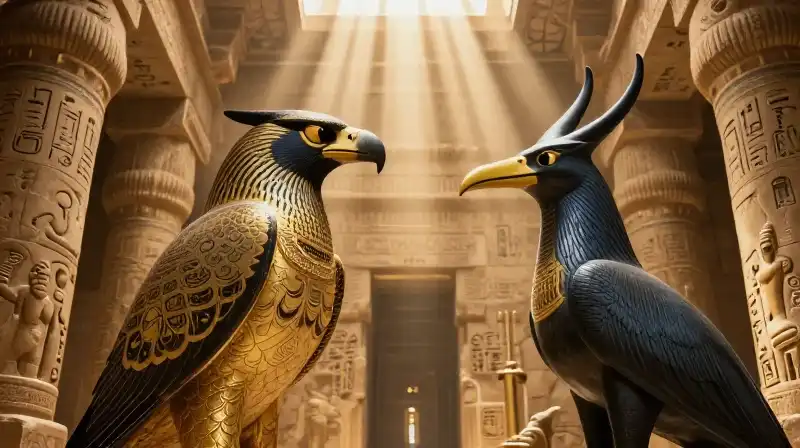
In Egyptian iconography, the representation of power is multifaceted, often moving beyond simple reptilian form. One of the most striking examples is the Akhekh, a mythical creature frequently depicted in ancient art. While modern interpretations sometimes seek to equate it with a dragon, the Akhekh is a nuanced figure defined by its attributes and symbolic role. According to 1, scholarly descriptions of the Akhekh vary, suggesting it was a quadruped possessing bird-like wings. Some historical accounts detail a wing-bearing Oryx, while others describe a creature resembling a winged lion similar to the European griffin. This ambiguity in its physical form emphasizes its symbolic nature: it is a composite entity, representing the convergence of terrestrial power with celestial might.
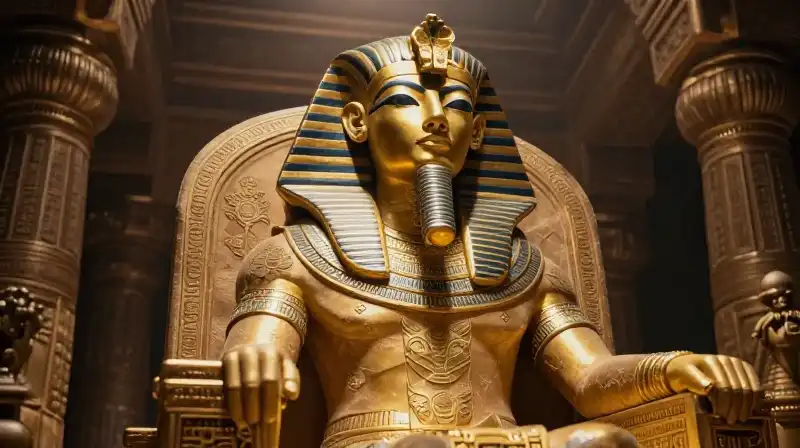
The significance of the Akhekh was tied closely to the divine structure of the Egyptian state. It was often associated with the powerful deity Set, the god who represented the western desert, darkness, and chaos. This association suggests the Akhekh could be seen as either an ally of Set or an embodiment of his formidable powers 1. Furthermore, these creatures served as powerful symbols of pharaonic strength. One prominent example is the Metternich stele, which showcases an Akhekh pulling a royal chariot over two crocodiles—a clear visual metaphor for the immense power and strength wielded by the pharaoh under the divine auspices of these formidable entities 1. The Akhekh, therefore, is less a simple monster and more a highly stylized embodiment of royal and cosmic authority.
The Duality of Cosmos: Ma’at vs. Isfet
If the Akhekh represents controlled power and divine authority, then the serpentine figures of Egyptian mythology represent the forces of pure, untamed chaos. The Egyptian cosmos revolved around the concept of Ma’at—the fundamental concept of truth, order, justice, and cosmic balance. Standing against this order is Isfet, the force of chaos. The primary vehicles for this entropic force are the serpent deities and the deities involved in the process of judgement.
Apep, or Apophis, is the most significant antagonist in this cosmic narrative. Characterized as a gigantic, python-like serpent, Apep serves as the ultimate archenemy of the Sun God Ra 1. The nightly struggle between Ra, who tirelessly maintains Ma’at, and Apep, who seeks to devour the light and prevent the sun from rising, forms the core cultural narrative of Egyptian existence 1. This confrontation is not merely a conflict between good and evil; it is the ceaseless, vital struggle between ordered existence and absolute dissolution. Mehen, which translates to “coiled one,” represents another powerful chaotic entity. Mehen is often depicted coiled around Ra’s Boat of the Sun, acting as a protective barrier against the surrounding chaotic forces 1. Mehen serves as a powerful visual representation of the protective boundaries required to preserve the order of the sun’s journey.
The Living Myths: Deities in Transformation
A common misconception when studying ancient myth is that the figures are static. In Egyptian tradition, deities and their associated forms could evolve based on the cultural and theological needs of the time. This dynamism is seen in figures like Nehebkau. Originally depicted as a mischievous spirit, Nehebkau eventually ascended to become a powerful, benevolent funerary god 1. His role moved from trickster to necessary cosmic functionary. In the process of death, he became one of the forty-two crucial assessors of Ma’at during the judgment of the dead. Nehebkau’s assistance provided life force and guidance to the deceased King, ensuring their journey into the afterlife was properly validated 1.
Similarly, the role of judgment was defined by figures of immense dread and finality. Ammut, known by the title “The Devourer of the Unjustified,” personifies the terror of failing the test of truth. She was not merely a punitive god but a vital part of the cosmic mechanism that upheld Ma’at, literally consuming the hearts of those whose souls failed the weighing of truth (2, 3). These figures, whether monstrous serpents or terrifying judges, were essential components of a deeply functional religious system, designed to maintain social and cosmic equilibrium.
Clarifying the Symbol: Myth vs. Monster
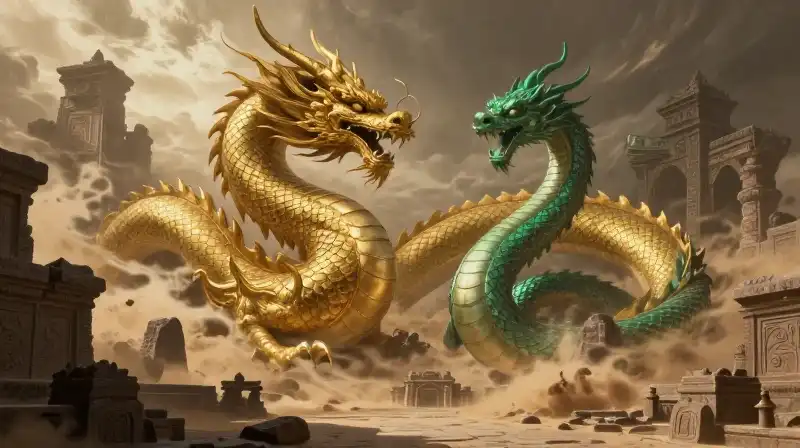
When addressing the question of whether there is a “dragon” in Egyptian mythology, the most honest answer is that the concept is a Western overlay. The Egyptian serpent, like Apep, is not a recreational creature or a destructive force purely for the sake of antagonism; it is an embodiment of a necessary cosmic principle: chaos, entropy, and the raw, unpredictable power of nature. The term “dragon” often implies a singular, identifiable entity and a Western moral binary of good vs. evil. In Egypt, the serpentine figures are often gods (like Set or Wadjet) or powerful embodiments of forces that are integral to the cycle of life and death 1. The serpentine myths, therefore, involve complex deities and theological concepts, fundamentally differing from the simplistic dragon archetype.
The difference lies in function. The mythological forces in Egypt, even the chaotic ones, are fundamentally functional. Apep’s existence ensures that Ra’s victory is hard-won and not merely a guaranteed outcome; it ensures that order is something that must be actively maintained and earned every single dawn. This functional mythology provides a layer of profound complexity that a generic dictionary entry rarely captures.
Conclusion: The Enduring Meaning of Cosmic Conflict
The study of Egyptian mythology reveals that the creatures of its pantheon—the winged Akhekh, the coiled Mehen, the consuming Ammut, and the titanic Apep—are not relics of a bygone age but powerful semantic tools. They allow the civilization to grapple with profound questions about existence: how is stability achieved? How is truth enforced? And what is the nature of the forces that threaten to unravel reality? These figures serve as a living cultural map of the Egyptian understanding of the universe. They reinforce the notion that Ma’at is not a static state, but an active, daily victory over the ever-present potential for chaos, a struggle that was central to the life and identity of the people who lived within that powerful cultural tradition.
References
Footnotes
Frequently Asked Questions
Is there a dragon in Egyptian mythology?
The article states that the concept of a dragon in Egyptian mythology is generally considered a Western overlay. While the mythical Akhekh has been interpreted by some as a dragon, the serpentine creatures in the mythology, such as Apep, are presented as complex embodiments of fundamental cosmic forces that differ from the simplistic dragon archetype.
Related Articles