Ancient Egypts Bird Gods: Decoding the Power of Horus, Thoth, and Nekhbet

Introduction
In the intricate tapestry of ancient Egyptian culture, the natural world was not a backdrop for the divine; it was the very language of the divine. Birds, in particular, were considered messengers, celestial travelers, and manifestations of immense power. These avian figures served as the foundational iconography for some of the most significant gods, establishing a visual link between the earthly realm and the vast expanse of the sky.
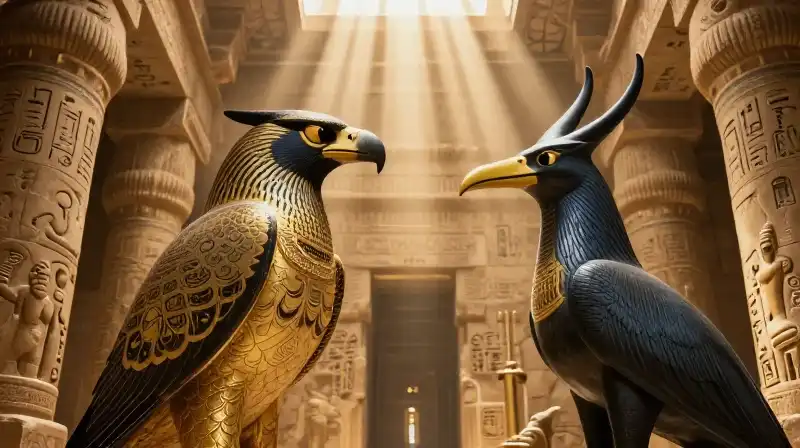
When we discuss the bird gods of Egypt, we are not simply discussing figures with wings; we are delving into a profound system of cosmic order. These deities, ranging from the majestic falcon to the sagacious ibis, held responsibilities as guardians, kings, and architects of existence. The most widely recognized is Horus, the falcon god, but the mythology is rich with specialized avian forms—such as Thoth, the god of wisdom, depicted with an Ibis head, or Nekhbet, the venerable vulture, symbolizing eternal power. Understanding these figures is understanding the Egyptians’ belief in perpetual balance and the cyclical nature of life and the universe.
The Divine Sky: Celestial Symbolism and Avian Form
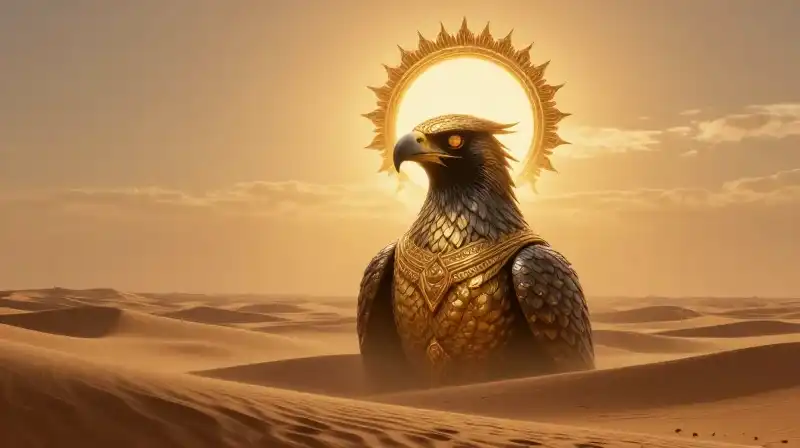
For the ancient Egyptians, the sky was the realm of the divine, and birds were its most recognizable inhabitants. The falcon form, specifically, was potent. It was often envisioned as a lanner or a peregrine falcon, or as a man adorned with a falcon head 1. This form was believed to possess potent protective powers, frequently revered as if hovering over or guarding the Pharaoh 1. The connection was so deep that the Egyptians often identified Horus with the Sky itself, believing he contained both the Sun and the Moon as they traversed the heavens in avian forms 1.
This celestial imagery extended to other creatures. The heron, for example, held a complex symbolic role, sometimes being viewed as the original Phoenix, symbolizing sun and rebirth, and was intrinsically linked to Heliopolis, the “Sun-City” 1. These varied avian forms demonstrate that the Egyptian concept of divinity was multifaceted; the characteristics of the god were often expressed through the specific nature of the creature chosen to embody them.
Horus: The Falcon of Kingship and Protector
Horus stands as perhaps the most prominent bird deity, embodying several crucial roles: kingship, healing, protection, the sun, and the vast sky 1. His identification with the Pharaoh was critical to the Egyptian worldview, as the ruler was often perceived as an earthly manifestation of Horus 1. This divine mandate established the Pharaoh as the regulator of nature and society, a role often tied to the concept of being the son of Ra 1.
The foundational myth of Horus, detailing his struggle against his uncle, Set, served a vital cultural function. This struggle was not merely a story; it was the mythological justification for pharaonic power and the explanation of the natural cycles of life, death, and rebirth 1. Furthermore, the powerful symbol of the Eye of Horus, or wedjat, served as a protective symbol of both royalty and protection, widely utilized on funerary amulets, tying his divine power to the journey into the afterlife 1.
Regional Variations and Divine Manifestations
The Egyptians were highly nuanced in their theological approach, and this applied to Horus. The term for Horus in hieroglyphs is simply translated as “Falcon.” However, his divine forms were often regional or specialized. One significant example is Hor-Akhti, or “Horus of the Two Horizons,” a title that personifies the sun 1. This complexity has led scholars to debate whether the various forms of Horus represent separate gods or a single deity presenting multifaceted manifestations, reflecting the Egyptians’ own complex view of reality 1.
Guardians of Wisdom and Eternal Power: Thoth and Nekhbet
While Horus dominates the imagery of kingship and the sun, other bird gods held equally vital, specialized roles within the Egyptian pantheon. The contrast between these deities reveals the breadth of their cultural needs—from intellectual guidance to enduring national strength.
Thoth, the god of wisdom, magic, writing, and the moon, was invariably depicted with the head of an Ibis 1. This avian form symbolized his profound intellectual capabilities and his role in regulating time and knowledge. His presence ensured that the cosmic balance was maintained not just through divine force, but through order and understanding.
In a different aspect of regional power, the Vulture was closely associated with Nekhbet, the powerful goddess of Upper Egypt. She represented eternal protection and might 1. The symbolism here is particularly fascinating; it potentially reflects the ancient belief that scavengers, like the vulture, consumed the souls of the departed and guided them skyward 1. This emphasis on the vulture, alongside the Vulture’s association with regional dynastic mythology, highlights how deeply geographical and regional traditions informed the gods’ powers 1.
Synthesizing the Avian Tradition
These bird deities were far more than decorative images. They were living metaphors for the essential forces of Egyptian life: the unstoppable cycle of rebirth (like the heron and solar imagery), the sacred, protective authority of the ruler (Horus), and the enduring intellectual and spiritual stability of the cosmos (Thoth and Nekhbet). The fact that a god could shift from a protective falcon to a wise ibis, or from a solar falcon to an eternally vigilant vulture, showcases the Egyptian understanding of reality as dynamic and infinitely layered.
The Avian gods reveal a culture that found profound meaning in its natural world, interpreting the flight and form of a bird as a direct manifestation of divine will. They offer a powerful window into how ancient communities sought to understand chaos and order, finding reassurance and structure in the predictable—and powerful—cycles of the heavens.
References
Footnotes
Frequently Asked Questions
Which Egyptian god was a bird?
Several Egyptian gods were avian, including Horus, who was the falcon god; Thoth, who was depicted with the head of an Ibis; and Nekhbet, who was the venerable vulture.
Related Articles