Who is Thrym? The Jötunn Antagonist of Norse Mythology


Introduction
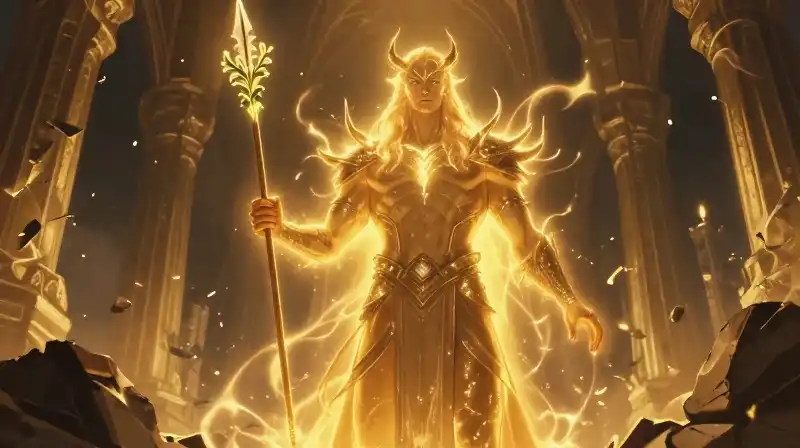
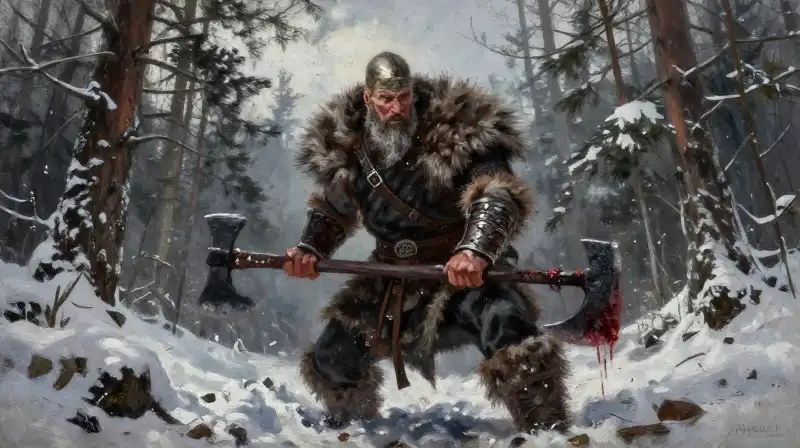
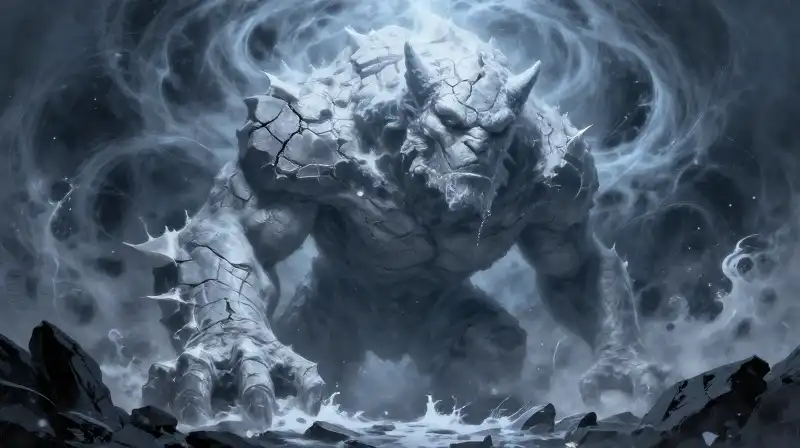
In the complex web of Scandinavian folklore, few figures capture the essence of chaotic power and cunning as profoundly as Þrymr. Often presented as an antagonist, Þrymr is far more than a simple brute; he is a multifaceted jötunn whose existence highlights the delicate balance between order and entropy in the Norse cosmos. He embodies the relentless, often deceptive force of the outer world attempting to breach the established peace of Asgard. To understand Þrymr is to grasp a fundamental aspect of Norse thought: the constant negotiation between divine security and the untamable forces of nature and ambition.
The Narrative of Deception in Þrymskviða
The core of Þrymr’s mythology lies within the Eddic poem *Þrymskviða*. In this pivotal tale, the jötunn Þrymr is established as a master of cunning, a figure who employs deliberate deception, often with the aid of Loki, to achieve his goals 1. His primary act of cosmic rebellion is the theft of Mjǫlnir, the mighty hammer of the god Thor. According to the narrative, Þrymr manages to steal Mjǫlnir, which the powerful Thor had buried underground, and instead demands the hand of the goddess Freyja in exchange for its return 1. This act is not merely a power grab; it is a profound act of violation. By successfully removing Mjǫlnir—the ultimate guarantor of divine and human protection—Þrymr effectively compromises the defense of Asgard 1. The narrative thus sets up Þrymr as a potent threat because his actions directly increase the vulnerability of humanity and the gods to external aggression from the Jötnar 1.
The Archetype of the “Wrong Way”
Beyond the dramatic theft, scholarly analysis suggests that Þrymr serves as a more nuanced symbolic archetype. Within the context of Norse cosmology, he frequently functions as a Jötunn representing a “wrong way” of doing things 1. This does not necessarily imply moral evil, but rather the dangerous expression of inhospitability or the tendency to take unfair advantage of goodwill. He represents a force that lacks the established rules of society or divine law, thriving on manipulation and exploitation. While *Þrymskviða* focuses heavily on Þrymr’s strategic cunning and his demand for Freyja, other texts hint at his broader role in the cultural landscape. The historical and settlement text *Hversu Noregr byggðist* records the presence of individuals named Þrymr, ranging from local rulers in Agder to Jötnar in Verma, illustrating the character’s pervasive presence across diverse types of Scandinavian lore 1.
Regional Variations and Local Folklore
The interpretation and physical manifestation of Þrymr shift when viewed outside the high poetry of the Eddas. Regional folklore offers a fascinating look at how the character is absorbed into local storytelling. For instance, specific traditions in Western Scotland introduce a divergent, more localized view of the character 1. In these Scottish narratives, Þrymr is depicted as an immortal Jötunn who possesses a remarkable resilience. A localized tale referenced in *Thrymsreider* provides a unique origin story for the midge. This folklore asserts that Þrymr has the ability to regenerate after being harmed by villagers—whether cut or burned—demonstrating a local tradition that equates him with eternal, cyclical, and defiant life 1. This regional emphasis on his regenerative abilities provides a stark contrast to his role as a purely destructive force in the main Eddic texts.
Evolution in Modern Interpretation
The perception of Þrymr has also evolved significantly in modern culture. While the original primary texts consistently present him as a powerful antagonist who is ultimately defeated by Thor and his kin 1, contemporary cultural interpretations often reinforce a different image 1. Modern media and dramatizations frequently emphasize his portrayal as a powerful tyrant who must be overthrown. This shift often focuses less on the philosophical concept of “inhospitable rule” and more on his sheer destructive power, making him an easily identifiable villain. This evolution reflects a broader cultural desire to clearly delineate forces of order from forces of chaos in modern storytelling, moving away from the complex, ambiguous portrayal present in the original texts.
Understanding Þrymr’s Symbolism
When engaging with Þrymr, the key lies in moving past the sensationalism of the hammer theft and focusing on the underlying cultural meaning he provides. He is a reminder of the inherent fragility of security. He is not merely a god or a monster; he is a literary mechanism that explores the concept of external threats and the seductive nature of cunning over brute force. Furthermore, while the primary texts establish him as a Jötunn lord, the original *Þrymskviða* does not offer specific details regarding his day-to-day leadership style 1. This deliberate narrative focus suggests that Þrymr’s power is not derived from bureaucratic command or societal structure, but from his fundamental nature as an unpredictable, deceptive force of chaos. He represents the disruption that always lurks at the edge of civilization.
Context and Caution
To genuinely understand Þrymr, one must appreciate the layered nature of the tradition. He exists simultaneously in the epic battle for the cosmos and in the humble, enduring cycle of regional folklore, like the midge’s regenerative ability. He is a symbol of threat, but one whose meaning is filtered through the cultural lens of every community that adapts his story. Recognizing his dual nature—both the formidable, cunning tyrant and the resilient spirit of nature—is essential for understanding the true weight of the Norse tradition.
References
Footnotes
Frequently Asked Questions
What is Thrym the god of?
Þrymr is a multifaceted jötunn who embodies chaotic power and cunning. He functions as a symbolic archetype of a wrong way of doing things, representing the relentless, deceptive force of the outer world that thrives on manipulation and exploitation.
Why did Thrym steal Thor's hammer?
Thrymr stole Mjǫlnir, the mighty hammer of the god Thor, and demanded the hand of the goddess Freyja in exchange for its return.
Who is Thrym Norse's mythology?
Þrymr is a multifaceted jötunn and master of cunning, whose mythology centers on his use of deception to achieve his goals. He is primarily known for stealing the hammer Mjǫlnir and demanding the hand of the goddess Freyja, serving as a symbol of chaotic and unpredictable forces.
Related Articles