Jötunn in Norse Mythology: Beyond the Simple Translation

Introduction
In the vast, often turbulent landscape of Old Norse mythology, the term Jötunn (Jötnar) is frequently simplified, even by those familiar with the sagas, as merely a ‘giant.’ However, this reduction is a significant cultural misstep. According to various scholars, the translation of Jötnar as simply ‘giant’ can be problematic, as these beings are more accurately viewed not as exceptionally large creatures, but as a kin group or family unit separated by distinct relations rather than size 1. For communities who inherited these stories, the Jötnar represent far deeper cultural concepts: the raw, untamed forces of nature, the primordial chaos that exists outside of the established divine order, and the unpredictable boundaries between the wild and civilization. To understand the Jötunn is not just to study monsters, but to examine the tension between ordered culture and the infinite power of the natural world.
The Etymology of the Wild
The linguistic roots of the Jötunn reveal the nature of these beings. The word possesses cognates across various Germanic languages, including the archaic term ettin, which descends from the Proto-Germanic root *etunaz (1, 2). While the precise meaning of this root is debated, theories link it to concepts like ‘to eat’ or ‘glutton’ (1, 2). This etymological link hints at a nature that is consuming, perhaps uncontrollably. In the foundational cosmology of the Prose Eddas, the Jötunn begin with Ymir, the first being, who emerged from the primeval chaos of Ginnungagap. His subsequent slaying by the gods was a world-shaping event, leading to the creation of the cosmos, though surviving individuals like Bergelmir ensured the species’ repopulation 1. Because they were born from the chaos itself, Jötnar were inherently linked to the elements—they were the embodiment of fire in Múspellsheimr, the ceaseless sea (Ægir), and the harsh north.
Embodiment of Primal Force: Chaos and Nature
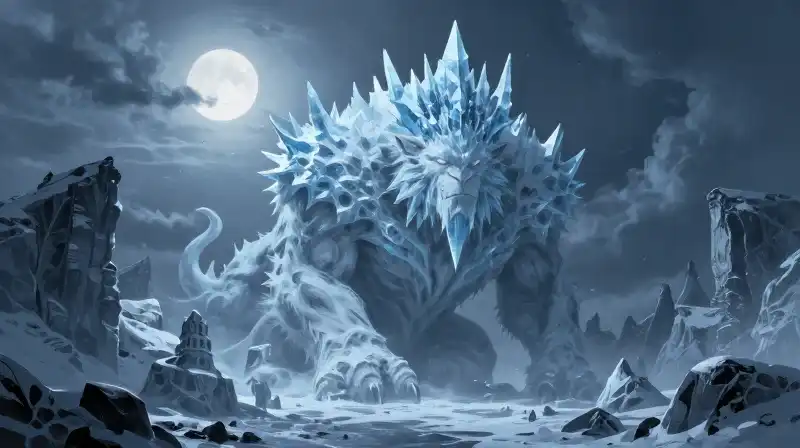
Culturally, Jötnar stand as the personification of primal forces that defy the controlled structure of the divine realms (3, 2). They are frequently encountered in peripheral lands like Jötunheimr, residing in geographical locations distant from the settled, ordered world of the Æsir and Vanir (1, 2). Their role often serves as a test for the gods and humanity. When the forces of ordered society and culture are tested, they encounter Jötnar, representing natural threats such as famine, disease, and elemental violence (3, 2). The ultimate narrative function of the Jötnar is often interpreted as a powerful metaphor: the struggle of humanity and culture to establish order against the overwhelming, destructive power of raw, untamed nature 1. Even regional variants reflect this elemental connection; the term *þurs*, an Old Norse variation, was specifically linked to the ‘rime-giant’ (*hrímþurs*), tying them directly to associations with frost and the deep cold (1, 2).
The Ambiguity of Power: Wisdom and Antagonism
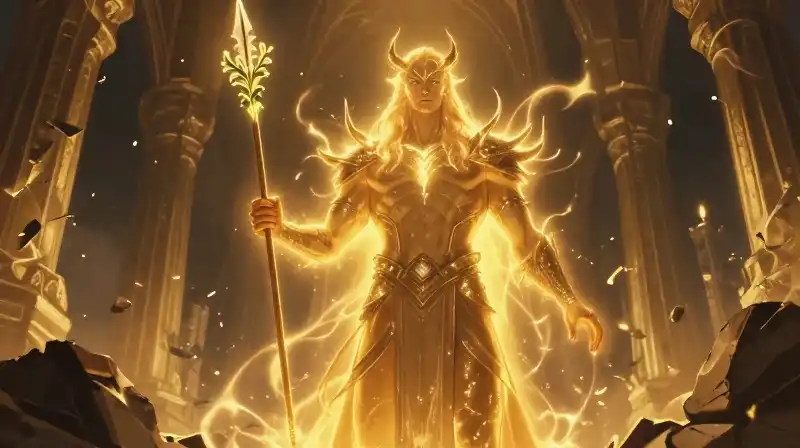
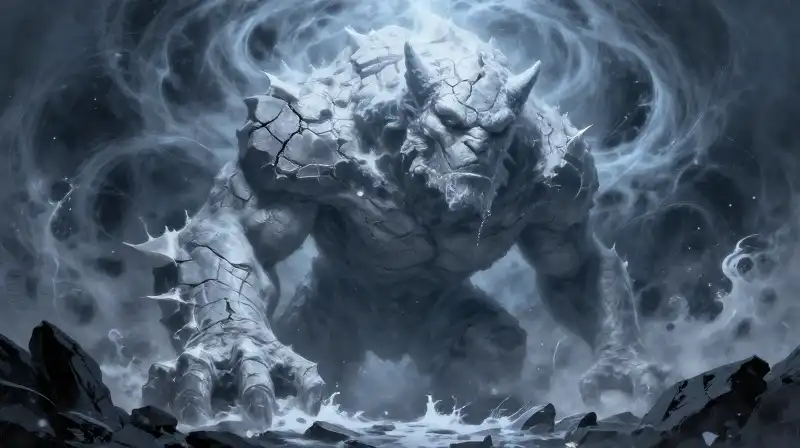
One of the most nuanced aspects of Jötunn lore is that their portrayal is not static. While they are often depicted with hideous characteristics, such as claws or multiple heads, some are described as being physically indistinguishable from the gods (1, 2). Furthermore, the depiction of their intelligence and moral worth shifted dramatically over time. As Christian influences began to affect the cultures that preserved these myths, Jötnar were increasingly demonized and stereotyped as less intelligent and more monstrous 1. However, the mythology suggests a deeper complexity. While Jötnar are frequently antagonistic, they are simultaneously viewed as repositories of ancient knowledge. They represent a wisdom from before the establishment of the current divine order, and because of this value, even the gods sometimes require their help. For example, Óðinn, the great god, must travel to seek crucial pro-cosmic knowledge from Vafþrúðnir, a Jötunn, engaging him in a profound contest of intellect (1, 2).
Navigating the Boundaries: Jötunn vs. Troll
Understanding the Jötunn requires distinguishing them from other powerful supernatural beings in the Norse tradition, particularly the Trolls. While there is an overlap between the two terms, their semantic scopes are different. Jötnar belong to a defined mythological lineage, rooted in primordial chaos and elemental nature (1, 2). Trolls, however, possess a much wider semantic scope across Old Norse literature, encompassing a diverse range of beings—from individuals with peculiar or unusual traits to ghosts and spirits of uncanny supernatural ability (1, 3). While Jötnar represent the forces of nature, Trolls often represent the aberrant or the uncanny within the cultural landscape. It is also worth noting that the concept of antagonism is not absolute. Several powerful figures, such as Loki, Týr, and Skadi, are noted in the sagas for either having Jötunn ancestry or eventually intermingling and marrying into the established Æsir tribes, demonstrating the fluidity of this ancient kinship 1.
Addressing Modern Interpretations and Common Queries
In the contemporary dialogue surrounding Norse mythology, several common misconceptions arise that the Jötunn identity helps to clarify:
- Are they equivalent to a Wendigo? No. While Jötnar represent chaotic, often insatiable, natural forces (sometimes linked to concepts like consumption or gluttony, based on etymological roots), the Wendigo is a specific, localized figure rooted in certain Algonquian traditions, focusing on cannibalism and winter desperation. The Jötnar are a broader cosmological force.
- Is Fenrir a Jötunn? Fenrir, the monstrous wolf destined to devour the gods, is a figure whose lineage is often debated. However, while he is a monstrous agent of chaos, his designation is typically tied to a specific prophetic destiny rather than the broad familial definition of Jötunn established in the cosmology.
- What did the Vikings call Jesus? The Norse people, who preserved these traditions, did not possess a unified, centralized religious framework outside of their pagan beliefs. Any encounter or concept related to a figure like Jesus would be filtered through regional beliefs or later Christian interactions and is not an inherent part of the mythological identity of the Jötnar.
The Synthesis of the Wild
The Jötnar represent the profound philosophical question found within the Old Norse tradition: how does humanity coexist with the vast, unpredictable power of the cosmos? They are not merely obstacles to be conquered, but complex entities that embody the wild, elemental aspects of life—the fires of creation, the floods of change, and the profound, sometimes terrifying, wisdom of the pre-god world. By studying the Jötnar, one understands that the mythology is not just a collection of tales, but a cultural meditation on the necessary balance between human civilization and the immense, chaotic power that perpetually exists outside of our ordered reach.
References
Footnotes
Frequently Asked Questions
What did the Vikings call Jesus?
The Norse people did not possess a unified, centralized religious framework outside of their pagan beliefs. Any concept or encounter related to a figure like Jesus would therefore be filtered through regional beliefs or later Christian interactions and is not an inherent part of the mythological identity of the Jötnar.
Is jötunn a wendigo?
No, jötunn are not equivalent to the Wendigo. The article notes that while Jötnar represent broad cosmological forces of natures chaos, the Wendigo is a specific, localized figure from Algonquian traditions focused on cannibalism and winter desperation.
Is Fenrir a jötunn?
Fenrir, the monstrous wolf, is a figure whose lineage is often debated, and while he is a monstrous agent of chaos, his designation is typically tied to a specific prophetic destiny rather than the broad familial definition of Jötunn.
Related Articles