Greek Gods: Understanding the Pantheon and Their Divine Order

Introduction
For the communities that revered them, the Ancient Greek pantheon was not a collection of stories to be passively read, but a living infrastructure of their world. Greek religion was fundamentally a polytheistic framework—a complex tapestry of gods and goddesses who governed every facet of existence, from the might of the ocean to the subtle turn of the harvest. These deities were understood to be powerful beings who could bring about positive outcomes or unforeseen hardships, existing outside the realm of human control 1. To understand this tradition is to grasp a worldview where the natural world and the supernatural were inextricably linked, and where the relationship between humanity and the divine was defined by ritual, awe, and shared narrative.
The Nature of the Divine: Gods as Living Forces
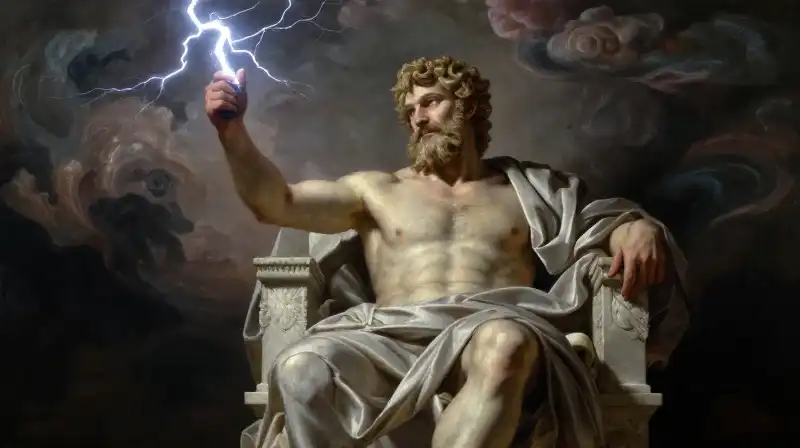
Unlike the distant, perfect beings of some monotheistic traditions, the gods of the Greek tradition were deeply anthropomorphic. They were immortal, yet they possessed forms and personalities remarkably similar to human beings. They were figures of immense power, capable of dictating outcomes in human affairs, natural events, and conflict 1. Their divine nature was symbolized by physical markers, such as the presence of ichor—a divine fluid that flowed through their veins instead of blood 1. This blend of immense power and relatable human characteristics was crucial to the tradition; it allowed the divine to be accessible, even if only through a measure of fear and respect.
A god’s character and domain were defined by two critical elements: their iconography—the way they were depicted in art—and their mythology. These narratives detailed their deeds, established their functions, and mapped their connections to one another, providing the community with a coherent structure for understanding the universe 1. Because of these narratives, gods and goddesses were not just abstract forces; they were characters whose temperament could shift, much like human personality, making the interactions between mortals and deities feel real and consequential 1.
The Architectural Layers of the Pantheon
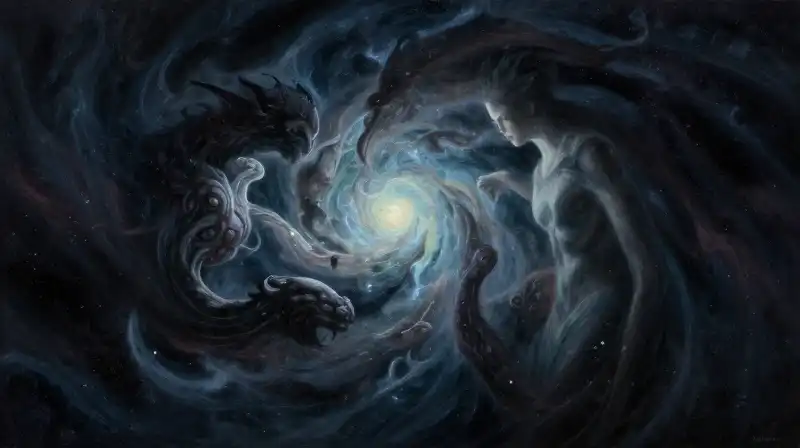
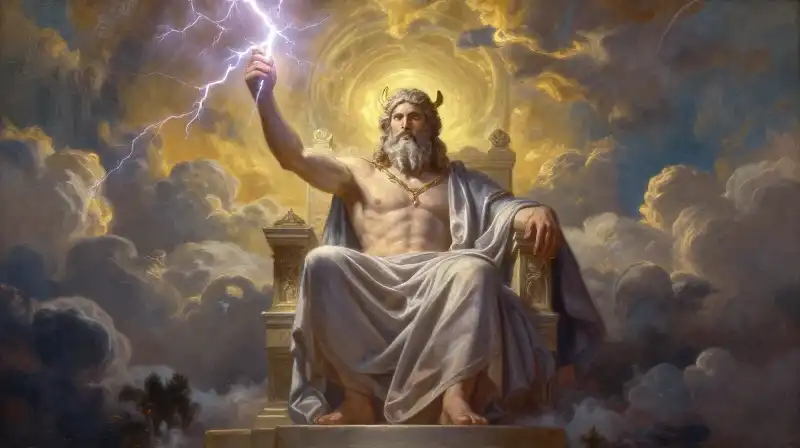
The Greek pantheon was not a flat list, but a carefully constructed hierarchy that reflected the layers of the cosmos. This structure was often mapped out through complex family trees, such as those provided by Hesiod, which meticulously detailed the relationships between the various gods 1. The divine lineage was generally understood to proceed through three major generations: the Primordial gods, the Titans, and finally, the most celebrated Olympians 1. The twelve Olympian figures were considered the principal authorities, believed to reside on Mount Olympus. However, it is important to note that this grouping was subject to regional variation, meaning different local communities might emphasize slightly different figures in their own divine councils (2, 1).
The arrangement also accounted for specialized domains. For example, Hades, the sovereign of the underworld, was considered a chthonic deity—one deeply connected to the subterranean aspects of the earth (2, 1). Due to his essential role beneath the surface, he was not included in the canonical group of the twelve Olympians. His cult was focused on a different facet of the world, primarily worshipped under the title Plouton, with a presence felt across the entire Greek world despite his subterranean nature 1.
Beyond the major figures, the tradition respected local significance. Many minor deities, such as nymphs and various river gods, were intrinsically tied to specific geographic locations. Their importance was directly tied to local concerns and the unique environment they guarded 1. This decentralized importance ensured that the pantheon was not solely a matter of capital mythology but was woven into the fabric of the landscape itself.
The Practice of Cult: Engaging with the Gods
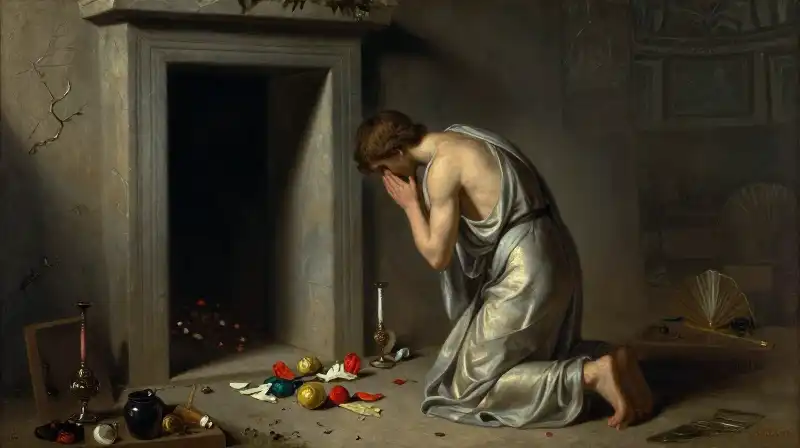
Religious life in ancient Greece centered on the practice of *cult*. This was the communal and individual engagement with the divine, involving highly structured rituals meant to maintain the cosmic balance and seek divine favor. These practices were carried out in sacred spaces known as *temenē* 1. A typical engagement with the gods involved sacrifices, libations, and prayers, actions that served as a physical and symbolic dialogue between the community and the divine forces they sought to influence 1.
The purpose of these acts was often to ensure prosperity, successful harvests, or military triumph. The rituals provided a communal focus that affirmed the shared cultural understanding of the gods’ powers. Furthermore, the entire tradition was heavily influenced by foundational literary works. Hesiod’s Theogony was essential for understanding the original lineage of the gods, while the expansive Homeric epics like the Iliad provided the grand, dramatic narratives that defined the gods’ behavior and their relationship with mortal heroes (2, 1). These texts were the shared interpretive lens through which the tradition was understood and practiced.
The Intersection of Human Aspiration and Divine Power
The Greek pantheon offers a fascinating study in the merging of the mortal and the divine. While the gods held absolute power over natural events and battles, they were not immune to human-like flaws. They could exhibit envy, engage in intense passions, and make decisions driven by impulse 1. This human element made the divine accessible and recognizable, creating a shared ethical space even if the gods themselves were outside of mortal morality.
This merging of human and divine aspirational energy is also seen in the tradition of deified mortals. Figures such as Heracles and Psyche were honored, representing a point where human achievement or profound spiritual transformation allowed an individual to merge with divine reverence 1. These figures allowed the community to celebrate extraordinary human potential, showing that while the gods held ultimate power, the aspiration toward divine qualities was a core part of the cultural identity.
Understanding the Pantheon: A Synthesis
The Greek gods were not simply mythological characters; they were the framework of a deeply spiritual and narrative-driven cosmology. They represented the forces—good, terrible, and neutral—that shaped the world the people knew. The tradition lived through the act of ritual, through shared stories, and through the recognition that human destiny was always mediated by the whims and hierarchies of these mighty figures.
For the modern reader seeking to genuinely understand this tradition, the key takeaway is to view the gods not as static beings from a dusty textbook, but as personifications of fundamental forces. They embody the complex interplay between cosmic order and unpredictable chaos, between human ambition and inescapable fate. The power of this living culture lies in its ability to reflect the full spectrum of the human experience—from the celebration of powerful heroism to the humble appeal for blessings at a sacred altar.
References
Footnotes
Related Articles