Red and Fiery: Discover Mythical Creatures from Global Folklore

Introduction
The vibrant spectrum of color often serves as a quick shorthand for narrative—red for passion, green for nature, blue for depth. Yet, when we speak of red in the context of world mythology and folklore, the hue becomes something more profound. It represents transformation, dangerous beauty, the divine, or the volatile force of nature. Across cultures, the fire element—often manifested as brilliant shades of red—is the primary language through which humanity expresses its deepest anxieties, its greatest hopes for fortune, and its reverence for the inexplicable. Exploring these “red mythical creatures” is not merely an exercise in identifying strange beasts; it is an attempt to map how different communities interpret the fundamental forces that govern their world. These entities, whether they emerge from the folklore of the Maranao people, the arid plains of the East African tradition, or the misty highlands of Finland, serve as mirrors reflecting the core values and fears of their human creators.
The Spectrum of Fire: Guardians and Predators
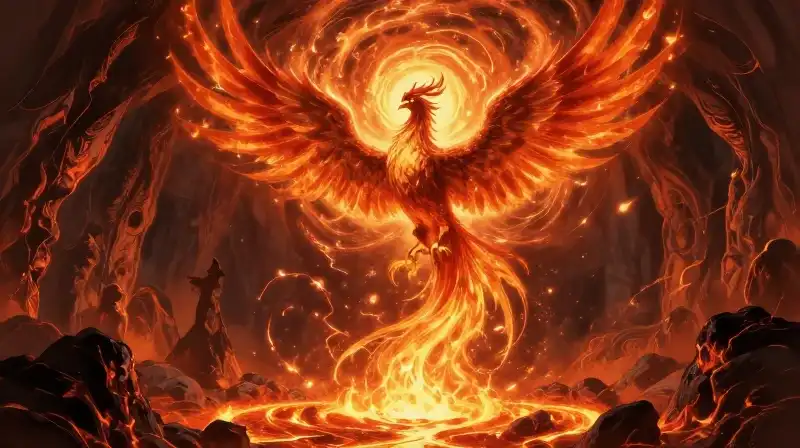
The character of a mythical creature is often defined by the nature of its fire. Some beings are terrifying predators, while others are celestial forces of destruction or rebirth. In Japan, for instance, the Basan is known as a fire-breathing chicken, embodying a fierce, earthly power. This theme of intense, primal heat resonates globally; the “firefly” element often appears in subtle, sinister forms. According to the list of legendary creatures, the Adze in Ewe mythology is a vampiric entity that transforms into a firefly to penetrate keyholes and draw blood, suggesting a direct link between this fiery transformation and a source of dark, sinister power. This contrast—between a bright, ephemeral glow and a dangerous, predatory nature—is a common thread running through global folklore. The most powerful examples of this archetype are often those associated with cosmic order or great danger. The Cockatrice, a creature that marries the serpentine or draconic form with that of a chicken, is consistently listed in mythology as being associated with potent, dangerous, and highly mythical status. Similarly, the Chilote mythology features the Carbuncle, which is not a creature but a greenish-red fiery light, representing a specific, often divine, natural or divine manifestation. For these communities, these fiery manifestations are not necessarily beasts to be defeated, but rather forces to be observed and respected—a natural phenomenon given form.
Transformative Beasts and Divine Archetypes
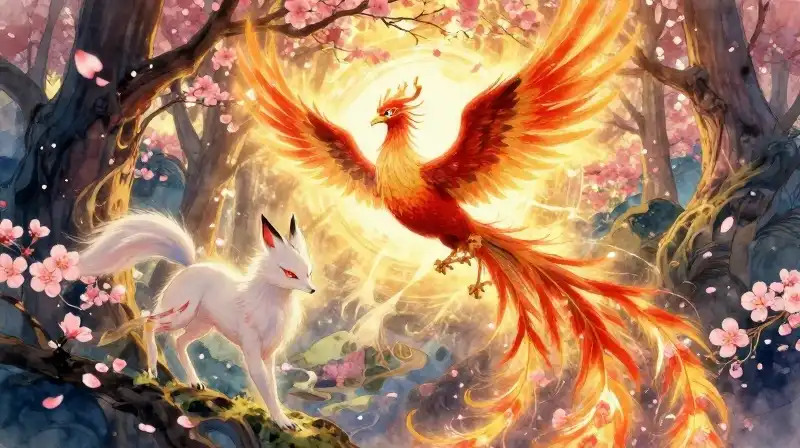
Many of the most interesting “red mythical creatures” are tied directly to the concept of change or divinity. These creatures are living manifestations of a people’s relationship with fate or their gods. In the case of the Japanese goddess Amaterasu, her power is so great that she is sometimes associated with the form of a dragon-fox, reflecting a divine transformation that links different aspects of the natural and supernatural world [1]. This motif of powerful, spiritual animal forms is widespread. The concept of the fox spirit—known as the Kitsune in Japan, the Kumiho in Korea, and the Huli jing in China—is a recurring element in Eastern mythology. These entities, though their specific color is not detailed in the source, are profoundly spiritual figures that embody mystery and power, capable of complex transformations. Another example of significant cultural association is the Sarimanok, a legendary chicken from the Maranao people in the Philippines, whose importance is central to local tradition, embodying a specific cultural identity and heritage [1]. The presence of a mythological bird atop a great world tree also suggests cosmological importance. Norse mythology features Víðópnir, a rooster that serves a culturally significant role as the bird residing atop Yggdrasil, the sacred ash [1]. While the descriptions vary, the recurring role of powerful birds and foxes suggests that these creatures represent pivotal points of transition between the mundane world and the spiritual realm.
Omens, Luck, and the Natural World
Not all fiery creatures represent danger or the divine; some serve as powerful indicators of fortune or warning, particularly regarding human endeavors like the hunt or travel. In Finnish folklore, the Tulikettu is a fox characterized by flaming fur. Its ability to catch fire is interpreted as a reliable omen of great riches during a hunt, positioning the creature as a symbolic harbinger of wealth and success [1]. Conversely, some myths explore the colossal scale of the world’s natural forces. The Gallnipper, referenced in African-American folklore, provides an example of how local traditions incorporate the idea of colossal nature through the figure of a large insect, showing how communities project their relationship with the massive and uncontrollable elements of the natural world onto mythological forms [1]. The presence of the Bjarndyrakongur, the King of bears from Icelandic legend, illustrates how specific attributes can set a mythological creature apart and imbue it with significance. His distinct red patches on his cheeks differentiate him from other local bears, turning a natural animal into a specific, legendary figure [1]. These localized legends show how a simple visual detail—a splash of red—is used to elevate an animal into a figure of specialized cultural importance.
Understanding Red Mythical Creatures: Why the Hue Matters
A search for “red mythical creatures names” often leads to a simple list of taxonomy, but the true value of these legends lies in their function. When a community names a being with a fiery or red aspect, it is rarely a random aesthetic choice. It is a cultural commentary. According to 1, the vast regional differences between the fiery entities of the Ewe people, the Basan of Japan, and the Tulikettu of Finland provide evidence that mythical beasts are hyper-localized. The red of the Tulikettu brings fortune, while the red of the Adze brings danger. The meaning is entirely dependent on the context and the relationship the culture has with the creature. Understanding a tradition means moving past the visual definition and asking: what does this color mean in this specific cultural landscape? This nuanced approach is what differentiates a “listicle” from a genuine cultural exploration. These stories teach us that fire, in its mythological forms, is both an elemental force and a powerful lens through which to view the complex relationship between humanity and the wild, the divine, and the unseen.
The persistence of these traditions suggests that as humans continue to face uncertainties—whether ecological shifts, social change, or cosmic isolation—the myths persist to offer a structured way to understand forces that cannot be easily quantified.
References
Footnotes
Related Articles