Obscure Mythical Creatures: Rare Figures from Global Folklore

Introduction
The rich tapestry of global human folklore is woven from the anxieties, hopes, and ecological observations of communities across continents. Among the countless legendary figures and spirits, some remain tucked away in regional traditions, known only to the people who live within those cultural borders. These obscure mythical creatures—from the serpentine horror of Japanese river life to the protective, fiery deer of China—are not merely strange stories. They are living cultural anchors, externalizing human fears about the unpredictable environment: the devastating drought, the arrival of plague, the insidious creep of bad fortune. Understanding these figures requires looking past simple definitions; it means examining how these beings shape beliefs, guide behavior, and provide a necessary narrative framework for the wild, the uncertain, and the deeply sacred.
The Embodiment of Environmental Dread
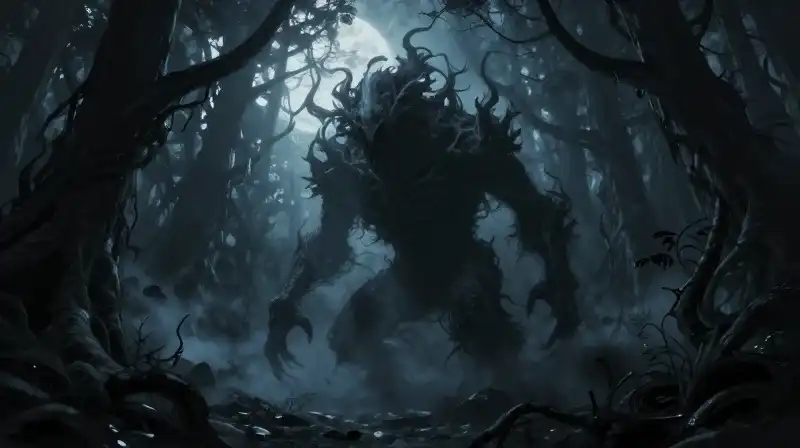
Many of the most potent figures in regional folklore serve as personifications of environmental instability or the sudden, catastrophic arrival of misfortune. In cultures that have wrestled with famine and disease, the appearance of specific beasts acts as a cultural alarm system. In the Scottish Isles, the Nucklavee is regarded as a sea-dwelling centaur variant whose noxious breath is intrinsically linked to droughts and epidemics 1, functioning as a powerful cautionary tale about the volatile nature of the ocean. Similarly, the Helhest in Danish folklore is a demonic horse associated with bringing death, plagues, and famine 1, a figure whose mere noticing in the wilderness is considered an omen of profound calamity. This anxiety is not confined to the maritime worlds. In Slavic tradition, the Drekavac (Shrieker) embodies exhaustion and despair; this deformed, child-like entity is known for its blood-curdling shriek and its habit of riding victims until dawn, often leading to exhaustion and death 1. Across the globe, these themes appear in diverse forms: the Aswang of Philippine folklore functions as a vampire-like figure, capable of mimicry by day and horrific transformation by night to consume blood or fetuses 1. These creatures often exist in liminal spaces—the deep forest, the open water, or the dark corner of the house—representing the points where human safety meets raw, uncontrollable nature.
Beings of Balance and Benevolence
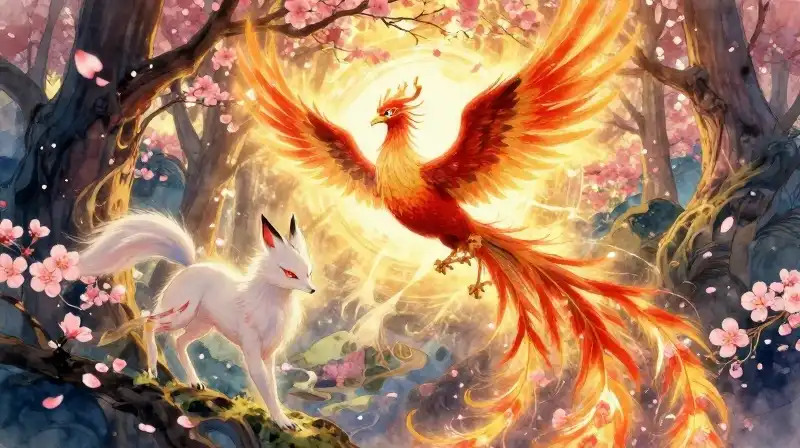
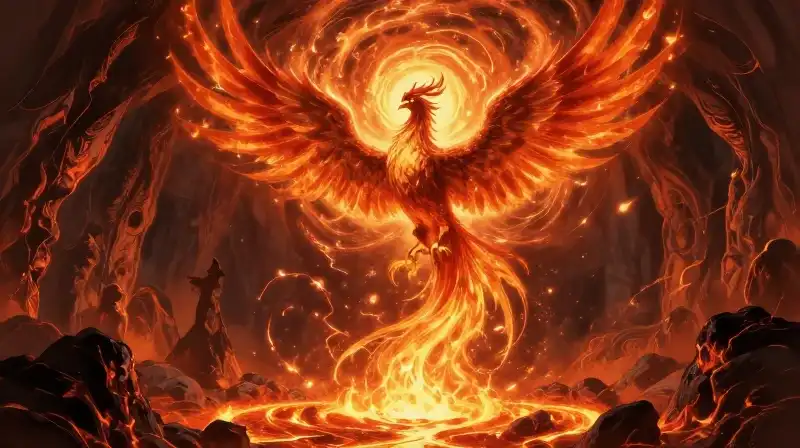
While many obscure creatures carry warnings, equally vital are the beings that provide hope, guidance, and protection. These figures represent the community’s desire for balance and a good harvest. The Japanese river creature, the Kappa, offers a study in cultural negotiation; this creature is known for engaging in sumo wrestling but can be pacified and brought good fortune by a specific ritual: refilling a bowl of river water placed upon its head 1. This illustrates how folklore provides a roadmap for interacting with the unknown. In Chinese mythology, the Kirin (Qilin) represents a pinnacle of auspicious power—a revered scaled deer that, depending on the telling, may possess the ability to set itself on fire, symbolizing a potent good omen 1. Other cultures share this motif of protective power. The Karkadann of Indian and Persian mythology, a rhino-like entity, is celebrated for its horn, which is said to possess powerful healing properties, earning it the title “Lord of the Desert” 1. Similarly, in ancient Roman lore, the Caladrius is a benevolent creature with the unique, sacred ability to absorb and remove sickness from a person, allowing them to recover 1. These mythological heroes stand as cultural reminders of the potential for grace and recovery amidst uncertainty.
The Mechanics of Domestic and Existential Fear
The most bizarre and often frightening of these figures derive their power from abstract or domestic anxieties. They challenge the rules of physics and reality, demanding constant attention or embodying the chaos of the subconscious. Perhaps the most uniquely structured of these is the kratt from Estonian folklore. This creature is constructed entirely from household materials. According to 1, the kratt can only be controlled if it performs constantly; an impossible task causing it to burn away. This folklore functions as a fascinating lesson in the limits of human control—a material entity that requires perpetual motion to exist, and the moment it is static, it destroys itself. Elsewhere, the Baku in Japanese mythology shares the specialized function of consuming dreams and nightmares 1. While often depicted as a creature made from spare parts when other animals were made, its true cultural purpose is to mitigate psychological distress, acting as a mythological defense against the night’s anxieties. Even the hidebehind, a nocturnal carnivore in forest lore, adds a layer of strange logic; while it preys on human intestines, 1 notes it lacks an aversion to alcohol, which lumberjacks used pragmatically to deter it, demonstrating a fascinating intersection of myth and practical resourcefulness.
Navigating the Obscure: Why These Creatures Matter
The presence of these highly specific, regional mythical creatures addresses fundamental human questions about survival and meaning. If one asks, “How do I explain why the harvest failed?” the answer might be the Helhest 1. If one asks, “How do I navigate the unknown dangers of the wilderness?” the answer might involve appeasing the Kappa 1 or using deterrents against the hidebehind 1. These figures provide more than just definitions; they provide narrative structure. By categorizing the anxieties of the community—the terror of the sea, the risk of a sudden death, the chaos of the subconscious—folklore helps a community understand and process the world they inhabit. This tradition, spanning the diverse beliefs of the Americas, India, Europe, and Asia, is a testament to the human need to find meaning in the unpredictable. They serve as a shared cultural language for fears that defy rational explanation.
The Living Tradition
The significance of these obscure mythical creatures lies not just in their existence in old texts, but in the persistent way they influence modern cultural memory and regional practice. They are living history, embodying the specific ecological, social, and historical pressures faced by the people who created them. They remind us that folklore is not an abandoned academic pursuit; it is a dynamic, deeply personal system of belief that offers a unique perspective on human experience, transforming the vast, intimidating world into a collection of stories—some terrifying, many hopeful.
References
Footnotes
How to Pacify the Kappa
Identify the Kappa's state
Recognize the Kappa, which may be engaging in sumo wrestling.
Prepare the offering
Prepare a bowl of river water.
Perform the ritual
Refill the bowl of river water and place it upon the Kappa's head.
Related Articles