Who Is the Ibis Head God Thoth in Egyptian Mythology?

Introduction
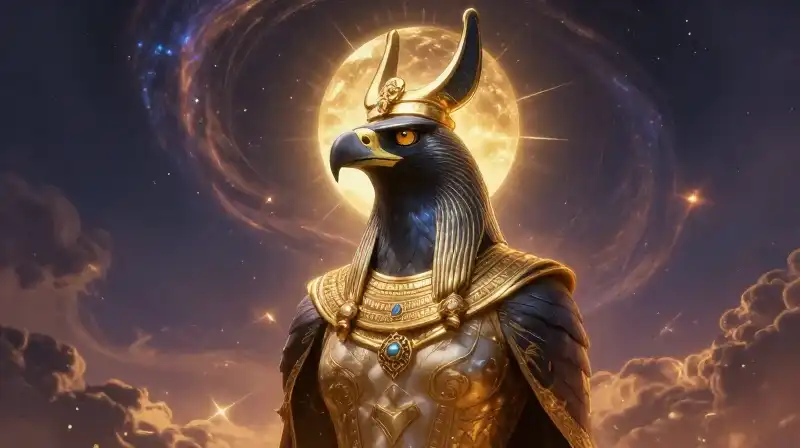
In the rich tapestry of Egyptian mythology, certain deities hold roles that transcend the purely divine, becoming fundamental architects of human civilization and cosmic order. Among these is Thoth, a figure defined by his wisdom, meticulous record-keeping, and profound connection to knowledge. Most vividly, he is recognized by the iconic form of the ibis—a slender, graceful bird whose head became inseparable from the god’s image 1. Thoth is not merely a mythological figure; he represents the intellectual heart of ancient Egyptian society, embodying the scribe’s dedication to order and the preservation of truth.
The Scribe of the Gods: Defining Thoth’s Domain
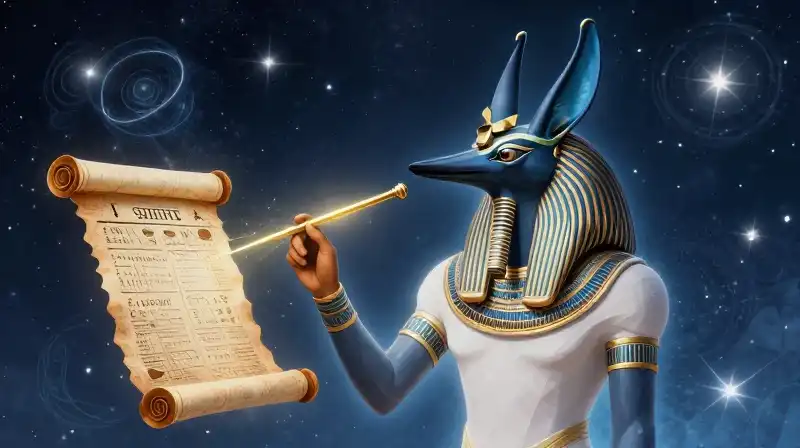
To understand Thoth is to understand the necessity of cosmic administration. He held the titles of the God of the Moon, wisdom, knowledge, and writing 1. Unlike gods of sudden, passionate violence or raw creation, Thoth was the guarantor of balance and systematic thought. He was revered as the Scribe of the gods, a crucial function that placed him at the center of both the earthly and heavenly realms. His authority was not merely theoretical; he was credited with meticulously calculating the establishment of the stars and the layout of the heavens 1.
This deep connection to the written word led to a profound relationship with the community of scribes. These educated elites universally worshipped Thoth, adopting the image of the ibis as the ultimate symbol of their craft. The bird’s distinctive appearance—often likened to a pen dipped in ink while it fed—suggested a primal connection between the creature and the act of intellectual inscription 1. Thoth was the intellectual cornerstone of Egyptian life, bridging the gap between divine will and documented reality.
Beyond Words: The Role of Judgment and Transformation
Thoth’s responsibilities extended far beyond the careful etching of hieroglyphs. His role in the journey of the dead underscores his function as the ultimate witness. In the complex proceedings of the afterlife, Thoth acted as the divine recorder, meticulously documenting every action and event of the deceased 1. He played a pivotal role in the weighing of the heart against the feather of Ma’at (truth), ensuring that the cosmic law of balance was upheld during the most critical moment of passage into eternity 1.
Furthermore, Thoth’s influence was broad, encompassing not only writing but also magic, science, and complex intellectual systems 1. His significance is deeply embedded in the foundational myths of Egypt. For example, he is credited with giving Isis the precise words—the linguistic power—she needed to conceive Horus following the death of Osiris 1. This demonstrates that his power was fundamentally rooted in language and the creation of definitive concepts.
The Ibis Metaphor: Symbolism of Wisdom and Patience
While the artistic depiction of Thoth—often a human figure with the head of a green ibis—is the most recognized form 1, the ibis itself carries specific symbolic weight. Scholars and modern discussions explore how this avian form may have functioned as a metaphor for pure knowledge. The characteristics often attributed to the bird include profound patience and keen observation 1. This aligns perfectly with Thoth’s function as the divine chronicler, who must remain calm and precise while observing the entire unfolding of creation and human destiny.
It is important to note the nuances in his representation. While “Thoth” is the most common Greek borrowing, the original Egyptian name was ḏḥwty 1. This reminds us that even within the study of these traditions, there are layers of linguistic reconstruction and scholarly variation, requiring careful respect for the complexity of the source materials.
A Tradition Rooted in Place and Devotion
The devotion to Thoth was not spread evenly across all of ancient Egypt. His worship was intensely focused and regional, with his chief temple establishing a major religious and intellectual center in Hermopolis 1. This suggests that the specific tradition of Thoth was a local, vital pillar of culture for the communities in that region. The temple served not just as a place of worship, but as a repository of knowledge and a hub for the scholars who revered him.
The distinction between Thoth and other animal-headed deities (such as the baboon-headed god, who is often mentioned in connection with him) highlights the specificity of the ibis’s association. Thoth’s link to the ibis was cemented by his role as the ultimate record-keeper and the divine representative of human intellect 1. He provided the cultural anchor for those who sought to understand the world through the lens of logic, measurement, and language.
Understanding Thoth’s Enduring Cultural Legacy
Thoth remains one of the most vital figures in Egyptian mythology because he represents the inherent human drive for order amidst chaos. His significance transcends mere definition; he is the ultimate embodiment of the intellectual tradition. Whether he is calculating the path of the moon or documenting the scales of Ma’at, Thoth is the personification of the necessary process: the act of recording, analyzing, and preserving what is true. He teaches that true cosmic power often resides not in brute force, but in clear understanding and meticulous, unbiased documentation.
References
Footnotes
Frequently Asked Questions
Which Egyptian god looks like an ibis?
Thoth is the Egyptian god most vividly recognized by the iconic form of the ibis, whose head became inseparable from his image.
Which Egyptian god had the head of an ibis bird?
The Egyptian god with the head of an ibis is Thoth. He is most vividly recognized by this iconic form, representing his wisdom and role as the Scribe of the gods.
Related Articles