Diverse Mythical Creatures: Exploring Global Folklore and Legends

Introduction
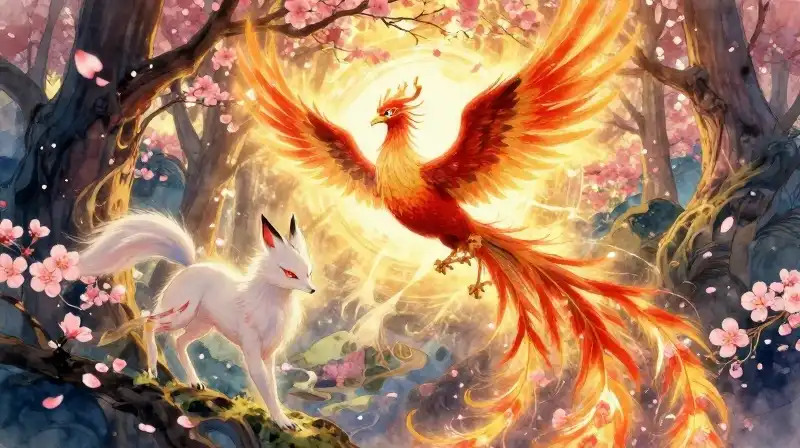
Mythical creatures are not merely elaborate backstories for entertainment; they are profound cultural lenses. They are visual, narrative echoes of a community’s deepest beliefs about nature, morality, and the invisible forces that govern their world. From the soaring guardian of ancient empires to the trickster spirit hiding in the woods, these legendary beings serve as a bridge between the physical realm and the spirit world.
Exploring these “mythical land creatures” reveals a shared global preoccupation: understanding transformation, hierarchy, and the delicate boundary between civilization and the wild. Across diverse traditions, whether we see a winged lion or a shapeshifting fox, we are witnessing a community grappling with profound questions about destiny, power, and the ethics of existence.
Guardians, Manifestations, and the Spiritual Order
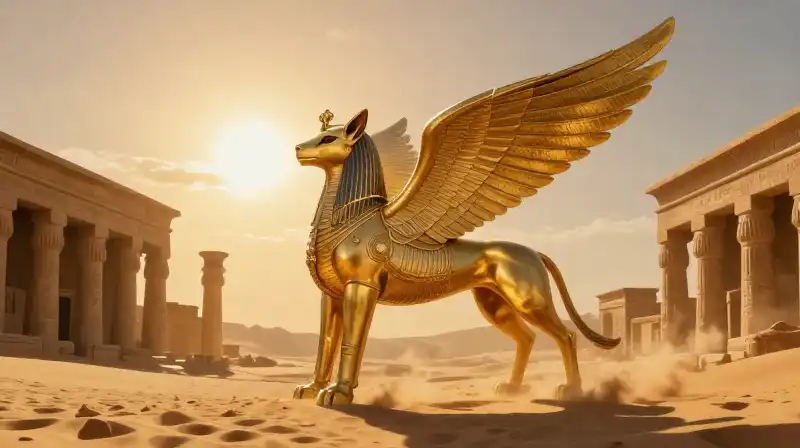
Many legendary animals exist primarily to define what they protect. These beings often represent the sacred stability or valuable essence of a people or their land. In Greek mythology, the Griffin, for instance, is far more than a magnificent hybrid; it is a potent symbol of wealth and stewardship, visually represented by the formidable combination of an eagle’s wings and a lion’s body 1.
A similar concept of divine guidance appears in Persian traditions through the Shahbaz. Viewed as divine eagle gods, the Shahbaz figures played a role in guiding both people and the cosmic order, symbolized by the Faravahar. On a grander scale, the powerful animal myths of civilizations like those in Mesoamerica often personified divine power. The concept of the great cosmic bull, Kujata, illustrates this well, serving the function of bearing a god and standing upon the deity Bahamhut, cementing its role in the spiritual cosmology of the region 1.
The Power of Transformation and Divine Intervention
One of the most significant functions of mythological figures is to illustrate the fluidity of life and the unpredictability of divine forces. Transformation narratives, common in both Greek and other world mythologies, show that identity is not always fixed. Examples like the Greek nymph Melissa, who was turned into a bee by Zeus, or Myrmex, turned into an ant by Athena, serve as powerful narratives about the interplay between humans and overwhelming divine power 1.
In contrast, some myths present powerful natural entities whose forms are also subject to transformation or massive scale. The Native American folklore of the Stiff-Legged Bear, for example, is often attributed to the historical sighting of massive prehistoric mammoths. This creature, therefore, stands as a cultural marker, transforming a geological past into a potent spiritual symbol for tribal communities 1.
Navigating the Trickster: Agents of Chaos and Wisdom
If the guardians represent order, the trickster creatures often represent the necessary introduction of chaos—the element that challenges established norms. These figures are often neither purely good nor purely evil; they are agents of complexity and cunning.
This archetype manifests across vastly different cultures. In Japanese tradition, the Kitsune, and in Chinese lore, the Huli jing, are cunning fox spirits celebrated for their intelligence and capacity for deception. Similarly, the Abenaki mythology features the trickster raccoon spirit, Azeban. These figures, whether manipulating human life or merely serving as foils to heroic narratives, provide a cultural framework for exploring duality and the unpredictable nature of the human condition 1.
Nature’s Terrors and Cryptids: Reflections of the Wild
Beyond benevolent spirits and clever tricksters, many mythical creatures serve as warnings about the harsh, untamed aspects of the natural world. These figures often occupy the fringes of documented human reality.
In the myths of the Far North, the concept of Wendigo emerged, representing more than just a savage beast; it often embodies the greed and spiritual decay of a community. Similarly, in North American folklore, descriptions of figures like Sasquatch and Bigfoot document a cultural intersection where localized, mysterious cryptid sightings meet generalized legendary concepts 1. Furthermore, creatures like the Minotaur in Greek mythology encapsulate a profound tragedy—the conflict between human instinct and monstrous, primal force.
Regional Spiritual Guardians: The Power of the Animal Form
Certain creatures are revered not just for their visual power, but for their specific spiritual utility within their community. This deep spiritual connection is evident in the Abenaki tradition, which features the Wuchowsen, a giant eagle spirit. This creature is not just any bird, but one of the four revered wind spirits, residing atop a mountain and maintaining the balance of the spiritual landscape 1.
In Southeast Asian traditions, the Sarimanok—a legendary chicken from the Maranao people of Mindanao—represents a symbol of prosperity and good fortune. This showcases how a powerful animal figure can be localized and adapted to serve specific socio-economic needs within its community, providing a tangible connection between traditional beliefs and daily life 1.
Conclusion: The Living Significance of Mythical Creatures
Mythical land creatures, in their myriad forms, are living repositories of human history. They teach us about what a culture values—be it the dignity of a guardian, the necessity of change, or the inherent danger in the unchecked wilds. They are complex cultural artifacts that demand respect, not simple classification. To understand a mythical being is to engage with a specific regional philosophy.
Ultimately, these legends remain powerful because they reflect eternal truths. Whether you are researching mythological creatures by type or searching for a specific legendary name, the real value lies not in compiling the list, but in appreciating how these stories help communities navigate their own intricate spiritual relationship with the world.
References
Footnotes
Related Articles