The History of Halloween: From Ancient Samhain to Modern Traditions

Introduction
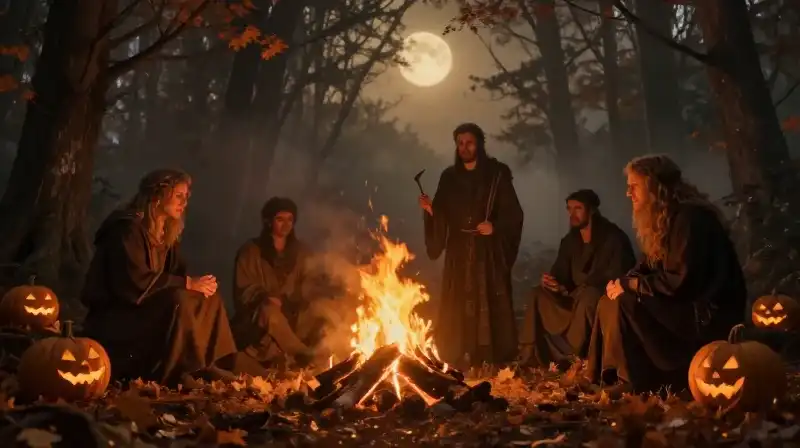
Halloween is often perceived through the lens of modern commercialism—costumes, candy, and cinematic horror—but its roots are deeply embedded in the cyclical rhythms of the natural world and the human preoccupation with the boundary between life and death. Far from being a singular, static invention, the history of Halloween is a tapestry of overlapping traditions, stretching from ancient Celtic harvest rites to medieval Christian observances and eventually to the immigrant-led transformations in North America. To understand the origin of Halloween is to look at how different eras have negotiated the transition from the abundance of autumn to the scarcity of winter, and how they have honored the memory of those who have passed.
The Threshold of Samhain
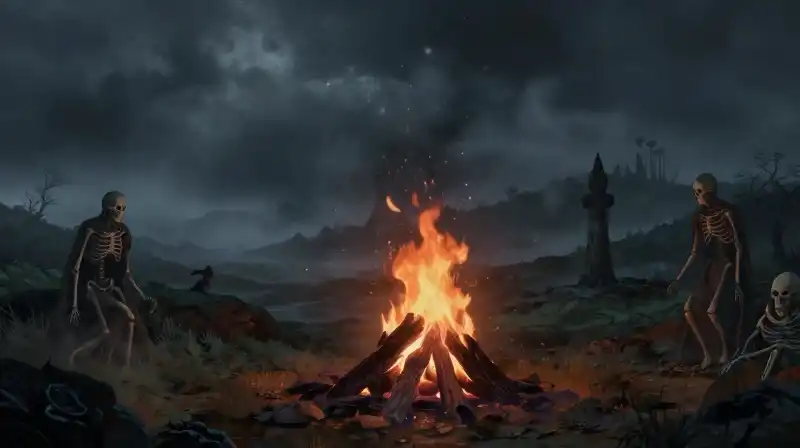
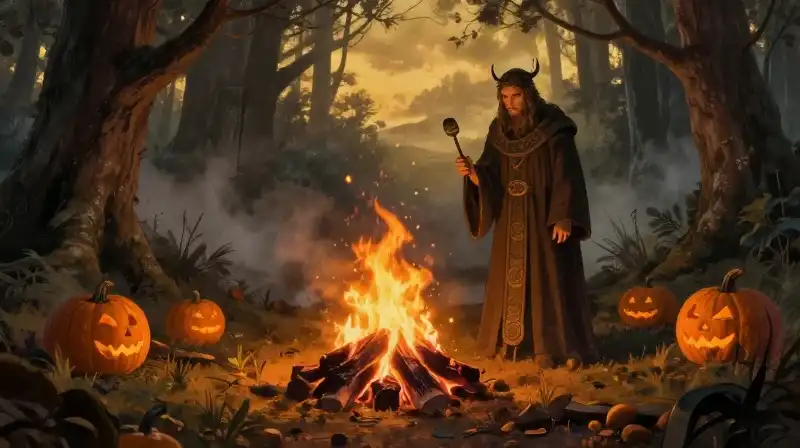
The foundational layer of these traditions is often traced back to Samhain (pronounced sow-in), a Gaelic festival marking the end of the harvest and the beginning of the new year. For the ancient Celts, this was a liminal time—a period when the veil between the world of the living and the realm of the spirits was believed to be uniquely thin (1, 2). It was understood that during this seasonal shift, the souls of the departed might return to visit their homes and kin 1.
This belief necessitated specific social behaviors. One of the most enduring practices was “guising,” where individuals wore masks or animal skins. While modern costuming is largely a matter of play, the original intent was more profound: wearing such disguises served either to communicate with the spirit world or to act as a protective measure, preventing vengeful or malevolent spirits from recognizing and targeting the wearer (1, 2).
All Hallows’ Eve and the Shift to All Saints
As Christianity spread through Europe, many existing pagan customs were integrated into the liturgical calendar, a process often described as Christianization. While some academic theories suggest Halloween may have begun as an independent Christian holiday, others argue it emerged from the blending of earlier practices like the Roman festival of Parentalia or the concept of Lemuria 1.
The specific dating of the traditions was influenced by the establishment of All Hallows’ Day on November 1st, a day dedicated to honoring saints and the faithful departed 1. This placement is hypothesized to have been shaped by both Celtic and Germanic perceptions of the spiritual significance found at the onset of winter 1. Consequently, the vigil held on the night of October 31st became known as All Hallows’ Eve, serving as a bridge between the ancient seasonal turn and the structured religious calendar.
Souling and the Roots of Trick-or-Treating
In the Middle Ages, the connection between the living and the dead manifested through communal food exchanges. A significant practice was “souling,” where the impoverished, often children, would go door-to-door to collect “soul cakes” (1, 2). In exchange for these cakes, the “soulers” would offer prayers for the souls of the givers’ deceased relatives and friends (1, 2).
These soul cakes were more than mere sustenance; they held symbolic weight. Typically round and often marked with a cross, the cakes represented the soul being freed through the act of eating (1, 2). Many historians propose that these Allhallowtide customs of baking and sharing food provided the direct historical lineage for the modern practice of trick-or-treating (1, 2).
From Turnips to Pumpkins: The Jack-o’-Lantern
The iconic imagery of the jack-o’-lantern also underwent a significant geographic and material evolution. The custom originated in Ireland and Great Britain, where people carved frightening faces into hardy vegetables such as turnips, beetroot, or potatoes to ward off evil spirits 1.
When Irish and English immigrants migrated to North America during the 19th century, they brought these traditions with them. However, they encountered a new, abundant resource: the pumpkin. Because pumpkins were larger and significantly easier to shape into recognizable faces, they quickly replaced the more difficult-to-carve root vegetables, creating the modern visual standard we recognize today (1, 2).
Understanding the Living Tradition
To view Halloween only as a collection of spooky tropes is to miss its essence as a tool for community cohesion and ancestral remembrance. Whether through the historical abstinence from meat during All Hallows’ Eve to honor seasonal cycles, or the modern gathering of neighbors, the holiday remains a way for people to acknowledge the mystery of death and the continuity of life 1.
As the tradition continues to evolve, it carries with it the echoes of its many origins: the protective masks of the Celts, the prayerful exchanges of the medieval soulers, and the resourceful adaptations of immigrants. Understanding these layers allows us to respect the holiday not just as a celebration, but as a profound cultural expression of how humanity navigates the changing seasons and the enduring presence of the past.
References
Footnotes
Related Articles