Celtic Gods and Goddesses: Powers, Names, and Myths Explored
Introduction
The tapestry of Celtic mythology is far more than a simple collection of characters; it is a living cultural framework that maps the relationship between humanity, the natural world, and the forces of existence. To approach the gods and goddesses of the Celtic world is to enter a deeply nuanced tradition defined by fluidity and regional diversity. Unlike pantheons structured around a single supreme ruler, the Celtic tradition features numerous entities—some ancient, widely recognized across broad areas, and others tied intrinsically to specific landscapes, like a particular mountain or river. This complexity reflects the community’s belief that divinity resides not just in the heavens, but in the very soil and waters they inhabit. The myths of this people offer a profound look at how they celebrated creation, negotiated conflict, and understood the cyclical nature of life and death. These deities were not distant, perfect beings, but dynamic entities embodying multifaceted concepts: the transformative power of war, the regenerative cycle of harvest, the sharp brilliance of the forge, or the wisdom drawn from the land itself. Understanding the Celtic pantheon requires moving beyond rote definitions to appreciating the duality inherent in many of these figures—a quality central to their spiritual and artistic significance.
The Dynamic Nature of the Pantheon
A common point of confusion is the apparent sheer number of gods. The reality is that the Celtic worldview viewed the divine through lenses of specialization and localized power. Within the traditions—whether Gallic in modern France and Germany, Brythonic in Britain, or Gaelic in Ireland—local spirits held immense significance, tied directly to their immediate environment. This meant a deity’s power was often tied not merely to a function, but to the specific geography that supported them. The central mythological cycles, such as the great cycle of the Tuatha Dé Danann, feature god-like beings who inhabited mythical realms like Tír na nÓg. However, these figures have undergone complex transformations over time; Christian writings, for instance, later interpreted them through the lenses of fallen angels, historical figures, or demons. This layered interpretation highlights the historical and spiritual evolution of the culture. Crucially, this mythology teaches that a single divine entity can manifest through distinct roles, often appearing in triads of aspects.
Embodiments of the Land and Sovereignty
In the Celtic tradition, the land itself is a sacred, living presence, capable of bestowing or withdrawing political authority from a ruler. This connection is powerfully embodied in figures like Áine, a deity who represents the very essence of the territory. In contrast, deities like Boann, the goddess of the River Boyne, are rooted in the power of nature to heal and regenerate. Her cultural significance is deeply tied to the narratives of fertility and the powerful connection between divine union and the suspension of time during sacred periods like Samhain. These figures suggest a cultural understanding where power is reciprocal: humans draw strength and authority from the landscape, and the land maintains its connection to humanity through these spiritual custodians.
The Pantheon’s Archetypes: Power, War, and Multiplicity
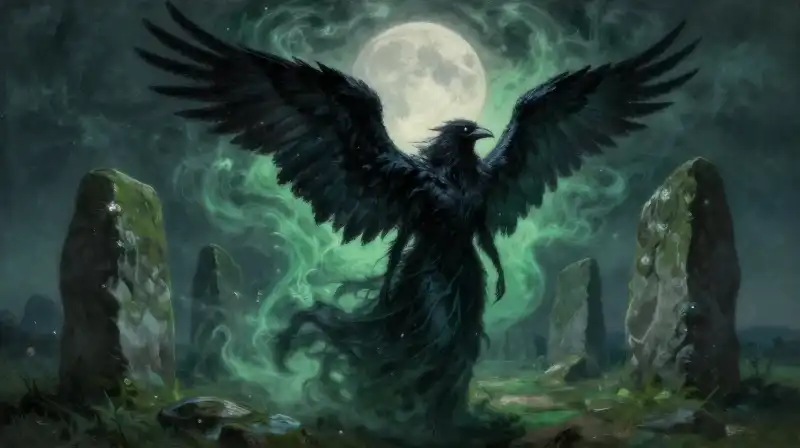
The figures recognized across large Celtic regions illustrate the breadth of their social and existential concerns. Dagda, for example, serves as a foundational father-figure and leader, associated with life, earth, and prosperity. He is often portrayed with a powerful magic staff, a potent symbol of his ability to bring about both life and sudden change. Similarly, the god Lugh stands as a master of multiple disciplines. He is not merely a warrior but a figure who seamlessly integrates skill in war, music, craft, and medicine. This holistic mastery is cemented by his legend, which involves wielding a fiery spear and whose skill is celebrated in traditions that name a specific month and festival after him. Conflict, however, is often viewed through a lens of fate and transformation. Morrígan, the Phantom Queen, embodies the forces of war and destiny. She is not simply the goddess of battles, but a figure that can shift form, often appearing as a raven. Her presence on the battlefield can either inspire or terrify warriors, representing the primal forces of change that fate brings.
The Divine Arts: Brigid, Oghma, and Dian Cecht
The Celtic tradition pays significant attention to the “Arts”—the skills of healing, creation, and communication—reflectng a community that highly valued craft and eloquence. Brigid is perhaps the most complex example of this, representing a profound duality as she is simultaneously the deity of poetry and healing, the fire of the forge, and the cycle of agriculture. Her festival, Imbolc, marks a crucial turning point between the seasons. In the realm of intellectual and creative life, Oghma holds a central place. He is the god of speech and language, linked directly to the birth of the Ogham alphabet and the concept of *Awen*, the divine source of poetic inspiration. Complementary to this is Dian Cecht, the god of craftsmanship and healing. His ability to mend fatal wounds shows a sophisticated duality: his healing power is immense, yet it is portrayed without gentleness, emphasizing the difficult and transformative nature of true repair.
Navigating the Questions of Power and Worship
One of the most common queries regarding the Celtic gods is the question of relative power. Rather than a single “most powerful god,” the tradition suggests a network of interlocking influences. Power is distributed based on what is needed. If a community’s need is political stability and natural bounty, they look to Dagda and Áine. If their immediate concern is conflict or change, they look toward Morrígan. The breadth of the pantheon demonstrates that power is diverse, ranging from the foundational regeneration of Danu, the mother of the gods, to the localized magic of Manannán mac Lir, the god of the sea who commands the *sidhe* mounds. Regarding the question of which deity to “worship,” a genuine understanding of the tradition suggests that the choice should be grounded in one’s personal relationship with the natural cycles and societal needs. Are you seeking inspiration? Oghma or Brigid may guide you. Are you seeking wisdom and regeneration? Look to Danu.
Living Culture: The Legacy of Celtic Myth
The myths are not relics of a distant past; they are tools for understanding the world and the human condition. By examining the Celtic gods and goddesses, we see a culture that never divorced its spiritual life from the practical realities of its environment, its battles, and its crafts. The traditions, spanning the powerful symbolism of the Tuatha Dé Danann to the localized reverence for River Boyne, remind us that every natural element holds a sacred meaning. The true enduring power of the Celtic pantheon lies in its emphasis on transformation—the ability to shift form, to mend, to conquer, and to begin again. For those who study these traditions, the gods serve as a bridge between the tangible and the metaphysical, teaching the profound lesson that life, like the seasons, is a constant, vibrant cycle.
Frequently Asked Questions
Who is the most powerful god in Celtic mythology?
The tradition of Celtic mythology does not feature a single most powerful god, but rather a network of interlocking influences. Power is distributed based on specific community needs, with figures like Dagda representing life and prosperity and Morrígan embodying the forces of war and destiny.
Who are the 12 pagan gods in order?
The provided article discusses several gods and goddesses, including Dagda, Lugh, and Brigid, but it does not list 12 pagan gods in a specific order.
What Celtic deity should I worship?
The choice of deity should be grounded in one’s personal relationship with natural cycles and societal needs. For instance, Oghma or Brigid may guide those seeking inspiration, or you may look to Danu for wisdom and regeneration.
Related Articles