Understanding the Celtic Earth Goddess: Danu, Anu, and Regional Myths

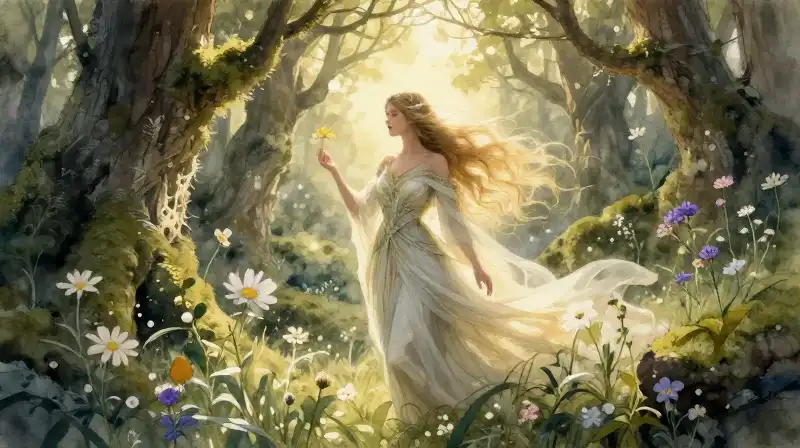
Introduction
To understand the Celtic Earth Mother is not to learn a single definition, but to navigate a rich, often debated landscape of mythology, regional folklore, and enduring spiritual resonance. The concept itself is deeply rooted in the relationship between early Celtic communities and the rugged landscape of the island—a reverence for the land that was alive, fertile, and profoundly sacred. While figures like Gaia, Prithvi Mata, and Pachamama hold powerful archetypal places in global mythologies, the Celtic iteration of the Earth Mother is complex. She is often known by names like Danu or Anu, and her specific powers, roles, and even her familial relationships shift depending on whether the focus is on the myths of Ireland, the regional traditions of Wales, or the localized deities of specific communities. This article explores the nuanced heritage of these figures, tracing their significance from ancient cosmology to their modern living traditions.
The Core Concept: Danu and the Tapestry of the Land
The figure most commonly discussed in relation to the Irish Earth Mother is Danu, and her variations, Anu and Danand. Danu is primarily regarded as the “Goddess of the land and sacred waters” (1, 2). Her domain encompasses the fundamental life-giving elements that support a community. However, academic understanding is shaped by continuous scholarly debate surrounding her exact manifestation.
Many scholars point to the name of the Tuatha Dé Danann—the “folk of the goddess Danu”—as evidence of her foundational importance in Irish cosmology (2, 1). In this tradition, Anu is sometimes identified as the Mother of the gods, a role correlated in theory to figures like the Greek goddess Demeter, as Danu supposedly embodied “earth and its fruitfulness” (2, 1). Despite the profound importance of her role, it is crucial to note that her presence in primary ancient texts is often hypothetical or derived from later, reconstructive scholarship (2, 1).
More Than Just Fertility: The Gods of Skill and Creation
The influence of the Earth Mother, Danu/Anu, extends far beyond mere agriculture and abundance. Within the Irish tradition, she is also tied to concepts of mastery, craftsmanship, and the divine lineage of the gods. The term dán, which represents skill and artistic craftsmanship, is linked directly to Danu, suggesting her sphere of influence included the “gods of skill,” such as Goibniu and his brothers 2. This dual nature—she as the nourisher of the soil, and she as the patron of human ability—highlights the holistic view of existence in early Celtic thought.
Furthermore, her divine parentage adds layers to her meaning. While sometimes viewed as a primordial mother, some interpretations suggest a specific narrative where the figure assumed to be Danu may be a daughter of the Sky God Delbáith, marrying him to become the Mother of the gods (3, 1). This complexity demonstrates that the Celtic Earth Mother was not a static symbol, but a fluid, evolving presence within the divine structure.
Regional Expressions: From Danu to Dôn
The idea of a singular Earth Goddess is often simplified, but the reality of Celtic heritage is one of regional diversity. The influence of Danu and Anu is most pronounced in the Irish pantheon, where she stands as a foundational parent to the entire race of divine beings (2, 1). Yet, similar concepts thrive elsewhere. In Welsh mythology, for instance, the figure of Dôn exists as a powerful parallel deity, described as the “Goddess of the elements, ruler of the Land of the Dead” (1, 2). Scholars note that this parallel figure, Dôn, may itself derive from a root referring to rivers, further emphasizing the importance of flowing water and the natural cycles in regional myths 2.
In other localized traditions, another figure emerges: Tailtiu. Tailtiu is designated an Earth goddess and is noted for her role as the foster mother of the deity Lugh. This specific association links her to the agricultural and cyclical significance of the Lughnasadh festival, grounding the concept of the Earth Mother in specific community celebrations (1, 3).
The Living Tradition and Modern Synthesis
In modern practice, the figure of the Celtic Earth Mother continues to inspire contemporary spiritual paths and polytheistic practices. For many modern pagans and polytheists, the archetypal qualities of Danu are seen as embodying the great, universal Mother Goddess archetype (3, 1). This often leads to what researchers describe as conflation, wherein Danu is aligned with figures from other traditions, such as the global concepts of Gaia or Pachamama, viewing her as a representative archetype of powerful, elemental femininity (3, 1).
Academics, however, generally caution against such conflation, urging practitioners and researchers alike to respect the distinct regional and historical context of the tradition 2. Understanding the tradition involves appreciating the difference between the universal archetype and the specific, deeply researched regional myths. The goal is not to equate Danu with a deity from an entirely different cultural context, but to see how she reflects the same universal human reverence for the life-giving power of the land.
Addressing Duality: The Cailleach and the Cycles of Nature
A common query among those exploring nature spirituality relates to figures who embody the dual nature of the Earth Mother—the life-giver and the tempests of nature. While Danu/Anu are often presented in roles of bounty and healing 2, the broader Celtic landscape is populated by powerful, often ambiguous figures. The question of whether the Cailleach is “good or evil” touches upon this inherent duality. In many nature-based traditions, beings like the Cailleach represent the harsh, transformative aspects of winter, the unyielding forces of nature, and the eventual return to the earth. They are not simply “evil,” but rather necessary agents of change, embodiment the cyclical struggle and the wild, untamed energy of the land that even the nurturing Earth Mother must respect.
Understanding the Enduring Meaning
The study of Danu, Anu, and the regional Earth Mother figures offers more than a collection of ancient myths; it provides a lens into a specific way of knowing the world. It shows a culture whose identity was inseparable from the fertility, the unpredictability, and the sheer power of the landscape. Whether viewed as the patron of skill or the mother of gods, the Earth Mother archetype in Celtic tradition remains a testament to a powerful, foundational human connection to the natural world—a living heritage that continues to resonate today.
References
Footnotes
Frequently Asked Questions
Who is the Celtic version of Gaia?
The primary figure for the Celtic Earth Mother is Danu, along with her variations Anu and Danand. Some modern pagans align Danu with global archetypes, viewing her as a representative of figures such as Gaia.
Is the Cailleach good or evil?
The Cailleach is not described as simply evil, but rather represents the harsh, transformative aspects of winter and the unyielding forces of nature. They are viewed as necessary agents of change, embodying the cyclical struggle and the wild, untamed energy of the land.
Related Articles