Flidais Explained: The Celtic Earth Goddess of Irish Mythology

Introduction
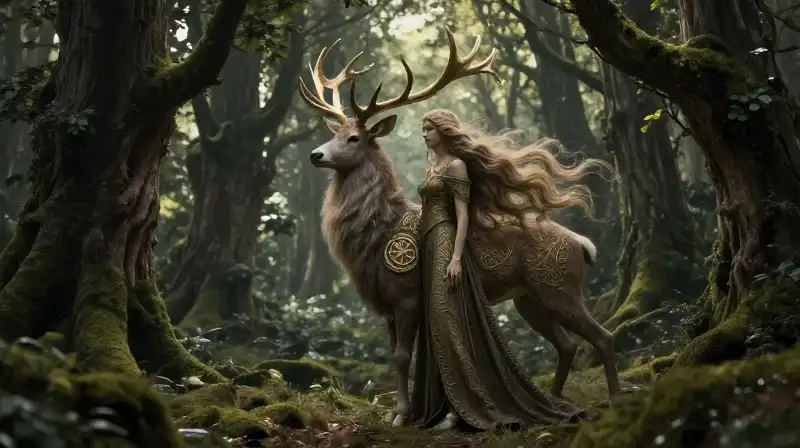
In the rich tapestry of Celtic myth, few figures embody the complex, compelling duality of the natural world as vividly as Flidais. She is a figure whose history is both ancient and modern, thriving in the interpretations of contemporary Pagan traditions while remaining deeply rooted in the folklore of Ireland. Rather than being a mere character, Flidais serves as a profound archetype—an Earth Mother who represents the simultaneous presence of wild, untamed power and domestic, nurturing life.
For those interested in understanding the traditions that shape ancient heritage, Flidais offers a look into how communities reconcile the cycles of growth and decay. She is a powerful symbol of abundance, a connection to the wild places, and a reminder that the domestic and the primal are inextricably linked. This exploration moves beyond her literary mentions to understand how she is venerated today and what her layered mythology suggests about the feminine power within the Irish cultural narrative.
Defining the Mother and the Muse: Flidais’s Archetype
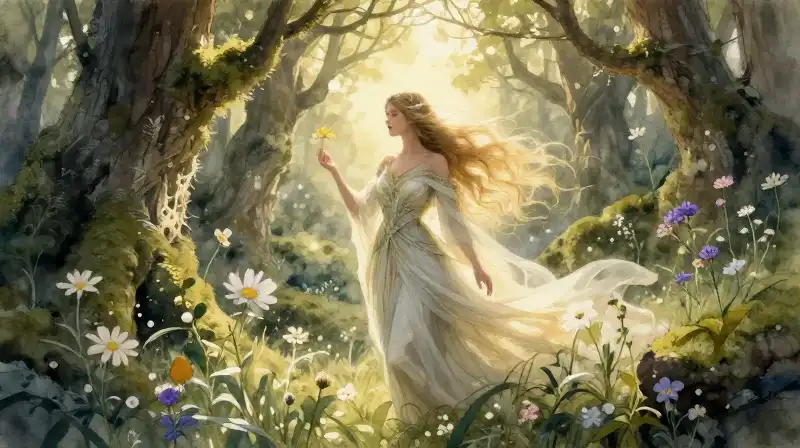
To grasp Flidais, one must first understand her primary symbolic roles. She is recognized as an Earth Mother, yet her identity resists a single definition. According to various scholarly perspectives, she encompasses both the nurturing qualities of the hearth and the fierce spirit of the wilderness (1, 2). This complexity is crucial to her power; she is not simply a benign figure, but one whose influence is vast, transformative, and often sexually potent.
Her epithet, Flidais Foltchaoin, has inspired varied interpretations regarding her name. The meaning is debated, ranging from “wetness of a faun” or “wetness of a doe” to connections to the Greek goddess Artemis (3, 2). Furthermore, while she is historically associated with cattle, linking her to the concept of abundance and power, some modern traditions see her as a Lady of the Forest who protects wild fauna 2. It is important to note that some academics suggest the “Lady of the Forest” title may be a later interpretive overlay, rather than an original mythological attribute (2, 3).
From Cattle Abundance to Transformative Power
In the ancient mythological cycles, Flidais’s most prominent role is linked to abundance and sustenance. She is tied to the Tuatha Dé Danaan, the pre-Christian deity system of Ireland, serving as a progenitor of several influential figures in Irish culture—including “cultivator heroes” and “she-farmers” (1, 2). Her connection to magical herds is most famously seen during the epic Táin Bó Cúailnge, where her magical herd is capable of supplying milk and sustenance to armies, cementing her status as a goddess of incredible material plenty (2, 3).
However, her influence is not limited to the practical and the bountiful. In the Ulster Cycle, the tale The Driving off of Flidais’s Cattle centers on her as a mortal figure whose powerful sexual allure and “sexual artistry” are at the heart of the narrative (2, 3). This portrayal highlights a facet of her power that is raw, human, and deeply connected to transformation—a theme also reflected in her role as a shape-shifter 2. She is also understood to embody healing and deep sexuality, elements that bridge the gap between the physical world and the spiritual realm.
Flidais in Living Practice: The Harvest and the Cycles
For the practitioners of contemporary Pagan traditions, Flidais holds particular significance during the autumnal shifts of the year. She is often honored during Mabon, the Fall Equinox. This timing is critical, as Mabon represents the perfect balance between the dying light of summer and the encroaching darkness of winter—a mirror of Flidais’s own nature, balancing domestic warmth and untamed wilderness (1, 2).
When engaging with traditions surrounding Flidais, the focus is generally on acknowledging the cycles of life, death, and the transformation inherent in the harvest. She represents the “perfect balance,” offering a meditative moment to give thanks for the year’s yield while preparing for the change in seasons 2. Her imagery, whether involving rich herds, ancient forests, or transformative energy, serves as a focus for celebrating the complexity of life itself.
Understanding Pronunciation and Lineage
A common point of curiosity regarding this ancient figure is how to pronounce her name. Flidais is generally pronounced Flee-ish.
In terms of her relationships within the mythology, Flidais is mentioned in the Irish literary tradition as the wife of High King Adamair and the mother of Nia Segamain. It is through her influence that Nia Segamain acquired the power to milk wild deer, tying her life and power inextricably to the natural world (3, 2).
Synthesis: Why Flidais Matters Today
Flidais is more than just a figure from an old myth; she is a living archetype that speaks to humanity’s enduring relationship with the land and with ourselves. Whether she is interpreted as the benevolent goddess of the productive harvest or the wild, potent muse of the forests, she represents the vital truth that power—true power—always exists in the meeting of opposites. In a world that often seeks to categorize or tame the natural world, Flidais stands as a powerful reminder that the untamed aspects of ourselves—our sexuality, our wild instincts, and our capacity for untamed abundance—are fundamental to our whole being.
References
Footnotes
Frequently Asked Questions
How do you pronounce the Celtic goddess Flidais?
Flidais is generally pronounced Flee-ish.
Who is the husband of Flidais?
Flidais is mentioned in the Irish literary tradition as the wife of High King Adamair.
How to Honor Flidais in Living Practice
Acknowledge Flidais's Symbolic Nature
Recognize Flidais as an archetype representing the perfect balance between domestic warmth and untamed wilderness.
Align with Seasonal Cycles
Focus on the autumnal shifts of the year, specifically honoring her during Mabon, the Fall Equinox.
Reflect on the Cycle of Life
Acknowledge the inherent cycles of life, death, and transformation present in the harvest season.
Perform a Meditation of Gratitude
Give thanks for the year's yield, using this meditative moment to appreciate the perfect balance of nature.
Embrace Flidais's Imagery
Focus on imagery related to Flidais—such as rich herds, ancient forests, or transformative energy—to celebrate the complexity of life.
Related Articles