Celtic Fairy Mythology: Origin and Structure of the Daoine Sídhe

Introduction
In the collective consciousness of European folklore, the concept of the fairy is broad, often encompassing everything from nature spirits and prehistoric ancestors to beings touched by the occult 1. Yet, to understand the specific traditions of the Celtic world—and particularly Ireland—is to move past the generalized idea of the winged creature. Irish mythology presents a complex, structured, and deeply spiritual lineage, centered around the Daoine Sídhe. These entities are not merely decorative mythological figures; they are the remnants of ancient divine kingdoms, the product of profound historical and mystical transformations that continue to shape the cultural landscape of Ireland today.
The study of Celtic fairy mythology reveals a sophisticated worldview where the line between the mortal and the mystical is porous. The Daoine Sídhe represent a specific, highly structured evolution of this belief system. Rather than existing in a separate dimension, they are deeply embedded in the narrative of Irish history, charting a displacement from the mortal plane that ultimately defined the nature of the Faerie people as we know them.
The Mythological Lineage: From Firbolg to Daoine Sídhe
To understand the Daoine Sídhe, one must look back to the foundational narratives of Irish myth. The early inhabitants of the island were the Firbolgs, often depicted in folklore as large and grotesque creatures 1. However, the narrative of sophistication and divine authority came with the arrival of the Tuatha Dé Danann.
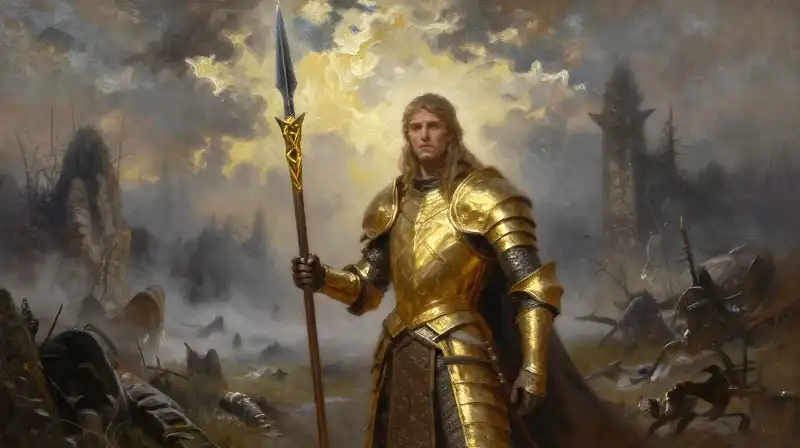
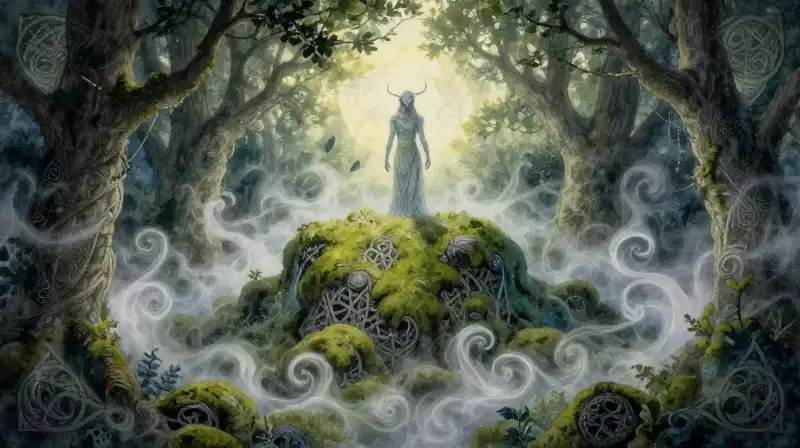
The Tuatha Dé Danann (meaning the “People of the Goddess Danann”) were a powerful, heroic race associated with advanced arts, music, and kingship 1. However, the core of Irish mythology revolves around a pivotal moment of transformation: the displacement of this powerful group by the Milesians, an early human tribe. This exile—or forced retreat—was the defining event that established the faerie people. According to 2, the Tuatha Dé Danann took refuge in the spiritual or underground realms, where they eventually transformed into the Daoine Sídhe, or “People of the mounds/mounds.”
This transformation suggests two primary interpretations from scholars 1: either the Daoine Sídhe represent a continuation of the Tuatha Dé Danann lineage in a transformed state, or they are understood in a way that mirrors traditions of fallen angels—beings who were not deemed good enough to be saved but were not evil enough to be entirely destroyed 1. This duality gives them an inherent ambiguity in most folklore.
Structuring the Faerie Realm: Types and Temperament
Unlike pan-European traditions that often focus solely on aesthetic descriptions, Irish folklore distinguishes the faerie world through social structure and interaction. The Daoine Sídhe are broadly categorized into two major groups, which dictates their behavior and reputation among mortals 1: the “Trooping faeries” and the “Solitary faeries.”
Trooping Faeries: These groups are generally viewed in a friendly or benign light. They possess distinctly human-like qualities. For instance, folklore tells of these faeries engaging with traditional human activities, such as participating in local Hurling matches 1. These heroic faeries share interests with human royalty, such as the appreciation for music and organized social gatherings 1.
Solitary Faeries: In contrast, the solitary faeries are consistently regarded as malignant or ominous. They embody the darker, more unpredictable aspects of the tradition and are often viewed as a source of danger or mis fortune 1.
This structural distinction contrasts with other regional classifications, such as the Scottish Seelie and Unseelie Courts, which offer similar groupings but are unique to the Irish mythological context 1.
Intersections with the Mortal World
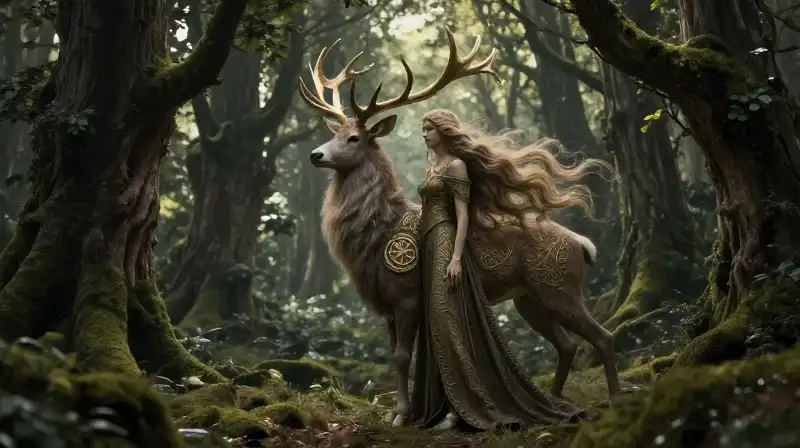
The relationship between the Daoine Sídhe and mortal families is perhaps the most intimate and complex aspect of Irish faerie lore. It is a dynamic marked by mystery, beauty, and volatile consequence. The traditional cultural practice involves faerie interactions that can change the course of a human life, sometimes subtly and sometimes dramatically 1.
One of the most enduring motifs is the story of the changeling. When a Daoine Sídhe interacts with a mortal woman, folklore recounts that they may take a beautiful mortal child or woman and replace the child with a changeling 1. However, when a child is born from a legitimate union between a faerie and a mortal, their nature is recorded as profoundly mystical. These children are often noted for their presence in music and song, marking them as exceptional, though their temperament is famously passionate and volatile 1.
Furthermore, the general concept of fairies across European cultures often involves beings who can sway human destiny. This ancient root is traced back to the Latin word *fatum*, meaning “fate,” illustrating how these entities have historically been understood as influential shapers of human affairs 1.
The Enduring Fascination: Art, Travel, and Modern Meaning
The significance of the Daoine Sídhe extends beyond ancient texts; it remains a vital part of the contemporary cultural heritage. The fascination with these myths has been a powerful force across different eras, most notably resurfacing powerfully during the Celtic Revival, which established these beings as a foundational pillar of Celtic cultural identity 1.
In modern culture, this tradition is highly accessible. The enduring appeal has led to the creation of specific, themed experiences. For instance, tours focusing on Northern Ireland and the Southwest of Ireland, such as those titled “Family – Giants, Myths & Legends,” reflect a modern appreciation for these deep-rooted legends and provide pathways for travelers to engage with the oral traditions of the Daoine Sídhe 1.
It is also important to note the divergence between tradition and art. While many Victorian and modern depictions of fairies emphasize physical attributes, such as wings, folkloric tradition suggests that the ability of the Daoine Sídhe to fly or move between realms was achieved solely through inherent magic rather than physical means 1.
Navigating the Lore: A Synthesis of Meaning
The Daoine Sídhe offer more than just an exotic category of creature; they provide a window into the sophisticated psychological and historical landscape of Celtic thought. They are not static entities. They are the crystallization of ancient displacement, the remnants of a grand, vanished kingdom, and the manifestation of the tension between the heroic past and the unpredictable present.
For the reader seeking to truly understand this tradition, the focus should remain on the narrative of transformation. The Daoine Sídhe are a testament to a cultural tradition that prioritizes narrative over taxonomy. They live on through the landscape, the legends, and the careful way communities in Ireland continue to celebrate their unique and complex place in the human story.
References
Footnotes
Frequently Asked Questions
Do fairies come from celtic mythology?
Yes, the traditions of the Daoine Sídhe are a specific and complex part of Celtic mythology. This mythology has established the Daoine Sídhe as a foundational pillar of Celtic cultural identity, tracing their origin to the transformation of the Tuatha Dé Danann.
What are the different types of fairies in Celtic mythology?
In Celtic mythology, the Daoine Sídhe are categorized into two major groups: Trooping faeries and Solitary faeries. The Trooping faeries are generally viewed as friendly or benign, possessing distinctly human-like qualities, while Solitary faeries are regarded as consistently malignant or ominous.
Who is the goddess of fairies in Celtic?
The article refers to the Tuatha Dé Danann, a powerful heroic race whose name translates to the People of the Goddess Danann. This group eventually took refuge in spiritual realms and transformed into the Daoine Sídhe, or People of the mounds.
Related Articles