The Primordial First Greek Gods: Origins in Hesiods Theogony

Introduction
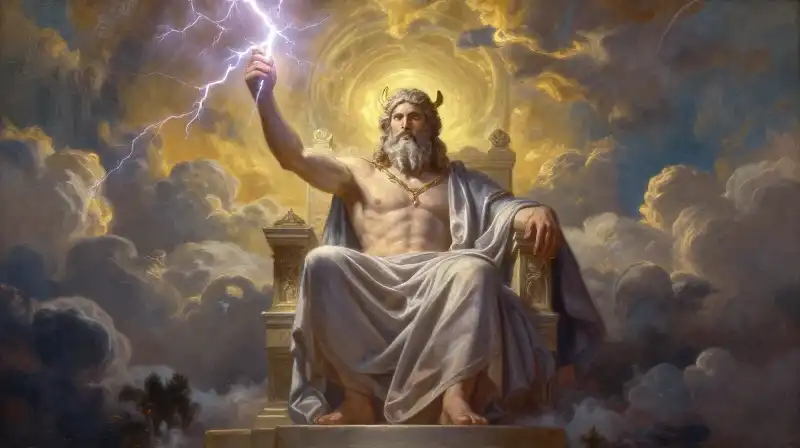
In the world of ancient Greek heritage, the stories of gods are often reduced to tales of power struggles and romantic drama. Yet, to truly grasp the foundational narrative of Greek cosmology, one must look beyond the tempestuous tales of Zeus and the Olympians. The deepest roots of the tradition lie not with mighty kings, but with the primordial deities—the *Protogenoi*. These earliest entities represent a fundamental cultural concept: the universe itself as a living, elemental entity. For a reader seeking to understand the genuine spirit of this tradition, it is essential to recognize that the Protogenoi were the abstract forces—the raw building blocks of the world—before they solidified into the structured generations of recognizable figures.
The Elemental Foundation: Primordial Forces
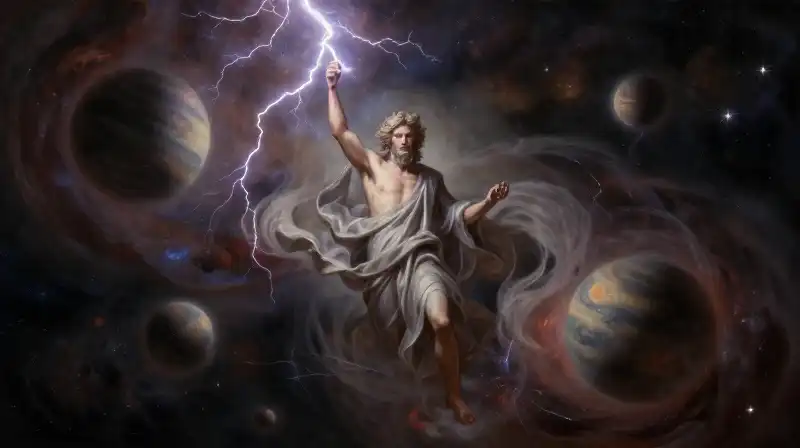
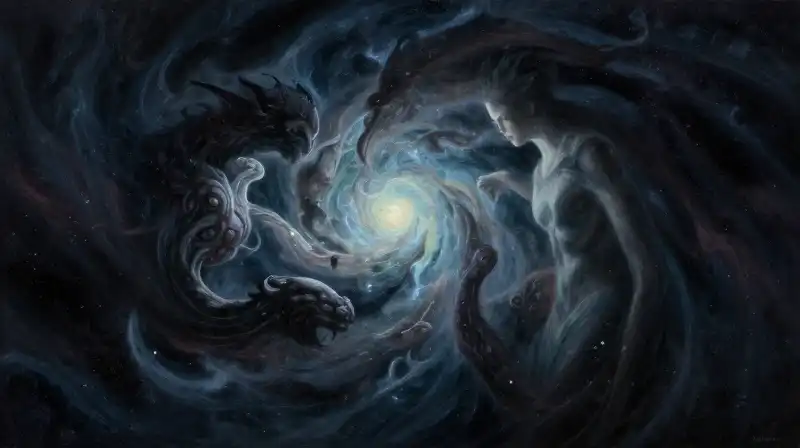
The starting point for the Greek creation narrative, as formalized in Hesiod’s monumental *Theogony* (c. 700 BC), is not a person, but a concept: Chaos. This void, the initial state of non-existence, gave way to the fundamental forces that would shape reality. The first deities, the Protogenoi, were primarily understood as these physical foundations or abstract concepts, rather than fully anthropomorphic beings (1, 2). They were the personifications of the cosmos itself. Among the earliest beings mentioned in Hesiod’s account are Nyx (Night), Erebus (Darkness), and the personified elements of the sea (Hydros), light (Aether), and earth. These figures are not characters driven by emotion; they are immutable forces. According to 2, these Protogenoi embodied the core building blocks of the cosmos—air, darkness, night, light, and water. Within the cultural context of ancient Greece, these forces were generally not actively worshipped in a traditional sense because they lacked human characteristics, being seen instead as unstoppable, natural laws 1.
The Genealogies of the Cosmos: Gaia and Uranus
As the narrative progresses, the void (Chaos) gives rise to figures that represent the foundational structures of the world. Hesiod’s accounts trace this sequence beginning with Chaos, which gives birth to Gaia (Earth) and Tartarus (the Underworld), followed by Eros (Love) (1, 2). This generative power is crucial to understanding the Greek view of life and creation. Gaia, the Earth itself, is the first truly creative entity. She gives birth to other primordial forces, including Uranus (Sky). The myth establishes a reproductive cycle for the earliest deities, where Mother Gaia gives birth to her children, including the Sky. This powerful familial origin set the entire stage for the subsequent history of the Greek pantheon. The later conflicts involving Uranus and Gaia—leading to the overthrow of the older, elemental forces by the subsequent generation of Titans, and ultimately Zeus—are thus framed as a progression of divine power, moving from the abstract, elemental first beings to more structured, more human figures (1, 2).
Tracing the Roots: Cultural Context and Historical Uncertainty
To understand the Protogenoi, one must also look outside the confines of the surviving scrolls. Modern scholarly discussion highlights the profound historical uncertainty regarding how the earliest Greeks actually practiced their beliefs. Surviving records from the initial Mycenaean period are extremely limited, making concrete details about their original veneration of these elemental gods difficult to ascertain 1. However, this cultural tradition remains a fertile ground for anthropological speculation. Some scholars suggest that the primitive myths involving the early coupling of Father Uranus and Mother Gaia may have cultural roots in the traditions of early Neolithic Farmers, known as Palasgians, who inhabited Greece around 3000 BC 1. Further research into the diversity of early Greek beliefs suggests that some deities might have connections to non-Hellenic traditions, such as potential links between Artemis and older Anatolian or Minoan cultures 1. These theories emphasize that the concept of the Protogenoi is less a fixed history and more a rich tapestry of cultural evolution.
The Protogenoi in Modern Understanding
For contemporary students of heritage, the importance of the Protogenoi lies in their function as the “standard” creation myth. Within Hesiod’s framework, they provide the essential genealogy that connects the elemental forces of the beginning to the organized reign of Zeus. The tradition teaches a crucial lesson: power flows from the foundational elements. When people ask who the original gods are, the answer is rarely a simple list of names. The first gods are conceptual—they are the inherent forces of nature. Understanding them is recognizing that the story of Greek mythology begins with the physical and abstract reality of the world, rather than a series of human-like heroes. This foundational layer allows the reader to grasp the transition of the tradition from the worship of immutable forces to the structured narratives of generational conflict and divine family.
Synthesizing the Tradition
The primordial deities of ancient Greece offer more than a list of names; they provide a philosophical blueprint for the community that developed this tradition. They represent the universal principle that everything, from the tiniest spark of Eros to the vastness of Chaos, had a foundational place in the cosmos. While history leaves gaps and scholarly theories continue to debate the earliest forms of worship, the core meaning remains clear: the world itself is the first and greatest god. This foundational reverence ensures that even in the highly dramatic stories of Zeus’s reign, the elemental power of the Protogenoi remains the indispensable bedrock.
References
Footnotes
Frequently Asked Questions
Who are the 5 original gods?
According to Hesiod’s account, the earliest beings mentioned among the Protogenoi are Nyx (Night), Erebus (Darkness), Hydros (Sea), Aether (Light), and earth. These figures personified the core building blocks of the cosmos.
Related Articles