Greek Gods and Planets: The Myth Behind the Celestial Names

Introduction
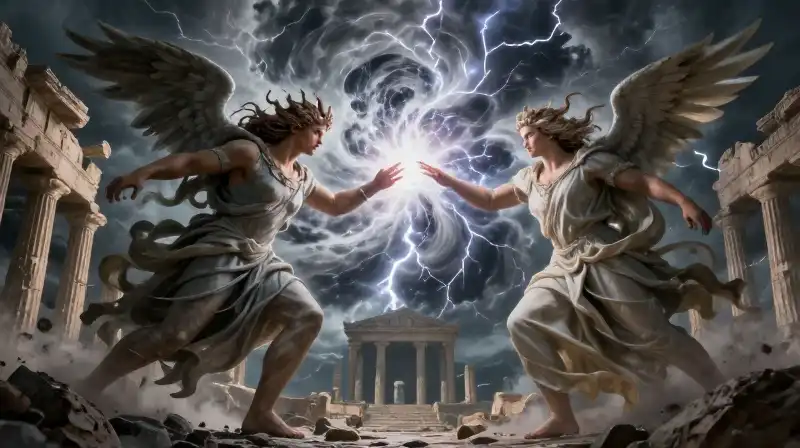
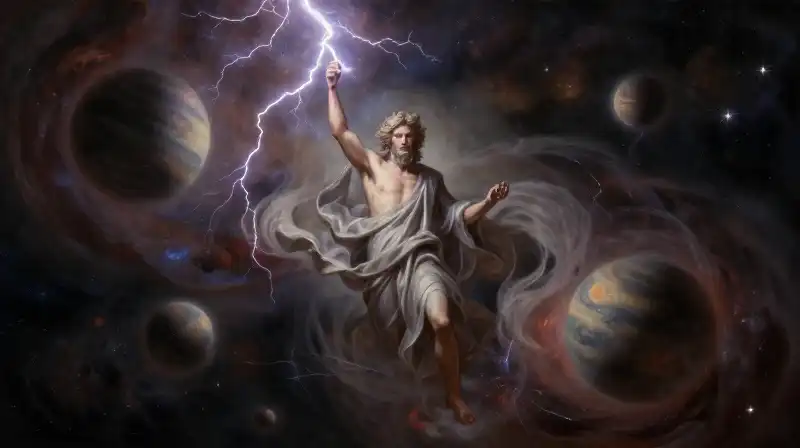
The ancient Greeks did not view the celestial bodies as distant, cold objects of physics; they perceived them as vibrant reflections of the divine hierarchy. For them, the vast canvas of the night was a stage upon which the powers of Olympus played out their eternal drama. The relationship between the gods and the planets was far from arbitrary; it was a sophisticated system that linked the physical movements of the heavens to the characters, powers, and domains of the deities who governed human experience. This tradition, rooted in Hellenic cosmology, provided a narrative framework for understanding order, time, and creation, allowing the ancient world to find meaning in the grandeur of the cosmos.
The Celestial Pantheon: Aligning Gods with Planets
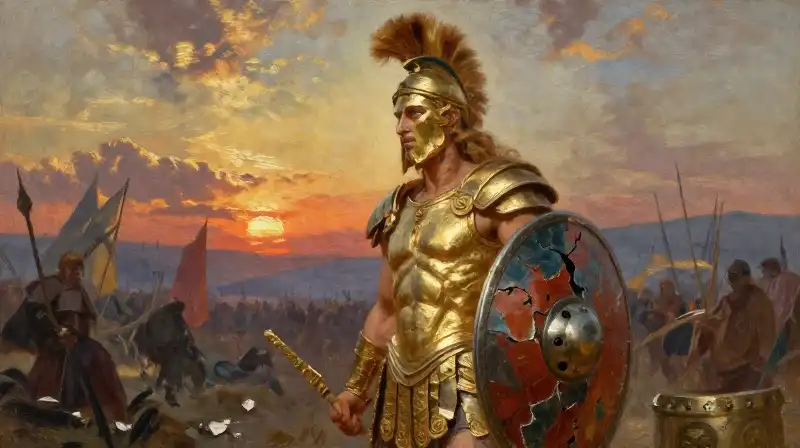
At the heart of Greek cosmology is a system where specific, potent deities were directly associated with the movements of the planets and celestial bodies. This association served to personify the forces that the cosmos represented. For instance, Jupiter, the massive king of the gods, was linked to Zeus, the supreme ruler (1, 3). This same pattern extended to other powers: Mars was linked to Ares, the god of war; Venus found her parallel in Aphrodite, the goddess of love; and Mercury corresponded to Hermes, the messenger of the gods (2, 2, 3). These mappings illustrate a worldview where the forces of nature—war, love, commerce, and conflict—were embodied in gods who then governed the spheres (planets) through which those forces traveled. The deepest origins of this order, however, lay in the primordial narrative of creation. Before the established Olympian pantheon reigned supreme, the foundational myth centered on Gaia, the Earth personified, and Ouranus, the boundless god of the sky, whose interaction formed the basis of Greek cosmology (1, 3). Even the sun, initially personified by Helios as the charioteer of the heavens, later yielded to the widespread veneration of Apollo as the primary sun god (1, 3), demonstrating how religious focus evolved over time.
Beyond Rome and Greece: Universal Mapping of the Heavens
The mapping of planetary names onto native deities is not a tradition unique to the Mediterranean. Rather, it reveals a deeply human impulse across diverse cultures to impose narrative and meaning onto the observable universe. Across the globe, other civilizations have employed similar celestial naming conventions. In Indian culture, for example, planets are described using names like *shukra* for Venus and *shani* for Saturn (2, 3). Even linguistic traditions outside the classical world have their own unique ways of labeling the heavens. Hebrew culture, for instance, utilizes terms such as *kokhav hama* for the sun planet and *kadur haaretz* to describe the Earth 2. These comparative traditions demonstrate that the celestial sphere served as a universal language, allowing disparate communities to articulate their unique spiritual and cosmological beliefs through shared symbols.
Narratives of Time and Creation
The Greeks used their mythological figures to explain fundamental concepts that modern science describes through time and physical laws. The concept of cyclical time and change is closely tied to Cronus, who was later assimilated into the Roman pantheon as Saturn, receiving a specific day of the week and new reverence 2. Furthermore, some of the most profound mythological explanations of our existence are still part of the Hellenic canon. The very concept of the galaxy or the Milky Way has linguistic roots in this tradition; the English word ‘galaxy’ translates back to ‘milk of value’ in the Greek language 2. In a mythological telling of the Milky Way, the celestial formation is attributed to Zeus, who supposedly poured the milk of his infant Hercules into a sleeping goddess, with part of that milky substance forming the visible sky 2. This illustrates the profound narrative importance of these gods, who are not merely figures in stories, but explain the structures of reality.
The Continuity of Celestial Myth in Modern Culture
While the modern classification of planets has changed—such as Pluto’s reclassification as a dwarf planet, a distinction that remains controversial in science—the traditional mythological correspondence persists in human consciousness 2. The name Pluto, once the ruler of the underworld and corresponding to the ancient Greek god Hades, remains a potent cultural marker even if its celestial status has shifted. Even outside the classical realm, the enduring influence of mythological cosmologies continues to shape everyday life. For instance, Norse mythology also informs the structure of time and the naming of several days of the week, linked to powerful figures like Odin and Thor 2. These enduring traditions show that the gods and the planets are not merely artifacts of the ancient past, but integral parts of the global tapestry of human storytelling and identity.
Synthesis: Understanding the Meaning of Greek Gods and Planets
Understanding the Greek gods and planets requires shifting focus from a mere list of names to a deeper appreciation of how the tradition functions as a cultural lens. This mythological system provided a complete narrative of cosmic power, where human experiences—from the fury of war (Ares) to the gentle pull of love (Aphrodite)—were seen as governed by divine forces that moved through the celestial spheres. These traditions remind us that the stars we observe are not just astronomical markers, but echoes of a foundational human quest to find order and meaning in a vast, often mysterious, universe.
References
Footnotes
Frequently Asked Questions
What are the 9 planets and their gods?
The article provides several specific pairings, such as Zeus with Jupiter, Ares with Mars, Aphrodite with Venus, and Hermes with Mercury. It also mentions associations between Helios/Apollo for the sun and Hades with Pluto, but it does not provide a complete list of all nine planets and their respective gods.
Why are Greek gods associated with planets?
This association linked the physical movements of the heavens to the characters and domains of the deities who governed human experience. The system was designed to personify the forces of nature, such as war, love, and conflict, which were believed to be embodied in these gods moving through the celestial spheres.
What are the Greek 7 planets?
The article details that Greek cosmology linked specific deities to celestial bodies, such as Zeus to Jupiter, Ares to Mars, and Aphrodite to Venus. It also mentions Apollo as the primary sun god, Cronus related to Saturn, and Hades corresponding to Pluto.
Related Articles