
Vietnamese New Year Customs: Your Guide to Tet Traditions & Etiquette

Introduction
Tet Nguyên Đán, commonly known simply as Tet, is far more than a holiday on the Vietnamese calendar; it is a profound cultural and spiritual nexus. Marking the beginning of the spring cycle and the shift into the Lunar New Year, Tet serves as a vital period of transition where the past, present, and future converge. For the Vietnamese community, it is a sacred time for radical renewal—a time when scattered families return to one another and when the boundaries between the human and divine worlds seem to thin, allowing for prayers for prosperity and blessings for the coming agricultural cycle (1, 2). Understanding Tet requires looking past the decorations and the calendar date; it is an immersive practice of gratitude, renewal, and profound respect for ancestral lines.
The Ritual of Renewal: Cleansing and Preparation
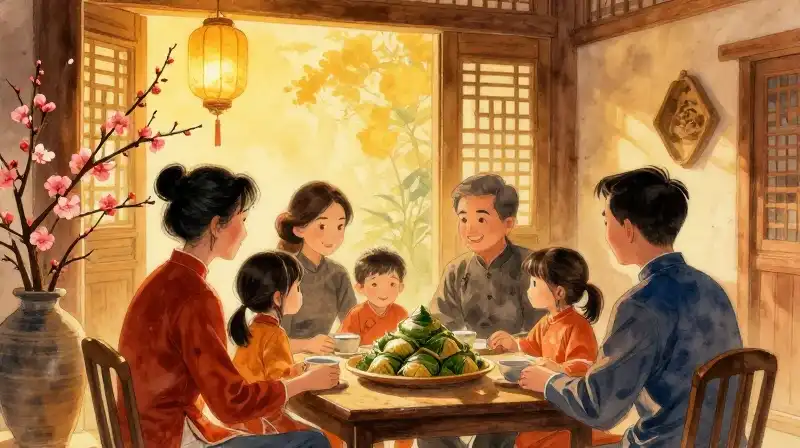
The spirit of Tet begins long before the first New Year’s Day. The fundamental principle driving preparations is purification. According to traditional practice, houses must undergo a comprehensive cleansing to symbolically remove the negative energies and misfortunes of the old year (1, 3). This deep cleaning is not merely domestic labor; it is a spiritual prerequisite for inviting good fortune. However, a critical caution exists regarding this process: all sweeping and cleaning must be completed before Tet, as sweeping away dust is symbolically equated with sweeping away future prosperity and good fortune (1, 3). This drive for renewal is reflected in the domestic environment. Decorations are designed to invoke luck and abundance. The placement of fruit blossoms and auspicious trees is a key component of the preparation. Whether it is the pink peach blossoms (*đào*) traditionally favored in the North, or the vibrant yellow ochna (*mai*) prevalent in the South, the floral choice often carries regional significance and symbolism (1, 2, 3). Families carefully select trees and blooms, sometimes allowing their size and type to reflect the desired health and financial fortune for the family unit (1, 2).
Honoring the Past: Ancestors and Household Deities
At the heart of Tet lies an unshakeable respect for ancestry and tradition. Tet is fundamentally an act of family reunion, giving scattered members the necessary time to reconnect with relatives and express deference to their elders and ancestors (1, 2). Spiritual rituals are meticulous and deeply significant. This includes the preparation of five-fruit trays and the presentation of solemn meals on the altar as a means of showing gratitude and seeking divine protection 1. Beyond the domestic altar, the ritual of visiting and cleaning the family grave before the holiday is a somber and necessary act that maintains the connection between the living and the deceased 1. A key milestone in the early Tet preparations is Kitchen God Day, or *Ong Cong - Ong Tao* (Lunar December 23rd). On this specific day, families cleanse their household altars. They offer new goods and fresh flowers to these ancestral household deities, formally welcoming the New Year and ensuring the protection and blessing of the home for the cycle ahead 1.
Symbolism on the Table: Culinary and Cultural Customs
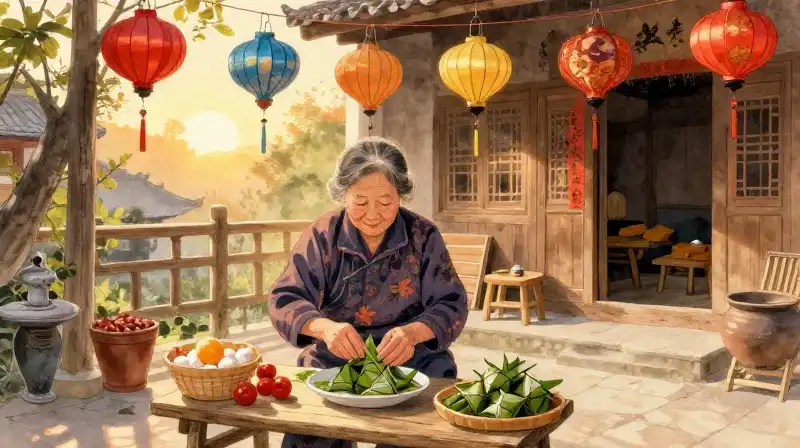
The culinary traditions of Tet are rich with meaning, far exceeding simple meal preparation. Specific dishes are not consumed casually; they are consumed as symbols. The most iconic dish is *bánh chưng* or *bánh tét*. These sticky rice cakes hold deep mythological and cosmological importance. They are revered because their square and cylindrical shapes, respectively, are seen as representing heaven and earth, connecting the human feast back to the ancient stories of the Hùng Kings’ sons (2, 3). The exchange of *bánh chưng* during this season affirms the family’s shared values and history. Social customs are also highly codified. The exchange of *bao lì xì*, the small red envelopes containing money, is a widespread and deeply customary practice during the initial days of the Lunar New Year (2, 3). This act is not simply giving money; it is a gesture of blessing and the passing of fortune. On New Year’s Eve, the family prepares *Com tat nien*, the final meal of the old year, serving as a final ritual offering to invite ancestors to participate in the new cycle with the living 1.
The Moment of Fortune: Xông Đất and Etiquette
For a guest or family member seeking to understand the rules of Tet, the practice of *xông đất* offers the clearest guidance on etiquette. This tradition pertains to the first guest who enters the home on New Year’s Day. This individual is believed to carry the energetic weight that will determine the host family’s entire fortune for the coming year 1. Because of this profound belief, the selection of the first visitor is seen as immensely important. Hosts must choose a person who embodies positive attributes—those who are cheerful, kind, and successful—to ensure the household begins the new year on the most favorable note. Conversely, the unspoken rule of *xông đất* serves as a potent reminder to avoid inviting those who might bring perceived misfortune, underscoring the cultural value placed on choosing auspicious beginnings 1.
Practical Considerations for Navigating Tet Traditions
For those wishing to understand or participate in Vietnamese New Year customs, knowing what to do and what not to do helps bridge the gap between observation and genuine engagement. * **To Bring Good Fortune:** The focus should be on harmony and respect. Participating in the rituals of cleansing and offering respect to ancestors shows deference to the past. Presenting thoughtful gifts and receiving *lì xì* with gratitude demonstrates participation in the cycle of blessing and good wishes. * **Cultural Cautions:** A careful observance of the “do not sweep away luck” principle during preparation is crucial. Furthermore, while *lì xì* is a customary gift, the spirit of giving is rooted in the desire to bless the recipient’s future, making the intent behind the gift more important than its monetary value. Tet is a magnificent illustration of a living culture, demonstrating how deep historical beliefs and agrarian practices are maintained alongside modern life. It is a celebration of resilience, familial duty, and the cyclical promise of renewal—a complex tapestry woven from prayers to the gods, reverence for the deceased, and the collective hope for the next bountiful spring.
References
Footnotes
Frequently Asked Questions
What are some lucky things to do during Tet?
To bring good fortune, families can place fruit blossoms and auspicious trees, perform rituals for cleansing and ancestor worship, or participate in the exchange of bao lì xì, which is a gesture of blessing and the passing of fortune.
What not to do during Tet?
All sweeping and cleaning must be completed before Tet because sweeping away dust is symbolically equated with sweeping away future prosperity and good fortune. Furthermore, one should avoid inviting those who might bring perceived misfortune, particularly during the xông đất tradition.
What to gift someone for a Vietnamese New Year?
During Vietnamese New Year, the customary exchange is bao lì xì, which are small red envelopes containing money given as a gesture of blessing and the passing of fortune. The article also advises presenting thoughtful gifts, emphasizing that the intent behind the gift is more important than its monetary value.
How to Participate in Tet Vietnamese New Year Traditions
Cleansing the Home
Conduct a comprehensive cleansing of the house to symbolically remove negative energies and misfortunes of the old year. Ensure all sweeping and cleaning are completed before the start of Tet, as sweeping away dust symbolizes sweeping away future good fortune.
Decorating with Prosperity
Decorate the home by placing auspicious trees and fruit blossoms, such as peach blossoms (in the North) or ochna (in the South), to invoke luck and abundance.
Honoring Ancestors and Deities
Visit and clean the family grave, prepare solemn meals on the altar, and offer five-fruit trays as an act of gratitude and seeking protection.
Observing Kitchen God Day
On Kitchen God Day (Lunar December 23rd), cleanse your household altars and offer fresh flowers and new goods to formally welcome the New Year and ensure home protection.
Engaging in Cultural Customs
Participate in family reunions, prepare traditional foods like bánh chưng, and engage in the customary exchange of bao lì xì during the initial days of the Lunar New Year.
Observing New Year's Day Etiquette
For hosts, carefully choose a first visitor (xông đất) who embodies positive attributes like cheerfulness and kindness to ensure a favorable beginning for the new year.
Related Articles