Nut: The Egyptian Goddess of the Sky, Stars, and Cosmos


Introduction
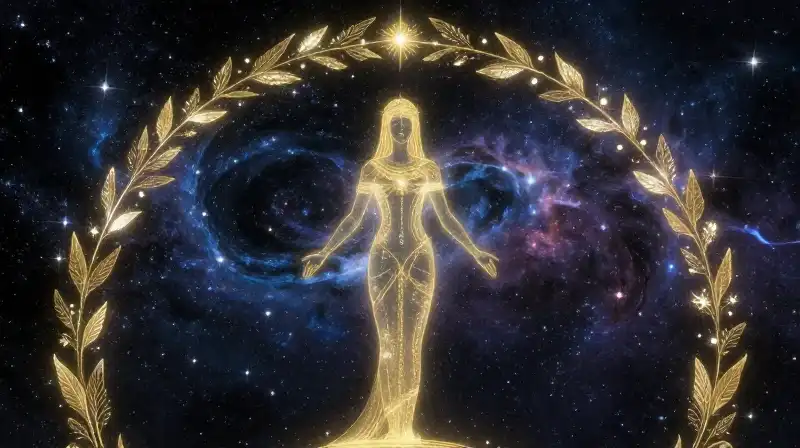
Nut is not merely a goddess among many; she is the boundless expanse of the sky itself. In the ancient Egyptian cosmology, she personifies the cosmos, the heavens, and the infinite expanse of the night speckled with stars (1, 2, 3). To understand Nut is to understand the structural foundation of the Egyptian universe. She is fundamentally linked to the primordial creation, emerging from the union of the deity Shu (Air) and Tefnut (moisture/heat), establishing her role as the daughter of these fundamental forces (1, 2). She acts as the literal canvas for the divine drama of creation and survival, providing the protective dome under which the Earth and its inhabitants exist.
The Celestial Duality: Nut and the Earth
The Egyptian view of existence required a fundamental balance between the realms above and below. This balance was personified through Nut and her counterpart, Geb, the Earth deity. Culturally, Nut is almost always depicted arching dramatically over Geb, her body serving as the “Cover of the Sky” that encompasses all visible heavens (1, 3). This duality is core to their understanding of the cosmos: while Geb represented the grounded, physical plane, Nut represented the limitless, celestial realm. This relationship between Earth and Sky creates a vital tension in the pantheon, defining the boundaries of the mortal world and the divine space above it (1, 3). Throughout Egyptian artistic traditions, Nut’s form was highly flexible, allowing her to be understood in various ways depending on the narrative being told. While she was most often depicted as a nude, arching woman, she could also be represented by powerful, abstract symbols—including a giant sycamore tree, a celestial cow, or a vast sow—depending on the specific cosmological moment being illustrated (1, 3). This variability suggests that Nut was a fluid concept, embodying the entire breadth of natural phenomenon under the sky.
The Cycles of Being: Nut and the Solar Journey
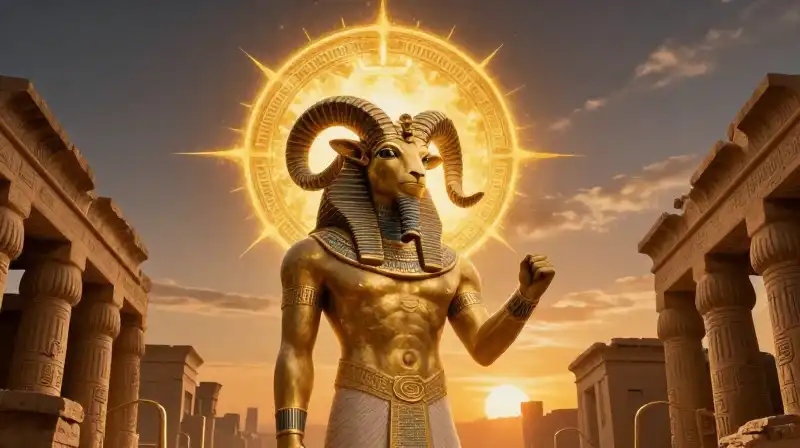
The deepest cultural significance of Nut lies in her role in the solar cycle. The Egyptians believed that she was the guardian of the divine life, actively participating in the nightly death and rebirth of the sun. According to the myths, Nut is the deity who swallow the sun god, Ra, as he descends below the horizon each night (1, 2, 3). This act of swallowing is not a hostile one, but a necessary step in the cosmic rhythm. As night progresses, she holds Ra captive within the starry expanse, and at the moment of dawn, she births him again, allowing him to begin his journey across the heavens for the next day (1, 2, 3). This narrative establishes Nut as the engine of renewal. Her cosmic function ensures that even the deepest parts of the night are productive and purposeful, setting the rhythm for the sun’s eventual return. This cycle cemented her role not just as a personification of space, but as the active force that governs temporal and existential continuity.
Guardians of the Passage: Nut in the Afterlife
Nut’s protective functions extend far beyond the daily flight of Ra, particularly within the context of the afterlife. For the Egyptian people, securing passage and protection during the perilous journey after death was paramount. This belief is evidenced by the *maqet*, a ladder-symbol frequently placed in tombs to invoke the aid of the goddess Nut 1. The *maqet* was a prayer for her assistance in guiding the deceased safely through the darkness of the Duat (the underworld) 1. This protective association is so central to her role that she was often integrated into the architecture of the afterlife itself. Nut was frequently associated with the coffins and sarcophagi, acting as a perpetual, powerful guardian to keep the deceased safe until their ultimate rebirth and union with Ra 1. Her celestial nature made her the ideal divine chaperone for souls traversing the vast, starry expanse of the afterlife.
Beyond the Cosmos: Interpretation and Resonance
While the ancient Egyptians held Nut as the definitive personification of the sky, later cultural encounters introduced fascinating external interpretations. Greek philosophical sources, such as Plutarch, drew parallels between Nut and the goddess Rhea, an association that even linked her conceptually to the idea of intercalary days—or *Epacts*—suggesting a bridge between ancient cosmology and later Hellenic belief 1. In the modern era, scholars have even proposed that the ancient Egyptians may have viewed the Milky Way not just as a collection of stars, but as a celestial depiction or a physical manifestation of Nut herself 1. This view allows us to see how the abstract goddess could embody the tangible wonder of the night sky. Furthermore, the presence of related deities like Shu and the cyclical nature of the gods suggests a complex, interconnected cosmology. For example, deities like Sekhmet, known for her formidable power, are also linked to the solar cycle and divine justice, showing how the theme of powerful, star-associated female divinity resonates across different parts of the ancient tradition. The concept of the Egyptian goddess of stars is not a single static image, but a vast field of influence encompassing protection, rebirth, and the infinite expanse.
The Enduring Canvas of Being
Ultimately, Nut is more than an astrological figure or a mythological character; she is the representation of limitless existence. Her role is to provide the essential framework for life, death, and rebirth. Whether she is seen arching over the Earth, swallowing the sun for the night, or guarding the tomb of the deceased, her function remains constant: she is the necessary expanse. She defines the sacred space where creation unfolds and where the journey of the soul finds its final, starry resolution.
References
Footnotes
Frequently Asked Questions
Is sekhmet still relevant today?
The article states that Sekhmet is linked to the solar cycle and divine justice, showing how the theme of powerful, star-associated female divinity resonated across ancient Egyptian tradition. The text does not specify her relevance in the modern era.
Related Articles