Norse Paganism for Beginners: History, Belief, and Practice

Introduction
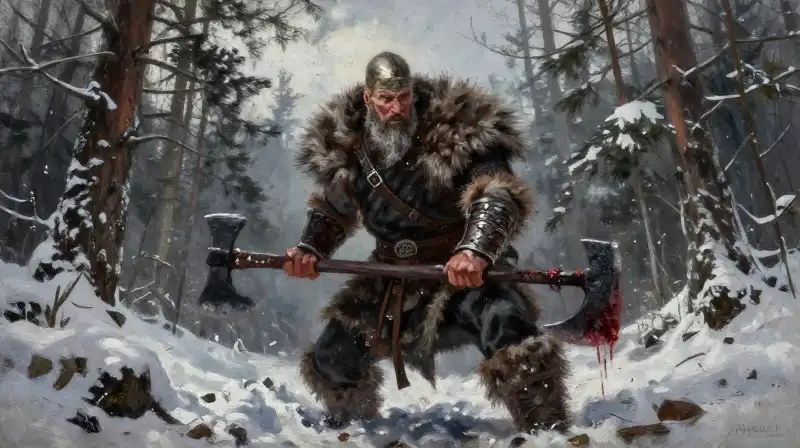
Norse paganism, also known as the Old Norse religion, represents a profound connection to the traditions and worldviews of the pre-Christian Nordic and North Germanic peoples. For those exploring this heritage, it is important to understand that it is far more than a collection of ancient myths; it is a vibrant, though decentralized, living culture that shapes community and individual life today. Historically rooted in the lands of Denmark, Norway, Sweden, and Iceland 1, the religion was fundamentally polytheistic, centering on a pantheon of deities including the Aesir and the Vanir. Unlike modern codified religions, Old Norse belief lacked a single unified text or dogmatic structure 1, allowing the faith to evolve organically and uniquely within different local geographies and communities.
When people ask, “How to begin practicing Norse paganism?” they are seeking a path into a tradition that prizes genuine understanding and personal relationship over rigid rule-following. For a reader seeking to truly grasp this tradition, the goal is to move beyond simple definitions and explore how these beliefs translate into a meaningful, living experience.
The Geography of the Soul: Mythology and Cosmology
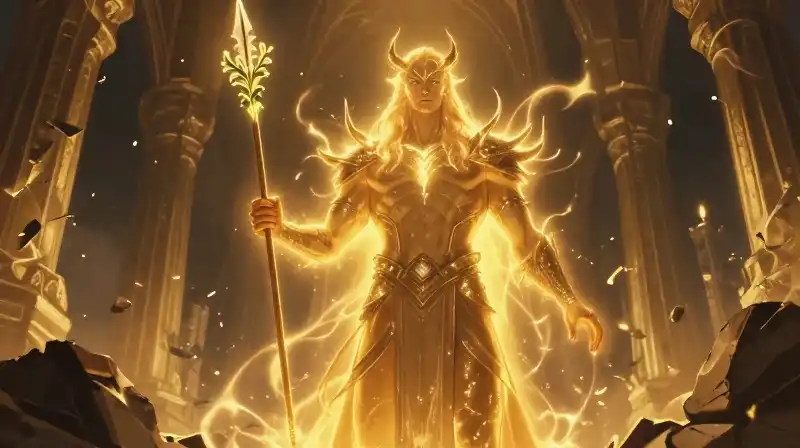
At the heart of Old Norse belief is a rich and complex cosmology that structures the relationship between humanity and the divine. The world is often conceptually mapped through Yggdrasil, the mighty world tree. This tree serves as the cosmic axis, connecting various realms that constitute the known universe 1. Midgard is the dwelling of humanity, situated alongside other crucial realms such as Asgard, the realm of the Aesir gods, and Vanaheim, the home of the Vanir deities 1. This worldview does not treat the gods as distant, abstract forces, but as powerful figures with whom one can attempt to establish a “right relationship” 1.
In a sense, this cosmology provides a spiritual framework—a cultural lens through which to view human existence—rather than a checklist of commandments. The relationship between people and gods is anchored in the concept of the “gifting cycle,” or reciprocity. Offerings are not merely arbitrary tributes; they are acts of exchange. By presenting offerings (*blóts*) to the deities, practitioners seek blessings and favors in return 1.
The Practice of Blót: Understanding Reciprocity
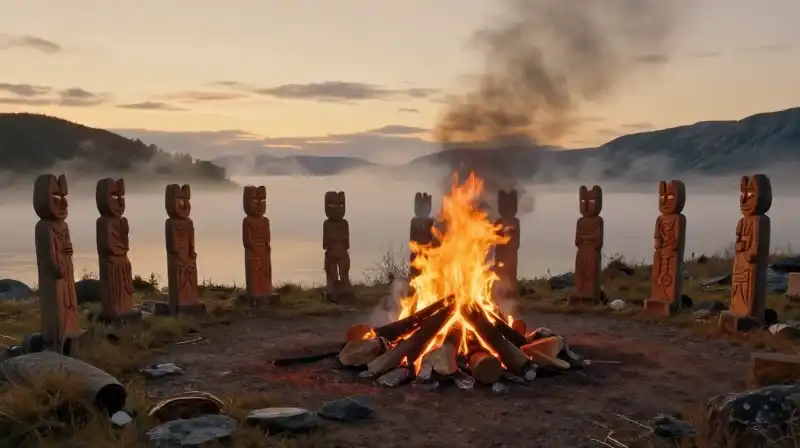
One of the most foundational practices of the historical Old Norse religion was the *blót* (sacrifice). In historical context, this practice was essential for maintaining balance and showing respect for the powers that governed their lives. In modern Norse paganism, *blót* remains a crucial element, often tied to the cyclical turning of the seasons and annual celebrations 1.
Practicing these traditions requires engaging with the historical record, which was initially preserved through oral tradition before being compiled by scholars from sources like the Poetic Edda and the Prose Edda 1. While modern practitioners often use these transcribed texts to inform their rituals, they recognize the complexities of interpretation. Scholars have noted different translations and interpretations of the Eddas, reminding students that engaging with the myths requires careful consideration of these varying sources 1.
For the modern practitioner, the requirements of ritual are surprisingly accessible. Ritual offerings can vary immensely across communities. They do not need to be expensive; clean water is often considered a grounding and excellent offering (1, 2). Offerings range from common foodstuffs and drinks—such as honey, bread, and water—to incense, demonstrating that the spiritual weight of the offering is more important than its monetary value.
Norse Paganism as a Living, Evolving Tradition
A key distinction in Norse paganism is its character as a “living religion.” Because it lacks a unified doctrine, the tradition allows practitioners to evolve beyond strict historical reconstruction 1. While some paths pursue Reconstructionism—an attempt to align modern practice closely with what is believed to be historical accounts—others choose to view the tradition as a dynamic spiritual framework. This fluidity is a reflection of the decentralized nature of the original belief system; because belief was localized, there is no single “official” way to perform a ritual 1.
This decentralized nature means there are no fixed or required steps for conversion or initiation. Instead, the community encourages independent learning and the careful examination of historical and mythological sources 1. This makes the search for “Norse pagan rules” often fruitless, as the tradition prioritizes the quality of personal inquiry over adherence to a rigid set of laws.
Key Elements of Modern Practice
To help beginners navigate this rich field of tradition, it can be useful to understand the general components involved in practicing Norse paganism today:
- Independent Learning: Prioritizing the reading and study of mythological texts like the Eddas to gain historical and cultural depth.
- Intent and Reciprocity: Framing offerings as acts of giving in exchange for blessings, rather than demanding results from the gods.
- Seasonal Celebration: Connecting practices to traditional festivals like Yule (the midwinter feast) and Sigrblot (the summer feast), though modern adherence to specific dates is flexible 1.
- Personal Context: Allowing the tradition to integrate into one’s life based on personal belief and community ties, rather than formal conversion.
Finding Your Path: Approach for Beginners
Since there is no centralized authority, the journey into Norse paganism is deeply personal. The approach for a “Norse pagan beginner” is not one of checking boxes but of seeking genuine connection and understanding. Instead of looking for a definitive book or a single “how-to” manual, the most valuable step is investigating the local communities and the resources available for independent study 1.
When connecting with the deities, such as Freyja, as often discussed in various community forums, the focus is on personal alignment and intent 1. One learns how to honor and relate to these figures through the lens of reciprocity. The tradition demands thoughtful engagement with the stories and the philosophy behind the world tree, acknowledging the history and regional variations of the practice.
A Synthesis of Meaning
Norse paganism, in its modern expression, stands as a testament to the power of ancient belief to endure and adapt. It is a tradition built on the premise of balance—between humanity and the divine, between the present and the powerful echoes of history, and between the physical act of giving and the intangible reward of a “right relationship” 1. For the modern practitioner, it offers a framework for living in communion with the powerful cycles of nature and the ancient narratives of the North. Rather than seeking definition, the tradition invites exploration, rewarding genuine curiosity with a sense of connection to a profoundly deep cultural and spiritual heritage.
References
Footnotes
Frequently Asked Questions
How to begin practicing Norse paganism?
The most valuable step for a beginner is investigating local communities and the resources available for independent study, as the journey prioritizes seeking genuine connection and understanding over rigid steps. The practice encourages independent learning and understanding the concept of reciprocity through offerings and personal alignment with deities.
A Guide to Approaching Norse Paganism as a Beginner
Investigate Local Resources and Communities
Since the tradition is decentralized, the most valuable initial step is to investigate local communities and available resources for independent study.
Prioritize Independent Learning
Gain historical and cultural depth by prioritizing the reading and study of mythological texts, such as the Eddas, to understand the cosmology.
Embrace Reciprocity in Practice
Understand that offerings, or blóts, should be framed as acts of genuine giving in exchange for blessings, focusing on intent rather than a demand for results.
Connect with Seasonal Celebrations
Connect your practices to traditional festivals and seasonal cycles, such as Yule or Sigrblot, allowing for flexibility in modern adherence.
Integrate through Personal Context
Allow the tradition to integrate into your life based on your personal belief and genuine understanding rather than adhering to formal conversion requirements.
Related Articles