Norse Polytheism Explained: History, Deities, and Modern Ritual

Introduction
Norse polytheism, often referred to as Norse paganism, is far more than a collection of ancient myths; it is a living tradition that has evolved from the pre-Christian spiritual practices of Scandinavia into a deeply personal and multifaceted belief system. Historically, this branch of Germanic religion focused on a polytheistic worldview centered on deities like Odin and Thor, operating within a profound cosmology built around the world tree, Yggdrasil, and its various realms, including Midgard 1. However, to understand this tradition is to recognize its essential fluidity. Scholars note that “pre-Christian Norse religion” was not a stable or uniform doctrine, but rather a dynamic set of beliefs that shifted depending on the time and region, largely due to its transmission through oral culture rather than written scripture 1.
The Architecture of Belief: Action Over Doctrine
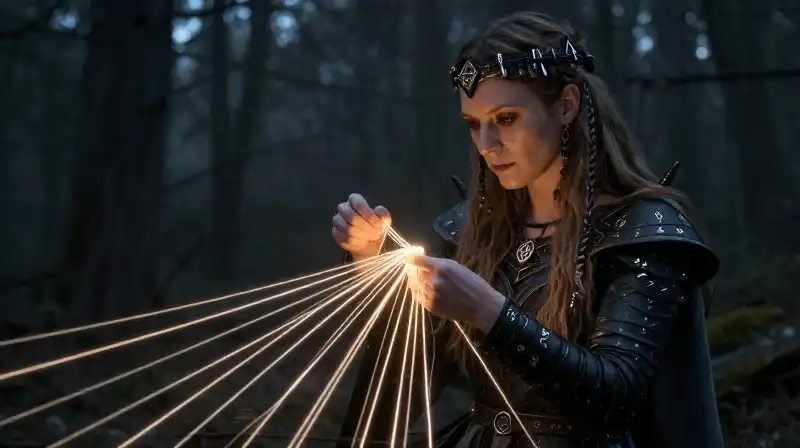
One of the most crucial distinctions when studying Norse polytheism is recognizing that it was fundamentally a tradition of action and experience, not codified written law. Unlike modern faiths defined by rigid scripture, historical Old Norse practice leaned heavily into ritual and the performance of sacred actions 1. The worldview was centered on a rich, varied spiritual landscape that included not only human society but also various supernatural entities like jötnar (giants), dwarfs, elves, and land-wights, creating a complex interaction between the divine and the mundane 1. The relationship between the community and the spiritual world was highly localized, meaning that different regional traditions and forms of religious activity—such as the shamanistic practice of Seiðr—existed alongside more formalized public sacrifices 1.
Mapping the Divine and the Cosmic Order
At the heart of the pantheon are two major groups of gods: the Æsir and the Vanir. These deities were woven into a cosmology that defined existence through the great world tree, Yggdrasil. For those engaging with the tradition today, the pantheon remains a vital framework for understanding life’s challenges. However, modern adherents approach the gods with great flexibility. While some treat the deities as equal, others find they must favor specific gods according to the needs or specific challenges they are currently facing in their lives 1. This flexibility suggests that the role of the divine is viewed less as a set of immutable commands and more as a dynamic support system throughout the human experience 1.
The Personal Altar: Living Practice Today
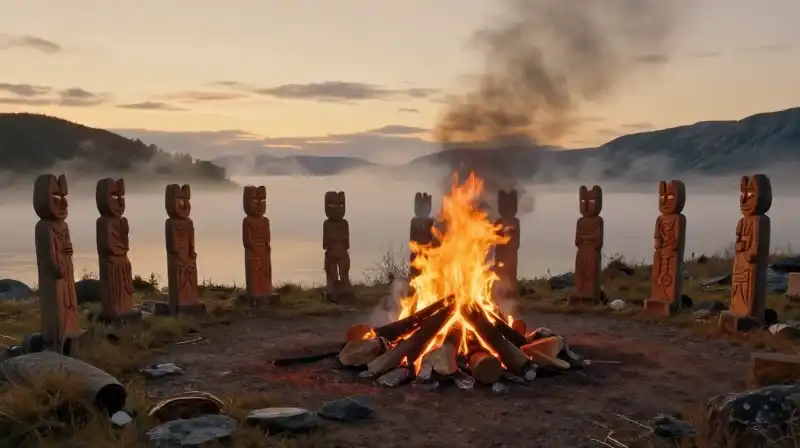
The contemporary revival of Norse polytheism reflects a move toward a highly individualized spirituality. Rather than conforming to a singular religious institution, modern practitioners generally describe their faith as deeply personal 1. The act of worship often takes place at personal altars, which serve as intimate focal points for spiritual connection. These altars frequently incorporate elements such as quartz, specific candles, or specialized knives, used in conjunction with offerings. These offerings—ranging from smoke and drinks to food—are not merely symbolic but are part of an active communication with the spiritual realm 1. This engagement can be intensely personal. Some modern followers report profound emotional and physical reactions upon encountering the faith, describing feelings of intense “hug” or “safety” that ground their spiritual connection 1. This intimate relationship with the divine is often rooted in a sense of “cultural home” found in the Norse pantheon itself 1.
Beyond Morality: Character and Modern Perspectives
The ethical framework within contemporary Norse polytheism often diverges from conventional moral systems that focus on strict “sins” or judgment. Instead, many modern practitioners value character and honor—personal integrity and virtue—as the core spiritual ideals 1. This emphasis on living a virtuous life, rather than simply obeying laws, speaks to the tradition’s focus on action and internal fortitude. Furthermore, some modern beliefs seek to reconcile ancient myths with contemporary understanding of the universe. For instance, certain modern adherents have integrated the myth of Ragnarok, the prophesied destruction and rebirth of the world, into scientific concepts. They posit that the cycles of destruction and renewal could align with scientific theories concerning matter conservation and the nature of repetitive universal events 1.
Navigating the Paths of Norse Polytheism
For those who are curious about how to begin understanding Norse polytheism, the practice requires nuance rather than a simple checklist. It requires respecting the historical breadth of the tradition—recognizing that it included everything from grand public rituals to quiet, individual acts of veneration 1. The modern community embraces diversity. Whether one is drawn to the epic stories of the Æsir, the wisdom of the Vanir, or the complex tapestry of regional traditions, the common thread is the commitment to a profound, active relationship with the spiritual world. It is a tradition that demands personal exploration, acknowledging that the path to the divine is highly individualized. Ultimately, Norse polytheism is defined by its adaptability and its focus on internal life. It is a spiritual home that offers a sense of belonging and meaning by placing value on character and the lived experience of the individual, providing a powerful cultural lens through which modern people seek connection to the grand, cyclical history of the cosmos.
References
Footnotes
Related Articles