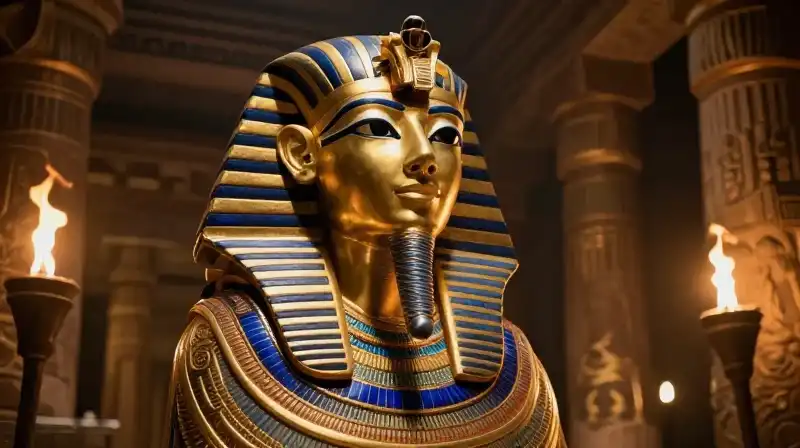
Imhotep: From Chancellor to Ancient God of Medicine

Introduction
In the long tapestry of ancient civilizations, few figures embody the transition from powerful human intellect to transcendent divine archetype as profoundly as Imhotep. Known first as the chief architect and vizier of Ancient Egypt, his identity shifted over millennia. His legacy eventually solidified not merely as that of a builder, but as a highly regarded physician and an enduring divine presence. To understand the tradition of Imhotep is to look into a profound cultural confluence—where empirical observation met spiritual necessity. The veneration of this figure offers a unique window into the Ancient Egyptian worldview, where the boundary between practical medical knowledge and sacred ritual was porous, and a wise, talented man could be granted deified status centuries after his passing.
From Court Strategist to Divine Archetype
Imhotep’s journey to god began not with celestial decree, but with monumental achievement. Initially celebrated as a highly influential historical figure, he served in the highest echelons of Egyptian society, acting as a chancellor and vizier (1, 2). His most lasting earthly contribution is widely credited with the design of Djoser’s Step Pyramid (1, 2). Despite the staggering height of his worldly influence, Imhotep was a non-royal figure, a distinction that would become key to his eventual apotheosis. His transition to divine status did not occur during his lifetime; rather, it was a gradual evolution that spanned over three thousand years (1, 3). This transformation was finalized following the Persian conquest of Egypt in 525 BCE 1, marking a significant era of cultural change. Unlike the traditional path of pharaoh-god, Imhotep’s rise represented a slow, collective cultural consensus elevating a highly respected statesman and intellectual to a position of divine authority (3, 2).
The Ancient Egyptian Paradigm of Healing
One of the defining features of the Imhotep tradition is the inseparable link between his medical reputation and the spiritual life of the Egyptians. While scholarly inscriptions do not explicitly label him as a physician while he was alive, his later veneration cemented a role that merged spiritual counsel with practical healing (1, 3). This dual nature of health—spiritual and physical—defined how disease was understood in the period. In Ancient Egypt, illness was often viewed not merely as a biological malfunction, but as an intrusion by a malevolent god or spirit 1. Consequently, effective treatment required a multi-faceted approach. Egyptian medical texts utilized a combination of physical remedies, empirical knowledge, and potent ritual incantations. The practice was seen as an act of balancing cosmic forces, requiring both the doctor’s skill and the patient’s spiritual submission 1. Imhotep became the ultimate representative of this integrated worldview, a divinely guided sage capable of consulting with kings to mitigate crises, such as the historical “Seven Years’ Famine” 1.
The Convergence of Sacred Arts: Thoth and Imhotep
The cultural breadth of Imhotep’s influence is further demonstrated by his religious evolution. As his cult flourished, his divine authority became intertwined with other established deities. A notable development in his lineage was the eventual merging of his cult with that of Thoth, the god of scribes and architecture 1. This merger solidified his position within the intellectual and creative fabric of Egyptian belief, linking his medical expertise to the very mechanisms of knowledge and design. This relationship also extended beyond the Nile. His stature as a healing deity resonated with the emerging Greek culture. The Ancient Greeks observed the same tradition of deified mortals being recognized for extraordinary gifts. Consequently, they equated Imhotep with their own prominent figure, Asklepios, the Greek god of medicine, who was also considered a mortal figure elevated to divine status (1, 3).
Is Thoth the God of Medicine? Charting the Egyptian Divine Roles
The question of whether Thoth is the primary god of medicine is a common one. While Thoth holds significant roles related to wisdom, recording, and knowledge 1, the specific cultural tradition surrounding healing in Egypt is more closely tied to Imhotep. However, the merging of the Imhotep cult with Thoth’s cult highlights a complementary relationship. Thoth provided the intellectual and scribal context—the very records and wisdom—while Imhotep provided the hands-on, empirical, and divinely sanctioned expertise in healing and architecture 1. The presence of Imhotep’s name in temple complexes, such as those in Memphis and Philaé during the Greco-Roman era, underscores his practical, localized significance. These sites became centers for sufferers seeking divine remedies, reinforcing his identity as a healer, distinct from the more abstract divine functions of other gods 1.
The Living Legacy of the Divine Healer
Imhotep’s apotheosis—the rise from a respected human contemporary of Djoser to a deified healer—is a powerful testament to the cultural adaptability of ancient belief systems. His cult reached its peak during the Greco-Roman period, where his temples served as powerful communal spaces for those seeking relief from suffering 1. The tradition surrounding Imhotep continues to influence modern understanding, particularly in the intersection of history and narrative. While the ancient cult has faded into historical study, his idealized image as a wise healer persists, often appearing in modern fiction 1. His story provides a vital example of how a highly skilled human life—one based on meticulous craft and empathetic counsel—can be transformed into a permanent fixture in the spiritual and cultural memory of a civilization. For readers seeking to understand the depth of ancient Egyptian tradition, Imhotep represents more than a historical figure; he is a living symbol of the cultural pursuit of balance, wisdom, and healing.
References
Footnotes
Frequently Asked Questions
Is Thoth the god of medicine?
No, the article states that the specific tradition surrounding healing in Egypt is more closely tied to Imhotep. While Thoth holds significant roles in wisdom, recording, and knowledge, he functioned in a complementary relationship to Imhoteps hands-on, divinely sanctioned expertise in healing.
Related Articles