The Greek God Look: From Ideal Beauty to Raw Power

Introduction
The question of how the gods are meant to look often leads to a simple list of features—powerful muscles, striking eyes, or ethereal grace. However, when exploring the tradition of Greek mythology, the answer is far more nuanced. The divine forms are not merely beautiful; they are highly specific visual manifestations of cosmic functions, domains, and even moral weight. For those who study these traditions, the appearance of a deity is rarely a matter of vanity; it is a visual language, communicating who the god is and what power they command. The Greek god look is a complex spectrum, ranging from the refined perfection of aesthetic ideals to the raw, scarred power of destructive force. Understanding this spectrum is key to genuinely grasping the depth and variety of the ancient world’s cultural belief.
The Dichotomy of Divine Ideal and Raw Power
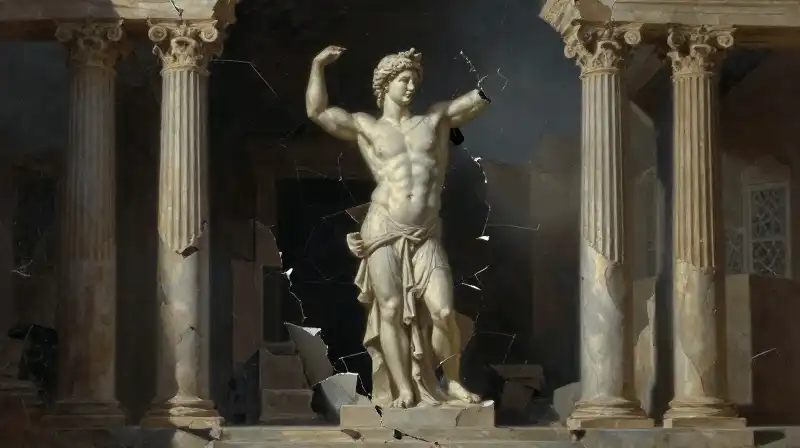
A central theme in the depiction of the Olympians is the contrast between pure, idealized aesthetic beauty and immense, robust physical power. On one hand, figures like Apollo represent the classical Greek ideal of perfection. Apollo is consistently characterized by a lean, muscular, yet graceful structure and smooth features, embodying refined ability and purity (1, 2). These characters embody ideals of elegance and controlled perfection.
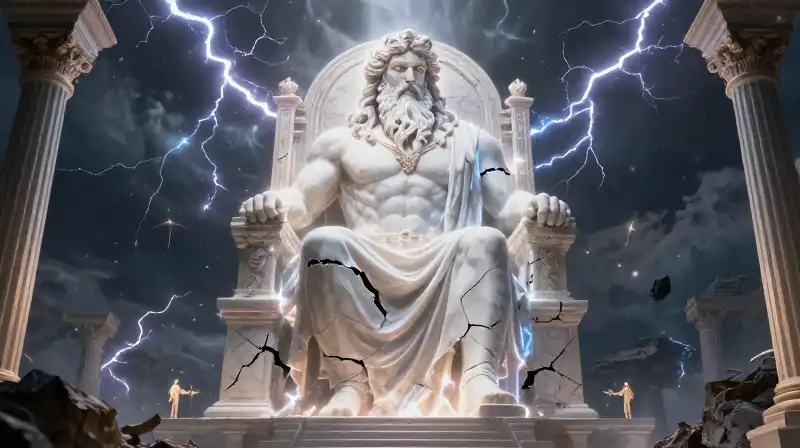
In sharp contrast, the more powerful deities are often presented with physiques that are less purely “aesthetic” and more physically formidable. Figures such as Zeus and Poseidon are frequently imagined with robust, muscular, and incredibly well-built bodies (1, 2). This portrayal isn’t incidental; the physical presence aligns directly with their domain. Zeus’s immense stature reflects his authority over the heavens, while Poseidon’s powerful physique mirrors his command over the sea (1, 2).
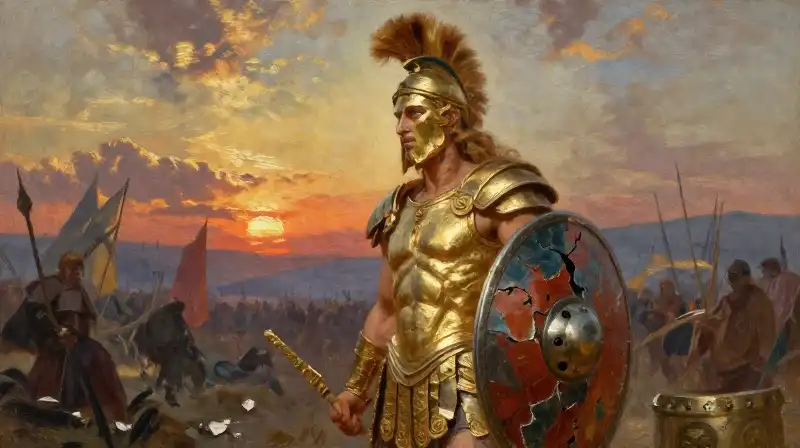
This suggests a cultural understanding that absolute power requires a certain physical gravitas. The body of the god is, in part, an embodiment of their power source. For instance, Ares, the god of war, is consistently described as having a “huge” or “powerful” build, an aesthetic choice that serves to complement his violent and combat-driven role (1, 2).
Form as Function: Appearance Tied to Domain
The characteristics of a deity often served as symbolic shorthand for their specific domain, linking their physical appearance directly to their function in the cosmos. This is particularly evident in the more labor-focused or elemental gods.
Hephaestos, the divine smith, serves as a compelling example of how appearance can reflect labor. His depiction is often focused on the practical results of his domain: intense heat and physical toil. He is frequently described with “leathered” and “burnt” skin, darkened and toughened by the relentless heat of his forge 1. This look transforms his body from a mere frame into a testament to his craft.
Other domains are also tied to visual cues. Demeter, connected to the harvest, is imagined with a sleek, tall stature and hair colored like wheat gold, visually echoing her connection to the bountiful earth 1. Meanwhile, Hades is consistently portrayed as an imposing figure, often depicted as imposingly tall with raven-wing black hair and piercing dark eyes, befitting his role in the shadowy underworld 1. The gods even incorporate regality into their look; ornate headwear, such as Zeus’s laurel adorned with lightning bolts or Poseidon’s crown resembling King Triton’s, links their divine status to earthly concepts of monarchical power 1.
Beyond the Handsome: Scars, Intensity, and Retribution
While beauty and strength are common themes, the tradition of Greek mythology also incorporates unsettling or intensely specific facial features to communicate psychological states or moral functions. The gods were not always perfectly idealized. Nemesis, the goddess of balance and retribution, is defined not by grace, but by her intensity; she is depicted with an “evil look” specifically designed to signify her role in balancing fortune and bringing inevitable consequence 1.
Similarly, figures associated with destructive power have been given aggressive features. Ares, beyond his powerful build, is often described with striking, aggressive characteristics. In moments of rage, he may be depicted with red or glowing eyes, which vividly matches his violent, impulsive nature 1. This suggests that the look of a god could, at times, serve as a visual manifestation of untamed, dangerous force.
Furthermore, the interpretation of even a powerful figure like Ares shows significant cultural variation within the source material. One description might portray him as strikingly handsome with black hair and black eyes, suggesting a classical ideal. Yet, another description emphasizes his battle experience, showing him with dark hair and multiple scars—a contrast that highlights that the “god look” is constantly shifting based on the narrative or cultural focus 1.
Navigating the Variation: Addressing Common Visual Queries
Due to the vastness of the tradition and the diversity of regional interpretations, the physical descriptions of the gods are never singular. For example, even Zeus’s features vary across different texts and artistic periods. Some descriptions envision him with streaks of white hair and striking blue eyes, while other traditional accounts picture him with a full white hair and beard, signifying a more aged, traditional appearance 1. This fluidity underscores the distinction between a rigid canonical depiction and the varied cultural interpretations that exist within the mythology.
The search for the “Greek god look” today is often an effort to distill these many possibilities into a coherent image. However, the traditional answer lies not in a single definition, but in understanding the interplay between form and function. A god’s visual characteristics—whether refined, powerful, scarred, or intensely focused—are clues to their relationship with the mortal world and the cosmic order.
Synthesis: The Living Symbolism of Divine Form
The enduring fascination with the physical appearance of the Greek gods offers more than just a collection of mythological facts. It provides a window into a culture that meticulously linked human experience to the divine. The variation between the smooth, ideal perfection of Apollo and the rugged, burdened skin of Hephaestos is not merely an artistic choice; it is a profound statement about the different ways a society conceived of power—whether through refined skill, physical might, or necessary, often destructive, balance. When you study the visual language of the gods, you are not just looking at art; you are witnessing the ancient effort to make the incomprehensible forces of nature and fate tangible, legible, and relatable through the human (or semi-human) form.
References
Footnotes
Related Articles