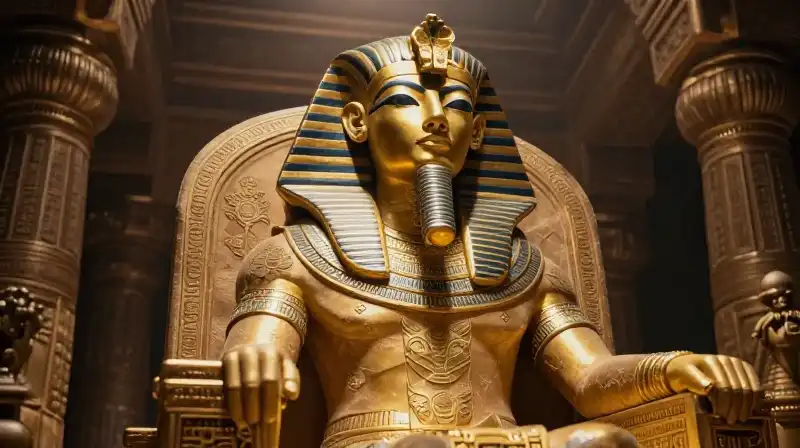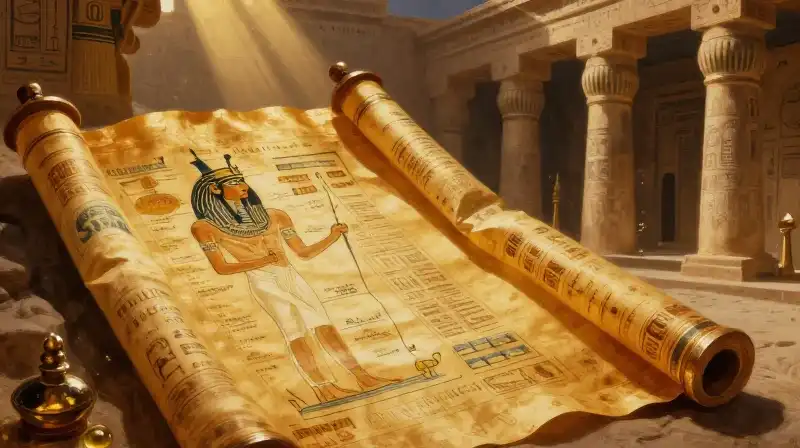
The Most Significant Egyptian Pharaoh Names and Rulers

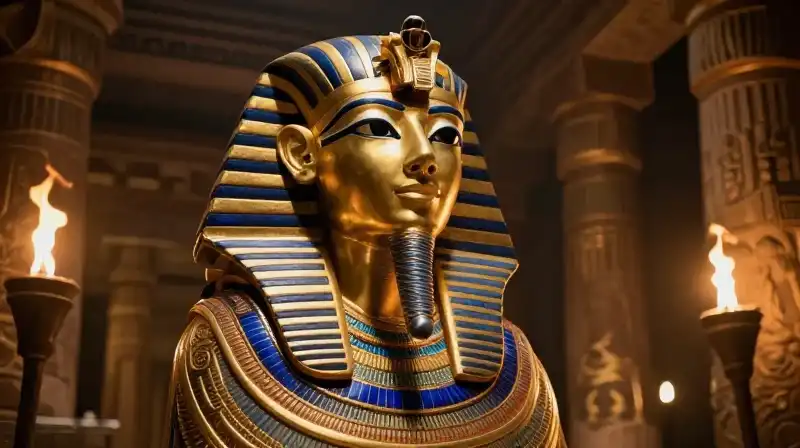
Introduction
To speak of the “pharaoh” is to engage with one of the most enduring and complex traditions in human history. Far from being a simple list of monarch names, the tradition of Egyptian leadership is a layered tapestry of myth, historical fragmentation, political evolution, and modern scholarly interpretation. For the communities and enthusiasts who study this heritage, understanding Egyptian pharaoh names is less about memorizing dates and more about grasping the shifting nature of power—how a king’s name could represent not just a ruler, but a cultural epoch itself.
The term “pharaoh” (pr-ꜥꜣ), a word currently used to refer to all kings of ancient Egypt, was not utilized within Egypt until the New Kingdom period (c. 1539–1077 BCE), according to current research (1, 2). This retrospective naming highlights a central cultural challenge: many of the foundational leaders whose names survive, such as Ny-Hor, Hat-Hor, and Iry-Hor from the Predynastic period, exist in limited fragments 1.
The Ambiguity of the Title: Nesut and the Crown
Because the concept of the pharaoh evolved over millennia, modern understanding of these rulers must start with acknowledging historical nuance. Royal figures were often addressed as *nesut* (nswt) or simply “kings,” maintaining a sophisticated titulary that sometimes encompassed up to five distinct names 1. These names were not just labels; they were complex declarations of the ruler’s divine mandate, connection to the gods, and earthly power.
Scholarly consensus recognizes significant uncertainty when mapping the reigns of kings during Dynasty 0 and the earliest dynastic periods. Their existence is often reconstructed from fragmented early writings, making definitive chronological sequencing exceptionally difficult for those who are researching Egyptian pharaoh names (1, 3). This inherent uncertainty forces researchers to rely on broad dynastic periods rather than precise regnal years for many early figures (2, 3).
Rulers as Cultural Narratives: Defining Significance
When scholars debate which names should be included in a definitive list of “the greatest” pharaoh names 1, the discussion is rarely about military might alone. The significance often hinges on whether the ruler represents a peak of cultural advancement, a period of stabilization, or a dramatic shift in the religious landscape. The pharaoh’s name, in this context, acts as a shorthand for an entire cultural narrative.
The Old Kingdom, for instance, is defined by legendary rulers who presided over its peak, including Snefru, Khufu, Khafre, and Menkaure (1, 3). These names mark an era of monumental architecture and centralized authority. Later, figures like Ramses II (Ramses the Great) defined the New Kingdom through vast military conquests and powerful cultural expression. Meanwhile, rulers like Tutankhamun and Akhenaten are central to the cultural narrative not for conquest, but for radical transformations—Akhenaten, in particular, shifted the focus of religious practice, profoundly altering Egypt’s ancient identity 1.
The 11th Dynasty presents another essential narrative arc, characterized by figures such as Mentuhotep I, Mentuhotep II, and Mentuhotep III. These names represent crucial turning points in the historical narrative, particularly as they relate to the re-unification and stability of the kingdom (1, 3). This demonstrates how the pharaoh’s name can signify not just a reign, but a moment of national rebirth or crisis.
The Evolution of Power: Queens, Foreign Rule, and Legacy
The Egyptian tradition of leadership is not confined solely to male figures. The inclusion of female names, such as Hatshepsut, is crucial, as her reign marked a period where her unique influence redefined the roles within Egyptian society 1. Later, figures like Cleopatra VII represent the culmination of this long, complex royal lineage, embodying a powerful blend of local and regional influence 1.
Furthermore, the story of the pharaoh involves periods where the crown was symbolically retained but the power structure was influenced by foreign entities. Rulers like Psamtik I and Psamtik II represent this transitional phase, holding pharaonic titles while operating under the influence of powerful neighbors like the Persians 1. These instances illustrate that the cultural weight of the pharaonic name could persist even when political control shifted.
A useful way to understand the diversity of these names is to look at their function: some names document monumental architecture (like Khufu), others document religious shifts (like Akhenaten), and others document periods of crisis or unification (like the Mentuhotep line). This allows a reader seeking “Egyptian pharaoh names and meanings” to look beyond simple lists and appreciate the varied roles these figures played in shaping the civilization 1.
Navigating Tradition: Cautions for the Researcher
Because these names are so central to ancient memory, several sources detailing them, such as the Manethonian lists, have been widely cited for centuries (1, 2). However, modern scholarship approaches these lists with considerable caution. Ancient texts frequently blend historical documentation with deeply held mythology, and transcriptions into languages like Greek often introduced errors or inaccuracies (1, 2). Therefore, when studying the chronology of pharaoh reigns, it is vital to recognize the limitations imposed by ancient record-keeping versus modern academic rigor.
Synthesizing the Meaning of the Pharaoh’s Name
For the community that upholds this heritage, the pharaoh is a figure whose identity shifts depending on the perspective—from a living god in the ancient texts to a historical, sometimes debated, title in modern discourse. Understanding the tradition means recognizing that a name like Ramses or Hatshepsut is a powerful anchor, signifying not just a biography, but a specific, lived experience of power and culture within that complex civilization.
The search for “good pharaoh names” ultimately leads to a deeper question: what makes a great ruler? Is it the perfection of the pyramid, the revolutionary change in religion, or the success of a military campaign? The richness of Egyptian history lies in this ambiguity, offering continuous material for us to explore, debate, and appreciate the enduring legacy of those whose lives were bound to the divine crown.
References
Footnotes
Frequently Asked Questions
What are some good pharaoh names?
Some notable pharaoh names include Khufu, who defined an era of monumental architecture, and Akhenaten, who enacted radical religious transformations. Others, such as Hatshepsut, are significant for representing unique cultural influences and redefinitions of societal roles.
Related Articles