Russian Gods and Goddesses: Perun, Veles, and Slavic Mythology

Introduction
The spiritual landscape of the ancient Slavic peoples was vast, complex, and deeply rooted in the rhythms of nature and the cycles of life. Yet, unlike the well-preserved records of many ancient civilizations, direct documentation from the earliest Slavs is non-existent (1, 2). To understand their gods and goddesses—from the thunderous Perun to the chthonic Veles—scholars must rely on fragmented contemporary chronicles, surviving place names, and linguistic evolution (1, 2). Because these written accounts often reflect the biases of foreign missionaries or the cultural reinterpretation of the time, modern scholars treat Slavic mythology not as a historical text, but as a collection of theories and reconstructions. What remains of this deep heritage is not just found in ancient books, but in the enduring folk tales and the subtle traditions that connect the pagan past to the living culture of the people today 1.
The Dual Forces of Cosmic Order: Perun and Veles
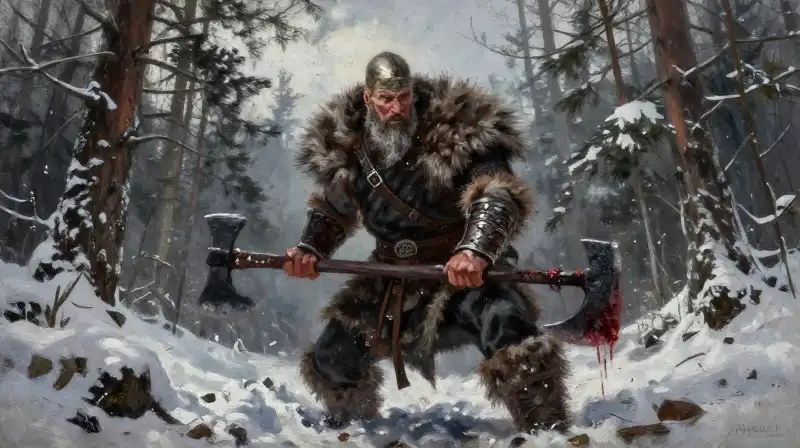
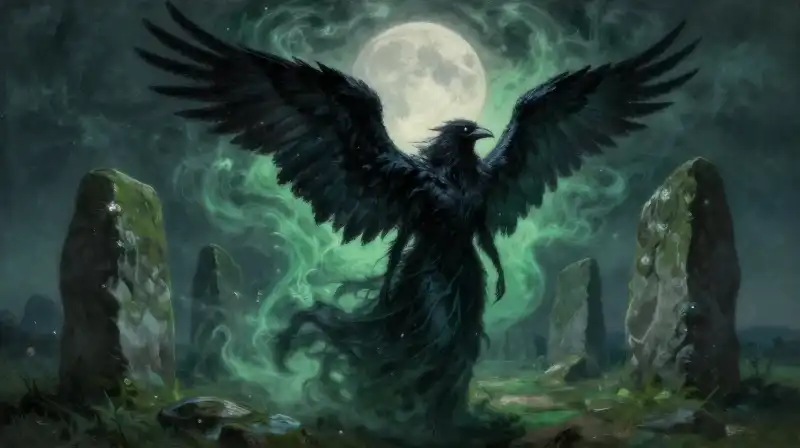
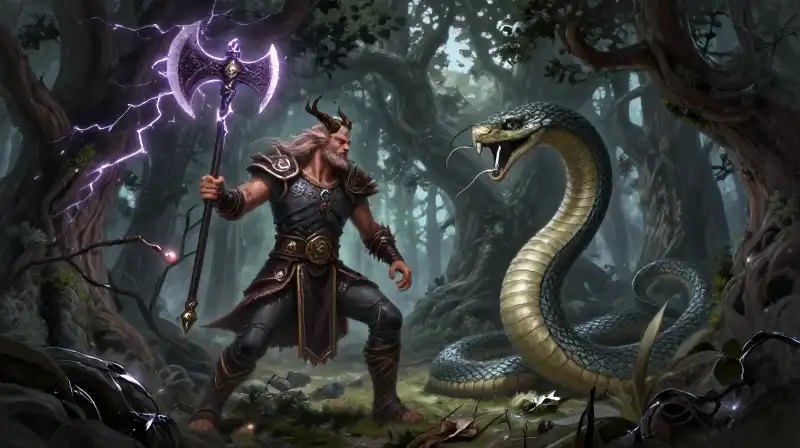
At the heart of reconstructed Slavic mythology lies the concept of “Slavic dualism,” a narrative tension between opposing yet essential forces that maintain the universe. The most prominent figures embody this contrast. Perun, the god of thunder, lightning, and war, is widely associated with the thunder god Perun of Proto-Indo-European origins (1, 2). He represents the celestial, the powerful, and the protective force of divine order. Standing opposite this might is Veles, a figure of profound and multifaceted complexity. He is a chthonic deity, often connected to the underworld, but his influence extends far beyond the grave. Veles is traditionally associated with wealth, cattle, and the mysterious realms of magic and poetry (1, 2). His role suggests a vital connection between the earthly and the supernatural—as cattle represent material wealth and life, Veles bridges the fertile earth with the unseen powers. Some modern interpretations suggest his role may overlap with figures like Chernobog, a concept referred to as the “black god” (1, 3). The interplay between Perun’s ordered, celestial power and Veles’s earthy, creative, and mystical influence forms the backbone of many Slavic cosmologies.
The Weaver of Destiny: Mat Zemlya, Dola, and the Rozhanitsy
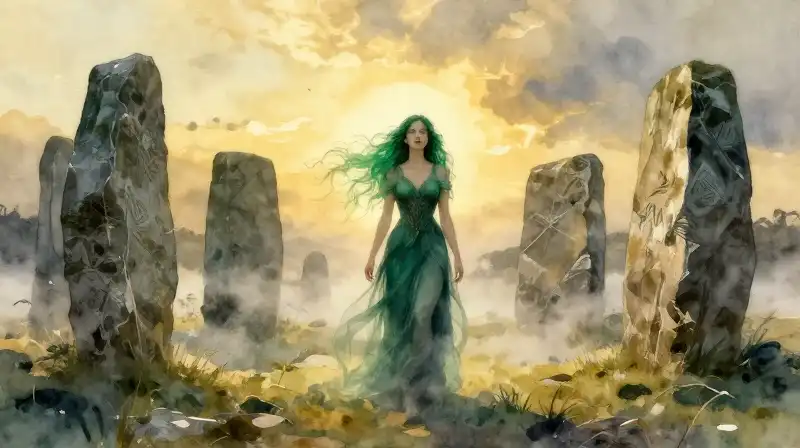
Beyond the major male figures of war and sky, the Slavs possessed a sophisticated understanding of fate, fertility, and the earth itself. The planet and the human experience were not seen as separate entities but as intrinsically linked to divine oversight. In many East Slavic traditions, the Earth itself was personified as Mat Zemlya. This concept suggests the land is not merely a resource, but a living, nurturing entity that governs life (1, 3). This personification is sometimes intertwined with figures like Mokosh, a goddess who is detailed in East Slavic texts alongside Dazhbog and Jarilo (1, 3). Furthermore, personal fortune was understood through the concept of Dola—a specific personification of destiny assigned to an individual at birth, providing a detailed cultural framework for how a person is expected to navigate their life 1. This belief system also incorporated the Rozhanitsy. These are female spirits of life, fate, and destiny, often mentioned alongside Rod (1, 3). While the precise nature of these spirits and the role of Rod remain matters of scholarly discussion, their presence illustrates a culture keenly aware of the divine forces governing human trajectory.
Regional Threads: Variations across Slavic Lands
The concept of “Slavic” is not monolithic; the belief systems and deities varied significantly as communities separated linguistically and geographically. Archaeological findings, such as statues found among the Baltic Slavs, demonstrate that worship occurred in both formal temples and sacred natural spaces, including hilltops and ancient oak groves 1. The pantheon described in East Slavic texts—including Dazhbog and Jarilo—can differ considerably from those mentioned in West Slavic sources, such as Helmold’s Chronicle, which details local deities like Perun and Chernobog and Svanevit (1, 2). Conversely, foreign observers have noted that certain South Slavic tribes emphasized the belief in single, supreme gods, which contrasts with the apparent polytheistic structure detailed in many East Slavic narratives (1, 3). These regional distinctions show that the spiritual life of the Slavs was a patchwork of local reverence, evolving over time as their populations diversified 1.
Cultural Legacy and the Living Tradition
The history of Slavic belief is inextricably linked to the process of Christianization, a period that did not result in the complete erasure of indigenous traditions. Instead, many pagan rituals and festivals were either assimilated or transformed into Christian practices 1. This process of transformation helped preserve traces of older heritage. Today, for those who engage with Russian and Slavic myths, understanding the figures like the “Russian version of Aphrodite” (who might be linked to the Earth and fertility figures like Mokosh or Mat Zemlya) or the divine structure itself offers a deeper connection to cultural identity. The belief in powerful, often dualistic, deities remains a source of fascination and revival for many practicing *rodnovery* (traditional Slavic spirituality). These modern interpretations and ongoing practices reveal that the mythology is a living tradition, not merely a relic of history. While scholars continue to debate the definitive status of figures like Svarozic—some suggesting it may be a title rather than a distinct god, as debated in community discussions 1—the overall persistence of the belief in powerful archetypes and the reverence for sacred natural spaces speaks to a deep, enduring cultural framework 1.
References
Footnotes
Frequently Asked Questions
Who is the Russian version of Aphrodite?
According to the article, the Russian version of Aphrodite might be linked to the Earth and fertility figures like Mat Zemlya or Mokosh.
Are Slavs descended from Vikings?
The article does not provide any information regarding the ancestry of Slavs or any relationship to Vikings.
Related Articles