The Worlds Strongest Mythical Creatures: From Norse Gods to Dragons

Introduction
The concept of mythical power is rarely about raw, physical muscle in ancient traditions. For a culture, the creatures that dominate its stories often embody its deepest anxieties, its highest aspirations, or its defining cosmic principles. The “strongest” creatures in mythology are not merely monsters; they are the embodiment of forces—divine favor, primordial chaos, or the unstoppable flow of fate. These beings serve as cultural mirrors, reflecting how a community grapples with the immense, unknowable forces that shape their world.
From the vast, sky-piercing scale of the Chinese Dragon to the incomprehensible physicality of the Norse giant Ymir, the pantheon of mythical figures offers a lens through which we can examine human tradition. This is not a list of definitions, but an exploration of how these powerful creatures define—and occasionally dismantle—the worlds they inhabit. To understand these legends is to understand the culture that breathes life into them.
The Dual Nature of Chinese Myth: Prosperity and Power
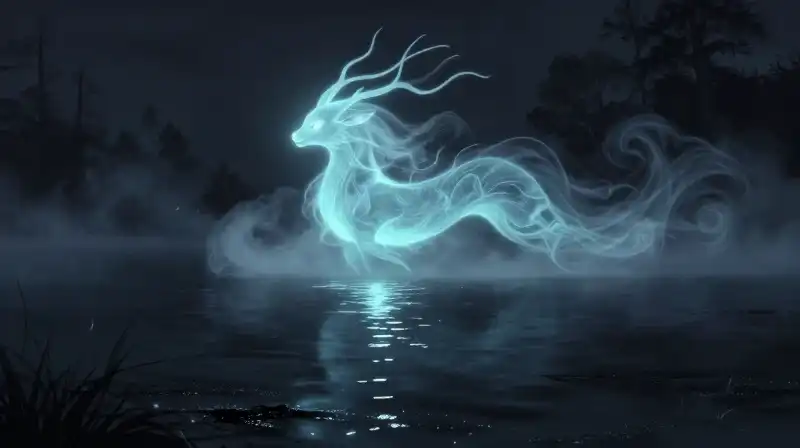
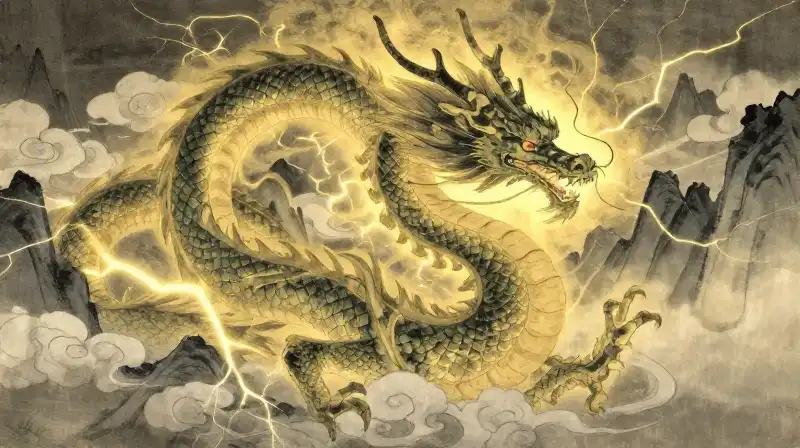
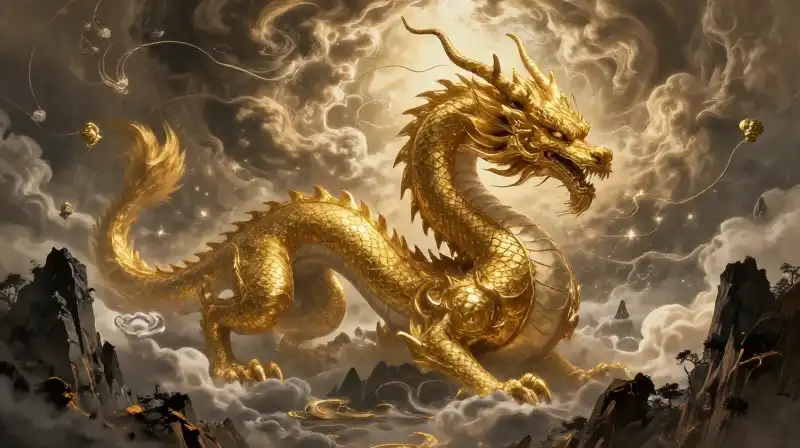
Chinese mythology presents a complex view of power, where destructive force is often secondary to the promise of prosperity and the wisdom of the aged. The Dragon, for example, is understood across various traditions not merely as a fire-breathing serpentine creature, but as a potent symbol of good fortune and imperial strength 1. This is further nuanced by the existence of the Sky Fox, a celestial nine-tailed spirit described as having golden fur and achieving spiritual maturity at one thousand years old 1.
Alongside these symbols of auspicious power, the Qilin operates as a profound political omen. This chimeric being is believed to herald the arrival of a virtuous and righteous ruler 1. Here, the strength of the creature is tied entirely to its moral gravity; its power is inherently connected to divine favor and the stability of the human realm.
Guardians, Omen, and the Challenge of the Unknown
Many mythical creatures exist not to dominate, but to guard, test, or embody cultural secrets. The Sphinx, appearing in both ancient Greek and Egyptian lore, is a perfect example of this functional power. Its influence lies not in brute force, but in the profound intellectual power of the riddle, positioning the creature as the ultimate gatekeeper (1, 2).
In Polynesian and Oceanic cultures, similar concepts of guardianship are found in the Taniwha of Māori mythology. While regional descriptions vary, these creatures are generally perceived as immensely large and powerful, yet their primary cultural role is often cast in the capacity of powerful protectors 1. In contrast, some traditions utilize immense, untamed creatures to embody the untamed world itself. The legendary Kraken, dwelling off the coasts of Norway and Greenland, serves to evoke the primal mystery and the fundamental human fear of the crushing, unknown power of the deep ocean 1.
The Architecture of Chaos: Giants and Monstrous Forms
Where some myths celebrate cosmic order, others focus on the inherent chaos and disorder of existence, often realized through terrifying hybrids or gigantic forms. Greek mythology offers some of the most visceral examples of this. The Chimera, a hybrid creature, embodies chaos through its composition of disparate animal parts (1, 2).
The sheer physical scale of mythical life is often utilized to represent primordial forces. In Norse cosmology, the figure of Ymir provides a literal foundation for this. Ymir, a giant of inconceivably huge size, is believed to be the primordial being whose body formed the structure of the world itself—his skull becoming the sky, his blood forming the seas, and his bones composing the mountains 1. Similarly, in Japanese folklore, the Oni are terrifying ogress characterized by malicious deeds and immense physical strength, representing destructive human impulses 1.
Cosmic Predators and Primordial Extremes
Perhaps the most powerful creatures are those whose existence threatens the very continuity of the cosmos. The Norse mythology presents two such figures. Fenrir, a monstrous force, is specifically depicted as having the power to consume vast cosmic bodies, including the sun and the moon 1. His significance is in the absolute nature of his destructive potential.
Beyond the celestial, creatures like the Manticore, found in Persian lore, are used symbolically to represent unchecked strength and tyranny. Described with a lion’s body, a human face, and a scorpion tail, the Manticore functions as a powerful, dangerous metaphor for human power gone corrupt (1, 2). In the North American Great Lakes region, the tale of Aniwye, a giant skunk of variable size, holds deep cultural weight. Mythologically, the legendary ability of this creature to “fart” is significant for its capacity to level entire forests, representing a volatile and immense natural force 1.
Navigating the Spectrum of Mythological Power
To grasp the concept of mythological power, it is necessary to look beyond simple strength metrics and consider how these creatures relate to their communities. This is often the difference between a cultural definition and a living tradition. Power in myth is rarely singular. It can be spiritual (the Qilin’s virtue), intellectual (the Sphinx’s riddle), or environmental (the Kraken’s influence on sailors). Understanding these facets is crucial when examining the various list-oriented searches—whether for “Top 10 most powerful mythical creatures” or simply a “Mythical creatures list A-Z”—as the true weight of a creature lies in its cultural function rather than a hypothetical power score.
The diversity of these legends—from the spiritual foxes of China to the raw, cosmic giants of the North—shows that human communities use these narratives to define their greatest fears and their most treasured ideals. The power they represent allows people to negotiate the vast, unpredictable nature of the world.
The Enduring Legacy of Cultural Symbolism
The myths surrounding creatures like the Kitsune of Japan, who gain supernatural powers and the ability to shape-shift as they age, teach that power in tradition is often earned, not granted. It is developed through experience and spiritual maturity (1, 2). This concept of incremental, earned power stands in stark contrast to the immediate, overwhelming power of entities like Ymir or Fenrir.
Ultimately, the most powerful mythical creatures are those that resonate most deeply within a community’s shared heritage. They represent the things that shape daily life, define boundaries, and offer warnings or blessings. They are not simply historical artifacts; they are living symbols of cultural identity, reminding communities of the deep connection between human narrative and the monumental forces of nature and destiny.
References
Footnotes
Related Articles