Mythical Wind Creatures: Gods, Spirits, and the Element

Introduction
The wind—an invisible, ceaseless force—has captivated human imagination across the globe. In the human narrative, the wind is rarely just an atmospheric condition; it is a powerful entity, a divine messenger, and a supernatural agent. It shapes landscapes, dictates seasons, and is often credited with the passage of great knowledge or the descent of divine mandates.
Across diverse cultures, the beings associated with the wind do more than merely represent airflow; they personify the human relationship with nature’s most volatile power. These mythical creatures—ranging from elemental spirits composed entirely of air to feathered serpents of immense cosmic power—offer us a glimpse into how ancient societies interpreted the chaotic beauty and life-giving strength of the air. To understand these wind spirits is to understand the cultural role of the sky in the human story.
The Divine Guardians: Wind as a Force of Sovereignty
In some cultures, the mastery of the wind belongs not to a mere spirit, but to a colossal, divine being. These figures represent the absolute sovereignty over the natural world. In Japanese mythology, Fujin stands as a powerful deity recognized as the God of the Wind. Interestingly, Fujin often manifests with the form of an Oni, a demon-like entity, yet is simultaneously revered as a Kami, indicating a complex cultural duality between terrifying force and revered protector 1.
Controlling the atmospheric elements is a domain shared between various traditions. In the Mesoamerican belief systems of the Maya and Aztecs, deities such as Quetzalcoatl and Kukulkan, the Feathered or Precious Serpent deities, are specifically recognized as gods of the wind. In these contexts, their association with air is not just about movement; they are celebrated as wind benefactors to humankind, suggesting a covenant between the elemental power and the protection or nurturing of civilization 1.
Furthermore, Japanese folklore presents the Daitengu, another supernatural being or Yokai. The Daitengu is noted for its repertoire of powers which includes swordsmanship and flight, coupled with the crucial ability to manipulate or control the wind 1. These beings illustrate how different cultures ascribe specific, practical powers—whether agricultural benefit or combat prowess—to the invisible force of the wind.
Elemental Spirits and Hybrid Forms
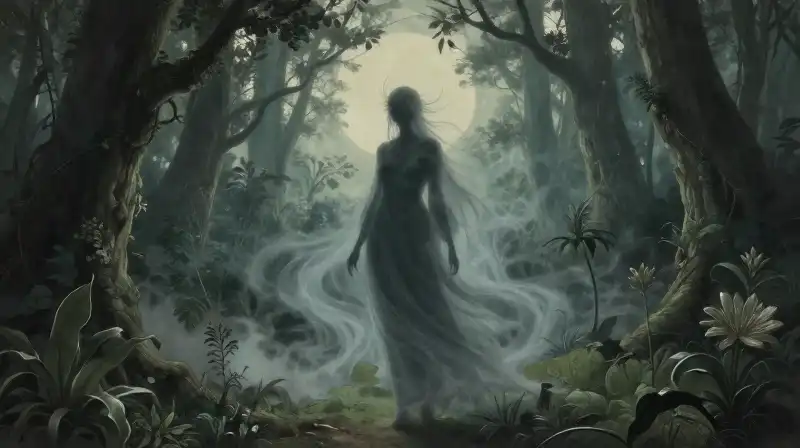
Beyond the great gods, many traditions feature entities that embody the wind through their physical composition or their role as agents of change. The concept of the Sylph, a race of elemental spirits, exemplifies this concept. In the Western tradition, Sylphs are spirits whose bodies are entirely composed of air. They govern the clouds and winds and actively interact with other elemental spirits representing Earth, Water, and Fire—the Gnomes, Undines, and Salamanders respectively 1. These creatures represent the microscopic, vital element of air and its role in the balance of nature.
Hybrid beings also serve as potent representations of wind’s unpredictable nature. In the context of Greek mythology, Harpies are creatures combining the form of a bird with the face of a human. They were originally believed by some traditions to be spirits of the wind. While later poems suggested they personified storm or stormy winds, their most defined cultural role was that of punishment, traditionally carrying evil doers away to the Erinyes 1. This highlights how the wind-related creatures often bridge the gap between the natural phenomenon and human moral judgment.
The Wind in Cosmic Order and Myth
The wind often serves as a catalyst or a structural element within the universe itself. In Norse cosmology, the colossal windstorms that inflict damage upon the World Tree, Yggdrasil, are generated by the powerful flapping wings of creatures like the Eagle and Veðrfölnir, a hawk 1. This association creates a unique, mechanical link between the movement of specific animals and the elemental power of wind, positioning the wind as a force that dictates the physical stresses upon the fabric of existence.
In Japan, the Kirin, or its Chinese counterpart Qilin, is a mythical creature linked to the wind. One of its supernatural abilities is tied to a slight control over the air, placing it among the symbolic creatures of the East that relate to cosmic balance and the subtle movement of the heavens 1. These examples demonstrate that the power of wind is not always manifested as raw, destructive force, but often as a subtle, yet pervasive, influence on the natural and celestial world.
Navigating the Myths: Understanding Air and Wind Creatures
Many readers exploring this topic seek to understand the general characteristics of mythical creatures associated with air. The common thread across these traditions is the concept of transition and transformation. Wind is change; it is the force that moves ideas and bodies alike. This leads to several generalized questions that emerge from the study of these traditions:
- What are the Greek wind creatures? In Greek tradition, creatures like the Harpies were linked to the spiritual essence of wind, representing the wild, untamed aspects of the storm or divine judgment 1.
- What mythical creatures are associated with air? The range is vast, encompassing the purely elemental (Sylphs), the majestic and divine (Quetzalcoatl), the transformative (Daitengu), and the mechanical (the Eagle and Veðrfölnir).
By studying these figures, we learn that the wind is a unifying element. From the raw, dangerous storms that threaten the World Tree to the gentle, life-giving winds bestowed by benefactors, the creatures of the air symbolize the fundamental dualism of nature: immense power, profound beauty, and inevitable movement.
Cultural Synthesis: The Living Wind
The presence of mythical wind creatures in global folklore offers more than just a fascinating list of names; it provides a blueprint of cultural anxieties and spiritual desires. The ability to control wind—a force that is both life-giving and lethally destructive—reflect the human yearning for order amidst cosmic chaos.
Whether through the reverent depiction of Fujin as a controlled divine force or the cosmic role of the Sylph in maintaining elemental equilibrium, these creatures teach us that the environment is not an empty void, but a richly inhabited space. The tradition reminds us that the invisible forces of nature are felt, understood, and personified, ensuring that the dynamic energy of the world is always recognized by those who live within it.
References
Footnotes
Frequently Asked Questions
What are the Greek wind creatures?
In Greek mythology, the Harpies are the wind creatures, described as combining the form of a bird with the face of a human. They were originally believed to be spirits of the wind, symbolizing the wild, untamed aspects of the storm or divine judgment.
What mythical creatures are associated with air?
Mythical creatures associated with air encompass purely elemental beings like the Sylphs, majestic deities such as Quetzalcoatl and Fujin, and hybrid forms like the Harpies and Daitengu. This vast range also includes the Eagle, the hawk Veðrfölnir, and the Kirin.
Related Articles