Día de los Muertos: Significado, rituales y tradiciones culturales

Introduction
Día de los Muertos, often translated as Day of the Dead, is far more than a commemorative date; it is a profound, living philosophy of memory and kinship. It is a celebration that negotiates the relationship between the seen and the invisible, transforming the traditional somber aspects of loss into a vibrant, deeply communal experience. For the communities that uphold this heritage, the tradition is not an endpoint in mourning, but a spirited reunion—a moment when the veil between the living and the departed is perceived to thin. While international recognition has solidified the holiday as a global symbol, its significance lies in the rich, often contradictory narratives of history, ritual, and heartfelt connection that define its practice.
The Architecture of Remembrance: Creating the Ofrenda
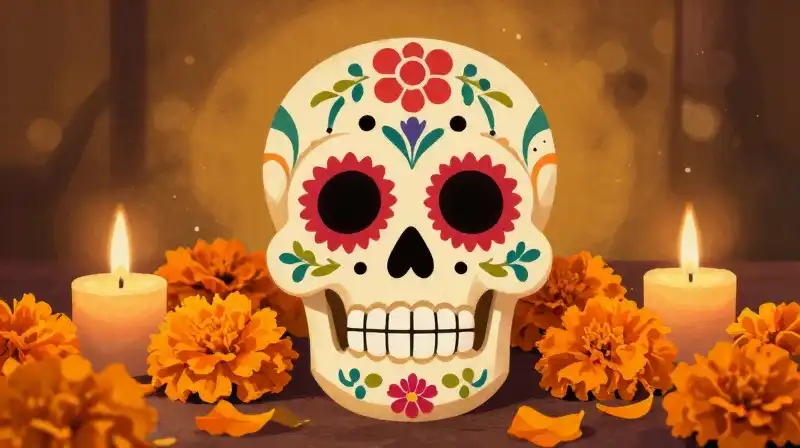
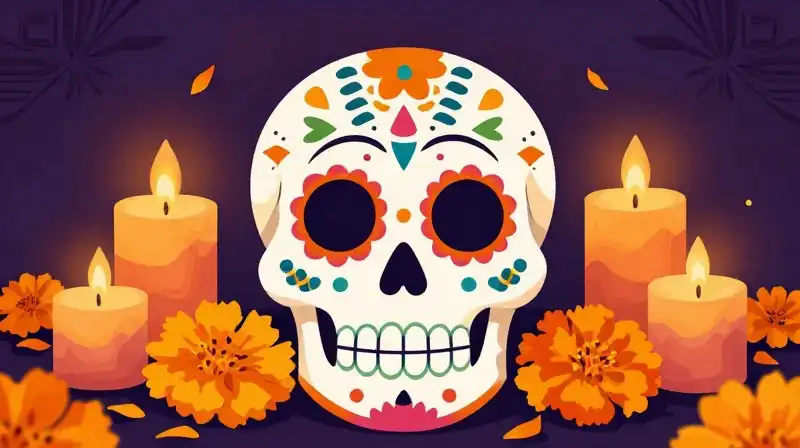
The heart of the observance, both locally and globally, is the construction of the *ofrenda*, or home altar. This is not merely a decorative display; it is a carefully curated invitation for the deceased to return. The tradition involves gathering elements that speak directly to the individual’s life and tastes, ensuring a personalized connection. According to historical documentation, the *ofrenda* is adorned with *cempazúchitl*, the vibrant orange marigold, a flower that holds deep cultural significance as a symbol of the cycle of life and death 1. Along with the flowers, the altar is piled high with the departed’s favorite foods, beverages, and personal mementos. The entire setup functions as a highly personal narrative of the person who passed away, creating a physical space where memory is both revered and indulged.
Historical Threads: Negotiation and National Identity
The contemporary understanding of the holiday is a result of complex, often contested histories. The narrative often cited is a beautiful syncretism: a blending of Indigenous pre-Hispanic beliefs regarding the cyclical nature of life and death with later Spanish Catholic customs 1. However, the historical origin remains a subject of significant academic debate. Scholars have challenged the simple narrative of indigenous or syncretic origin. For instance, historian Elsa Malvido has presented perspectives arguing that certain elements of the tradition trace their roots back fully to Medieval Europe, suggesting a more complex, multi-faceted historical trajectory 1. Furthermore, the elevation of this festivity to a powerful national symbol in Mexico is tied to broader socio-political movements, particularly post-revolutionary projects of national identity and those associated with the presidency of Lázaro Cárdenas 1. It is a tradition that is as much a statement of national character as it is a tribute to the dead.
The Spirit of Celebration: Wit and the Light-Heartened Memory
Perhaps the most unique cultural characteristic of Día de los Muertos is its refusal to be solely a day of mourning. While remembrance is central, the tradition embraces a festive, often remarkably light-hearted tone. This spirited approach encourages family and friends to gather, share traditions, and even recount amusing anecdotes about those they have lost 1. This spirit is beautifully expressed through several cultural artifacts:
-
Pan de Muerto: A traditional sweet bread often shared during the celebration.
-
Calaveras Literarias: These are light-hearted, satirical, and often irreverent mock epitaphs or poems, a way of humorously acknowledging the inevitable 1.
-
The Velar: Some researchers suggest that the modern practice of *velar*—staying up through the night to honor the deceased—may have been influenced by historical shifts like the Reform Laws during the presidency of Benito Juarez 1.
The Icon: La Calavera Catrina
No discussion of the holiday is complete without addressing La Calavera Catrina. This elegantly dressed skeleton has become the most recognizable icon of the tradition. However, historical analysis reveals that its visual aesthetic is not rooted in pre-Mexica traditions. Scholars have noted that the iconic depiction of Catrina is actually closer to the visual language of European Renaissance horror and the works of artists like Goya, transplanted and adapted into the Mexican cultural imagination 1. Catrina serves as a brilliant cultural synthesis: a European form adopted to represent a universal truth—the leveling power of death—within a Mexican context.
When and Where: The Living Tradition Today
The celebration traditionally takes place around November 1 and 2. However, the cultural practice is a living, dynamic tradition, meaning its scope is often wider than just those two dates (1, 2). Contemporary local observances increasingly integrate the holiday into modern cultural life, connecting the ancient rites of remembrance with modern artistic expressions through community gatherings and contemporary art exhibitions 1. This adaptability is key to the holiday’s survival and growth. While the ancient rituals remain deeply respected, the contemporary iteration shows how cultural heritage can evolve while retaining its core meaning. The recognition of this profound cultural practice has led to the observance being inscribed on UNESCO’s Representative List of the Intangible Cultural Heritage of Humanity in 2008 1.
Synthesis: The Enduring Meaning
Día de los Muertos is, at its core, an antidote to the notion that death signifies an absolute end. It is a profound cultural assertion that memory is a force powerful enough to bridge the gap between worlds. It allows the community to participate in the lifecycle of the deceased—to cook for them, to listen to their stories, and to celebrate their memory with joy, acknowledging that the influence of those who came before lives on, albeit in a different form. It is a powerful demonstration of how culture turns loss into a shared, vibrant communal ritual.
References
Footnotes
Frequently Asked Questions
¿Qué fecha es el de los muertos?
La celebración tradicionalmente tiene lugar alrededor del 1 y 2 de noviembre. Sin embargo, el artículo señala que la práctica cultural es dinámica y su alcance a menudo es más amplio que esas dos fechas.
¿Qué significa When is the Day of the Dead Celebration?
The celebration traditionally takes place around November 1 and 2. However, the cultural practice is described as a living, dynamic tradition, meaning its scope is often wider than just those two dates.
¿Cuáles son 5 cosas que se hacen en el Día de Muertos?
Se construyen ofrendas adornadas con elementos como el cempazúchil y los favoritos del difunto, se comparte Pan de Muerto y se reúnen familiares para contar anécdotas, además de practicar el velar, que implica pasar la noche en honor a los fallecidos.
Related Articles