
The Egyptian Sun God Ra: Life, Rebirth, and the Divine Journey

Introduction
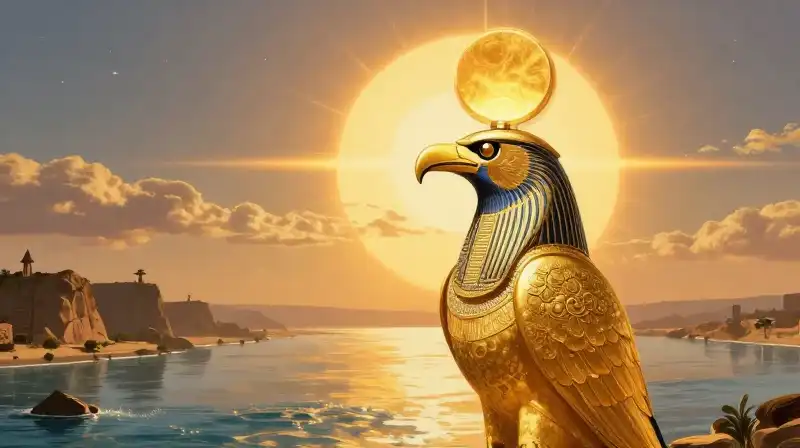
The civilization of Ancient Egypt was not simply defined by its magnificent monuments, but by its profound engagement with cosmic order. At the heart of this order stood Ra, the sun god, a deity whose presence transformed the heavens into a sacred narrative of life, death, and perpetual rebirth. Ra was more than a celestial body; he was the living embodiment of the divine blueprint upon which the Egyptian community—its agriculture, its political structure, and its afterlife—was built. To understand Ra is to understand the Egyptian concept of *Ma’at*, the fundamental truth and order that governed the universe. This tradition provides a rich cultural lens through which to view the ancient worldview, where the daily transit of light was a sacred, meaningful performance.
The Divine Source of Kingship and Order
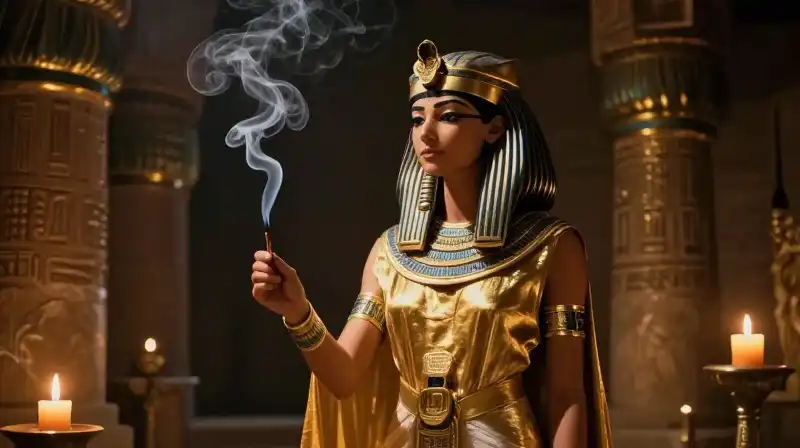
In Egyptian cosmology, the solar cycle was the ultimate analogy for human existence and the maintenance of social stability. Ra’s power was the very definition of legitimacy. According to the available research, Ra was deeply connected to the ideology of kingship, viewed as the divine source of life and the father of every succeeding pharaoh (1, 2). The pharaoh was thus not merely a political ruler, but a representative of Ra on Earth, tasked with ensuring the sun’s journey and the continuous flow of order. Furthermore, the sun itself was understood not just as a powerful light source, but as the fundamental giver of life. This was intrinsically linked to the prosperity of the community, as the solar energy was credited with the growth and ripening of the essential crops vital to Egyptian survival 3. The sun, therefore, was a physical manifestation of ecological and social well-being.
The Cosmic Mirror: Life, Death, and Rebirth
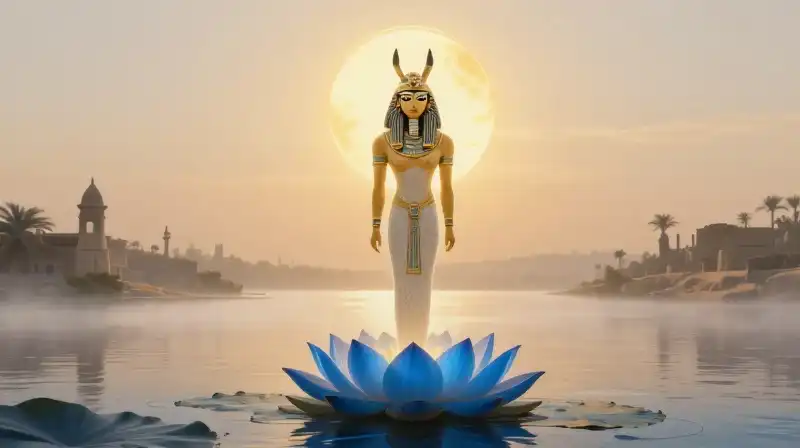
The experience of the sun—its rise, its zenith, and its spectacular descent—was culturally interpreted as a flawless map of the human life cycle. The progression of the sun was perceived as moving from a weak infant at the moment of dawn, through the strength of midday, into the cycle of death at sunset, and culminating in eventual rebirth (3, 1). This belief meant that the Egyptians did not view the end of life as a termination, but as a transformation mirroring Ra’s nightly voyage into the darkness. This belief in cyclical regeneration permeated daily life. Even the physical traditions surrounding death reflected the solar cycle, such as painting images of the sky-goddess Nut on coffin lids. This was done specifically to facilitate the deceased’s cyclical rebirth, allowing them to partake in the same promise of dawn as the god Ra himself 3.
The Passage into Darkness: Ritualizing Sunset and Transformation
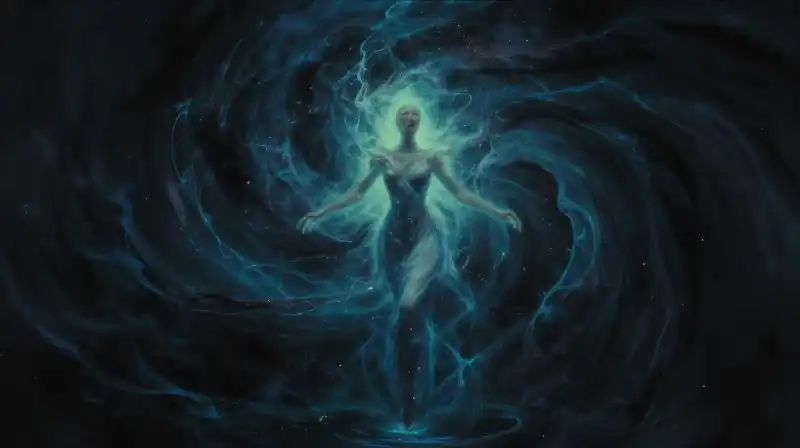
The transition of the sun from light to shadow was a moment of profound ritual significance. As Ra began his descent, the deity associated with the West, Amentet, emerged as a potent symbol of the sun’s passage into death and the opening of the gateway to the realm of the dead 3. This ritualization of the celestial event involved specific, hidden elements of time. Egyptian culture utilized “Hour goddesses,” such as HAp-Dsr, who presided over the final, most concealed hour of the day, guiding the sun’s final transition 3. The divine nature of the sun was not static; to navigate the underworld, Ra underwent various transformations. During the twilight hours when he traversed the Duat (the underworld), he sometimes took the form of Atum, the primordial creator 3. His celestial journey into the Duat, often depicted on the Mesektet barque, included other forms, such as a ram-headed form, symbolizing the journey through the night sky 3.
The Shifting Identity of the Sun God
Ra’s persona was fluid, allowing the tradition to accommodate multiple cultural perceptions under one supreme power. This fluidity is best understood through syncretism—the blending of deities. Powerful combinations, such as Amun-Ra and the merging of Ra with Khepri, illustrate how the tradition evolved to encompass broader divine concepts within its powerful framework (1, 2). This allowed the sun god to embody various stages of creation, transformation, and renewal.
Ra Rooted in the Earth: The Cultural Significance of Place
While Ra is primarily a celestial entity, its cultural presence was deeply anchored in physical locations. The sun was viewed as a “city god,” and Ra in his form as Atum established a powerful presence in specific religious centers, most notably Iunu, which is the Egyptian name for Heliopolis 3. These centers served as the nexus where the universal power of the sun met the terrestrial demands of the community. This earthly connection extended to agriculture and the collective spirit. The sun was understood not just as an abstract god, but as the vital force that sustained the land. The reliability of Ra meant the reliability of the Nile’s bounty; he was the patron of the growth and maturation of crops, directly benefiting the stability of the Egyptian people 3.
The Sun’s Many Faces: Understanding Ra’s Variations
When discussing Egyptian gods of the sun, the primary concept is not just “one” god, but a spectrum of manifestations, each tied to a specific aspect of the solar or nocturnal cycle. The concept of the three sun gods helps clarify this dynamic:
- Ra: The ultimate, supreme sun god, embodying the cosmic order and the divine father of kings.
- Khepri: Often associated with the morning sun and the rising sun, Khepri represents the creative force and renewal—the concept of continual becoming.
- Atum: The primordial creator, whose form is used by Ra during transitional or twilight moments, embodying the self-creation and foundational power.
Synthesis: A Living Tradition of Order
The tradition surrounding Ra transcended mere mythology; it was the operating system of Egyptian society. It was the framework for kingship, the blueprint for the soul’s journey, and the guarantee of agricultural survival. By treating the sun’s daily transit as a sacred, meaningful performance, the Egyptian community internalized the concept of perpetual change and the necessity of maintaining cosmic harmony. To understand Ra is to understand the profound belief that every beginning and every ending was merely a stage in an eternal, ordered cycle.
References
Footnotes
Frequently Asked Questions
Who are the three sun gods?
The three sun gods mentioned in the text are Ra, the ultimate supreme sun god; Khepri, often associated with the morning and rising sun; and Atum, the primordial creator.
Related Articles