Skuld: Understanding the Fate and Future of the Norse Norns

Introduction
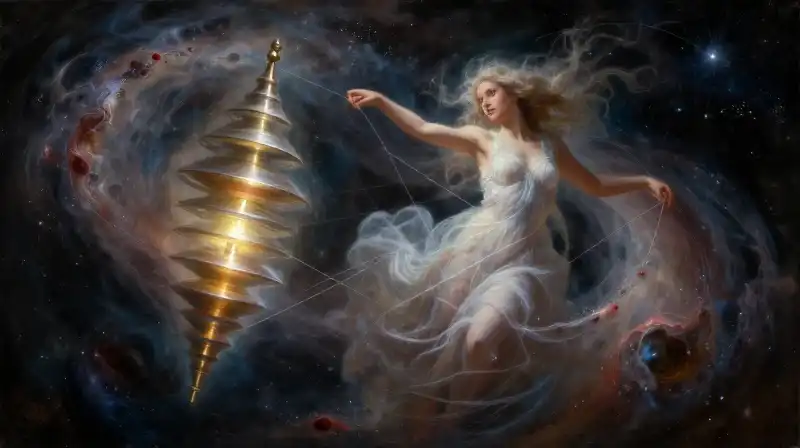
In the Norse cosmology, where the very world is held together by the colossal World-tree, Yggdrasil, destiny is not a passive concept but a living, woven fabric. At the heart of this immense tapestry sits a trinity of powerful feminine figures: the Norns. Among them is Skuld, the youngest, and arguably the most mysterious. Skuld is known as the “Norn of the Future,” embodying the concept of what is yet to transpire—the “Shall-be” 1. To understand Skuld is not simply to learn a mythological character’s name, but to delve into the deep-seated cultural understanding of fate, obligation, and the complex, often melancholic, path of human existence within the Nine Worlds.
The Trinity of Wyrd: Weaving the Threads of Destiny
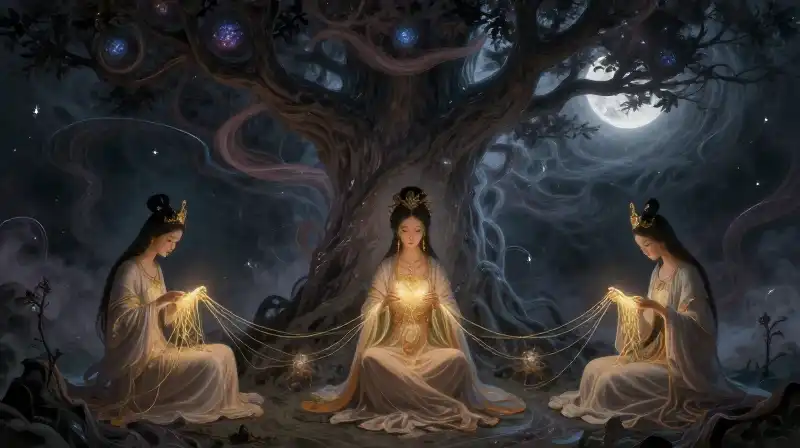
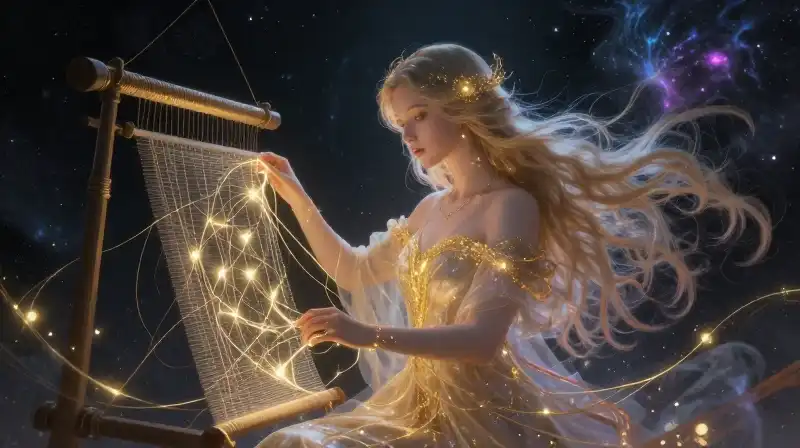
The Norns—Urd, Verdandi, and Skuld—are situated beneath the roots of Yggdrasil 1. They are the weavers and keepers of life itself, responsible for maintaining the vitality of the World-tree and the lives of all beings it connects. The process of weaving fate is intrinsically tied to their roles: Urd embodies “That Which Was” (the past), Verdandi represents “That Which is Becoming” (the present), and Skuld governs “Shall-be” (the future) 1. This collective trio enforces a concept of inexorable Fate that applies equally to both gods and men 1. Furthermore, the name Skuld itself possesses an interesting linguistic layer, sometimes being linked etymologically to concepts of “debt” or “obligation” 1, suggesting that destiny carries a weight of inherent responsibility.
Skuld’s Unknowable Domain
As the guardian of the future, Skuld’s role is one of constant transition and potential upheaval. She is frequently depicted with a veil, a powerful cultural symbol that reflects the inherently unknowable nature of what is to come 1. According to traditional accounts, Skuld is not merely a passive observer of fate; she is an active participant who can alter the established course. In the intricate lore, she is often reported to modify the decrees set by her elder sisters, often choosing outcomes that result in greater sorrow 1. This suggests that the future is not fixed in a single line, but is a fluid path that the Norn of the Future continually reshapes, introducing both light and tragedy into the cosmic narrative.
The Norn and the Valkyrie: A Divine Connection
One of the most intriguing intersections of Skuld’s role is her association with the Valkyries. While the Norns are deeply rooted in the earth and the cosmos, the Valkyries are divine beings associated with battle and the spiritual journey of the slain. Within the Eddic poems, specifically the *Völuspá*, Skuld is described as a Valkyrie who rides among the dead to choose who survives and who meets their end (1, 2). This interpretation is reinforced by Snorri in the *Prose Edda*, where he asserts that Skuld acts as one of these divinely appointed warriors who participate in the selection of warriors from the fallen to determine the ultimate fate of conflicts 1.
Navigating the Confusion: Norns vs. Valkyries
The overlap between the Norns and Valkyries is often a point of confusion for outsiders. While the Norns are the fundamental weavers of life and destiny, the Valkyries represent the agents who enact fate in the realm of war and the afterlife. Skuld’s inclusion in the Valkyrie role highlights that the dictates of fate (the Norn’s domain) extend even into the most violent human conflicts (the Valkyrie’s domain). Beyond this, some traditions suggest that the Norns also possess a connection to the natural world as water spirits, adding another layer of mystical complexity to her presence 1.
The Cosmological Weight of the Norns
The cultural significance of the Norns extends beyond simple destiny; they are tied to the architecture of the universe. They are closely associated with the realm of the Giants, beings who often represent raw, untamed forces of nature. Their residence within the World-tree means they oversee the entire axis of existence. According to the lore, the Norns tend to Yggdrasil, ensuring its continual growth and vitality 1. Furthermore, they are connected to the third root of the World-tree—the one that reaches toward the heavens—grounding Skuld’s role in the highest reaches of the cosmic structure. This suggests that the Norns are not just mythological figures, but essential pillars of the Norse view of the cosmos itself.
Beyond the Definition: The Meaning of “What Is Becoming”
In a modern context, examining Skuld offers a profound perspective on the nature of change. The “What Is Becoming” is a powerful antidote to fatalism. Because Skuld is constantly modifying the established threads of destiny, the future is presented not as an unbreakable script, but as a field of probability, where even the divine influences are subject to tragic or momentous shifts 1. She represents the continual unfolding of the present into the unknown, reminding the reader that even the most certain fates are in perpetual flux. To understand Skuld is, ultimately, to appreciate the cultural reverence for the unpredictable nature of time and the necessary role that obligation and consequence (the “Skuld” or debt) play in shaping human experience.
References
Footnotes
Frequently Asked Questions
Was Skuld a Valkyrie?
Yes, within the Eddic poems, specifically the Völuspá, Skuld is described as a Valkyrie who rides among the dead to choose those who survive and those who die. Snorri reinforces this interpretation by asserting that she acts as one of these divinely appointed warriors.
What role does Skuld play in Norse mythology?
Skuld is known as the Norn of the Future, embodying the concept of Shall-be and governing the changeable future of all existence. As an active participant, she can alter established paths of destiny and is also depicted as a Valkyrie who chooses who meets their end in battle.
Are Sköll and Fenrir the same?
The provided article does not mention Sköll or Fenrir, so it is not possible to answer whether they are the same based on the text.
Related Articles