Wyrd: How Norse Mythology Defines Fate, the Norns, and Heroism

Introduction
In the tapestry of Norse cosmology, few concepts resonate with the weight of human destiny as deeply as *Wyrd*. Far beyond a simple definition of “fate,” *Wyrd* represented a foundational, pervasive force that shaped the trajectories of both mortals and gods. For those who study Germanic folklore, understanding *Wyrd* is not merely an academic exercise in mythology; it is an exploration of a culture grappling with the absolute limits of free will and the inherent beauty found even in the face of inevitable loss. It was a potent, often arbitrary power that governed all time, dictating the unfolding of existence from the smallest moment to the prophesied collapse of the universe.
The Loom of the Norns: Weaving Existence
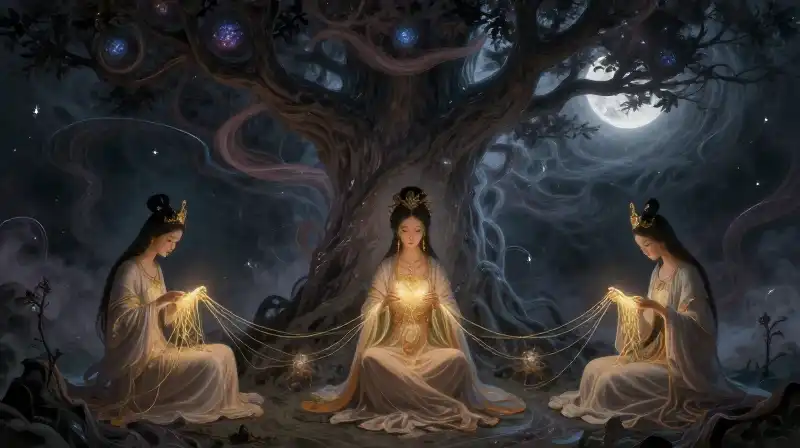
The power of *Wyrd* was not a detached cosmic law, but an active, living process. This process was controlled by the Norns—Urðr, Verðandi, and Skuld. These powerful, magical entities were the mythic weavers of fate. According to Source 2, the Norns were responsible for carving the destinies of all inhabitants into the fabric of the cosmos, a process often likened to the meticulous weaving of threads. This representation places fate not as a static decree, but as a continuous creation. The Norns did not merely dictate what was to happen; they were actively maintaining the “laws” of existence (Source 2). This active role distinguishes the concept of fate from a passive recording of destiny. Scholars note that while the gods, like Odin, were subject to the pull of *Wyrd*, they were not merely puppets. They were participants in the great unfolding, their own lives inextricably linked to the patterns the Norns established.
The Philosophy of Inexorability
The philosophical gravity of *Wyrd* lies in its absolute nature. According to scholarly research, fate was portrayed as an utterly powerful and inexorable force—one that lacked conscious motive or moral significance. As Source 1 and Source 2 suggest, struggling against this predetermined path was widely considered pointless. The inevitability of *Wyrd* led to a cultural framework where life’s deepest struggles were ultimately seen as part of a larger, unchangeable pattern. The Old English phrase, “Wyrd bið ful aræd,” which translates to “Fate remains wholly inexorable,” perfectly encapsulates this profound cultural understanding (Source 2). Crucially, *Wyrd* is not an evil entity; it lacks moral judgment. It is simply a function of the cosmos. This absence of inherent motive meant that the tradition shifted focus away from seeking divine favor or moral superiority, directing the community’s energy instead toward how one existed within the constraints of the inevitable.
From Doom to Valor: The Viking Response to Destiny
Paradoxically, the fatalistic nature of *Wyrd* did not breed despair in Viking culture; rather, it fostered a unique and profound commitment to honor and valor. If the end was certain—culminating, in the grand cosmic sense, in the prophesied destruction of Ragnarok (Source 1)—then the focus shifted entirely to the quality of the journey. Instead of surrendering to destiny, the prevailing cultural sentiment dictated that true worth was found in how one met their end. As Source 1 outlines, the cultural code demanded that one approach inevitable fate as a heroic battle, choosing to fight fiercely even when defeat was foretold. This willingness to embrace a glorious end defined the hero. The Viking world found deep enchantment and meaning not solely in the possibility of victory, but in the beauty of the struggle itself.
The Nuances of Fate: Wyrd Versus Orlog
For researchers, the subtle distinctions within the concept of fate are a point of persistent debate. The relationship between *Wyrd* and related terms like *Orlog* or *Orlaeg* introduces significant nuance into the concept. Some scholarly interpretations suggest that while *Wyrd* refers to the dynamic, actively woven future determined by the Norns, *Orlog* or *Orlaeg* might encompass the inherent, uncontrollable aspects of life from birth or a predetermined “law” of personal destiny (Source 3). One framework suggests a division of labor: *Orlaeg* might represent the inherent traits and circumstances given at birth, while *Wyrd* represents the dynamic, interwoven path that the individual follows throughout life (Source 3). This complexity indicates that the Norse understanding of destiny was not monolithic, allowing for a combination of fixed nature and dynamic progression.
Understanding Pronunciation and Meaning
For those curious about the term, the Old English pronunciation of *Wyrd* often reflects the archaic sounds of the language. While modern interpretations vary, the word is phonetically written as *Wird*, with the long ‘i’ sound. The meaning remains firmly rooted in its cultural context: an inexorable, powerful determinant of destiny that governs the lifespan of beings and the cosmos. Understanding *Wyrd* is therefore about understanding this cultural code of honor and the acceptance of a grand, unfolding design.
The Enduring Legacy of Wyrd
In its original context, *Wyrd* was the philosophical foundation for heroic conduct. It taught a people that even when facing insurmountable odds—from a single skirmish to the end of all time in Ragnarok—the most meaningful life was one lived with commitment, honor, and a profound sense of purpose. This tradition remains a powerful expression of how a community can find grace and meaning not *despite* the limits of destiny, but *within* the act of striving against them. *Wyrd* serves as a potent reminder that even in an age where the future is no longer dictated by myth, the human impulse toward heroic commitment remains a vital part of the cultural story.
Frequently Asked Questions
How do you pronounce wyrd Norse mythology?
The Old English pronunciation of Wyrd reflects archaic sounds, and the word is phonetically written as Wird, featuring the long i sound.
Related Articles