Baldurs Role in Ragnarök: The Tragic Fate of the Light God

Introduction
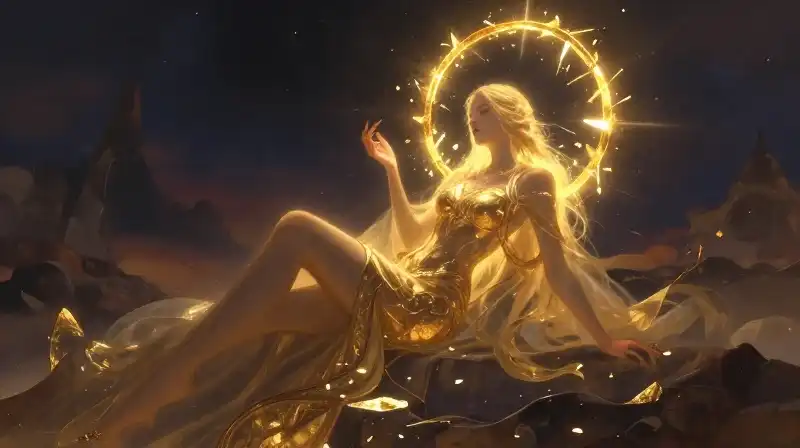
Within the intricate tapestry of Germanic folklore, few figures possess the radiant presence of Baldur. He is not merely a character in a myth, but a symbol of pure, often fragile, goodness—a god whose very nature is tied to light, peace, and joy. For communities that study and live within the tradition of Norse mythology, Baldur represents the idealized state of being, an almost impossibly perfect deity who stands in profound contrast to the inevitable entropy of existence. His story is fundamentally a tragedy. His immaculate existence, described in Eddic poems like *Völuspá*, makes his demise not just a personal loss, but a pivotal, prophetic event signaling the collapse of an era. By examining Baldur, one moves beyond a simple definition of a god; one investigates the cultural weight assigned to purity, vulnerability, and the cyclical nature of destruction and renewal.
The Architecture of the Divine: Light and Peace
To understand Baldur, one must first grasp the complexity of his domains. While he is overwhelmingly recognized as the God of Light, Peace, and Joy, his exact portfolio varies across interpretations, sometimes encompassing Wisdom and Goodness (Source 1, Source 2). According to scholarly analysis, his name may derive from concepts meaning “brave” or “hero,” but the prevailing cultural consensus aligns him with the archetype of a luminous deity, linking him to “white” or “shining” qualities (Source 3). Baldur is rooted deeply within the royal lineage of the Aesir, as the beloved son of Odin and Frigg, and brother to powerful figures like Thor and Váli (Source 3, Source 1). His traditional portrayal is that of a universally adored figure; his status is highly valued by both the divine community and mortal beings alike (Source 3). This widespread affection establishes him as a cornerstone of the Norse worldview—a deity whose presence is intended to be a constant source of harmony and moral clarity. Interestingly, the tradition does not offer a single, rigid definition for the Norse gods. Rather, cultural discourse often leaves open the debate of whether these deities possess official portfolios or whether they are simply associated with specific, potent qualities (Source 2). Baldur embodies this fluidity—he is defined more by his overwhelming *radiance* than by a specific set of duties.
The Shadow of the Trickster: Baldur’s Fall
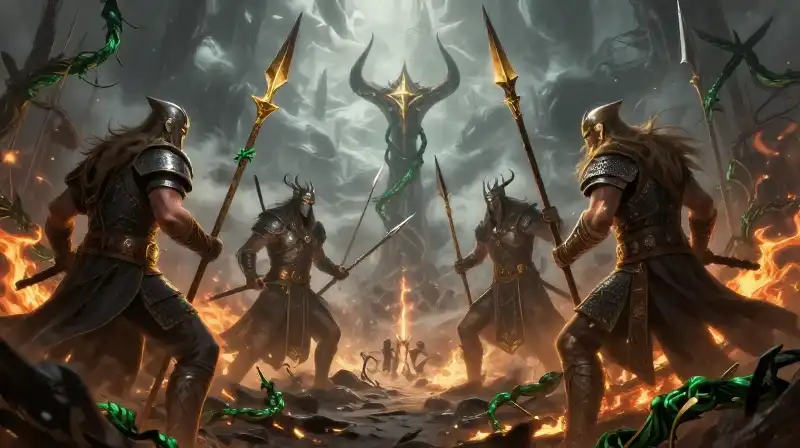
The perfection that defines Baldur also determines the gravity of his fate. According to the narrative tradition, his radiant and impeccable nature serves as a direct precursor to Ragnarök, the twilight of the Gods (Source 2, Source 3). His death is not a common mortal demise; it is a profound rupture in the cosmic order. The cultural mechanism driving this tragedy is the trickery of Loki. As the architect of Baldur’s demise, Loki—the trickster god—represents the unpredictable forces of chaos that threaten even the most perfect divine structures (Source 3). His demise is thus interpreted not simply as an act of violence, but as a pivotal, necessary turning point in the cosmic cycle. The Eddic poems convey this decline through powerful, tragic imagery, describing the beloved deity as the “bleeding god” (Source 3). This narrative of betrayal and loss transforms Baldur’s passing from a static event into a dynamic cultural symbol of vulnerability. The story emphasizes that even the most inviolable light cannot withstand the encroachment of trickery and destiny.
Baldur and the Turning Tide of Ragnarök
When we ask who Baldur is in Ragnarök, the answer resides in his function as a harbinger. His death is deeply intertwined with the countdown to the end of the current world order. He is the person whose absence signals the crumbling of the era of peace and the impending return of chaos. Within the grand scope of the mythological timeline, his death represents the climax of the divine vulnerability. However, the tradition does not end in pure devastation. According to certain interpretations, his demise is not an absolute end, but a sacrificial event. This allows for a cyclical understanding of the myth, where his ultimate sacrifice—his tragic fall from grace—is seen as potentially paving the way for a new age of peace and renewal (Source 3). This duality is what makes Baldur such a potent cultural figure: he is the face of beautiful decline, yet his story contains the seeds of future rebirth.
Living Echoes: Modern Interpretations of the Light God
As mythological traditions evolve, their figures often find new significance in contemporary culture. While the primary narrative focuses on his tragic role in the end of days, certain contemporary community discussions have fostered different folk interpretations of his attributes. In these modern readings, a notable interpretation has emerged identifying Baldur as the “god of gates” (Source 2). While this specific interpretation is likely a modern synthesis of his radiant attributes and his role in cosmic passage, it highlights how a figure defined by universal light can be re-contextualized to represent transition and threshold—the gateways between worlds, the beginning of a new era, or the passage into death itself. The enduring cultural value of Baldur lies in this tension: he is the ideal (Light, Peace) and the inevitable casualty (Fate, Chaos). He serves as a powerful reminder that even the most perfect aspects of community and culture are subject to change and the deep, unpredictable currents of fate. The tradition of Baldur thus provides not a static history, but a vital lens through which modern communities can explore the fragility of peace and the profound power contained within sacrifice.
Frequently Asked Questions
What does Baldur have to do with Ragnarök?
Baldurs radiant nature serves as a direct precursor to Ragnarök, and his death acts as a harbinger whose absence signals the crumbling of the era of peace and the impending return of chaos. In some interpretations, his tragic demise is also viewed as a sacrificial event that potentially paves the way for a new age of renewal.
Who is Baldur in Ragnarök?
In Ragnarök, Baldur functions as a harbinger, and his death is deeply intertwined with the countdown to the end of the current world order. His absence signals the crumbling of the era of peace and the impending return of chaos.
Related Articles