Dragon Horse Mythology: The Power of the Longma in Chinese Lore

Introduction
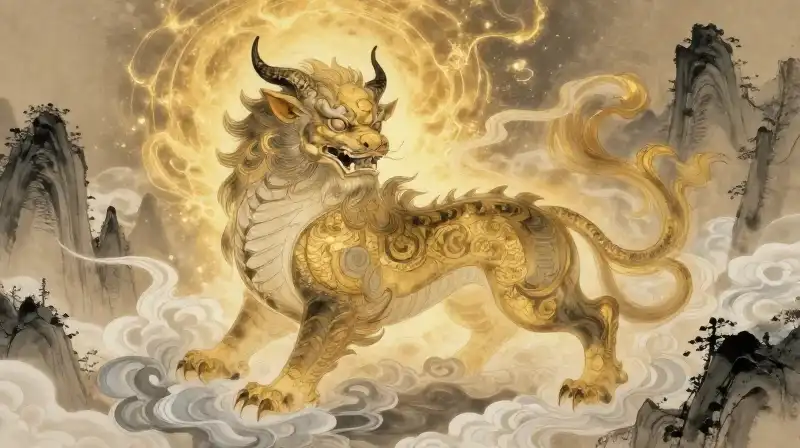
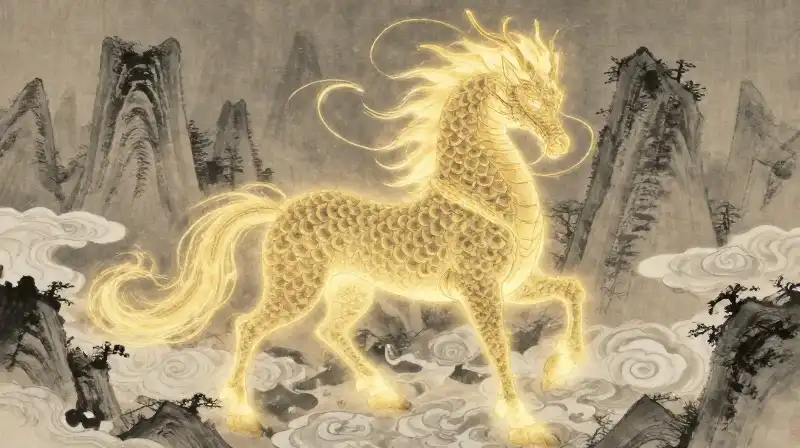
The Longma, or dragon horse, stands as one of the most profound and resonant figures in the rich tapestry of Chinese mythology. Far more than a mere decorative beast, this winged creature represents a vital synthesis of two of humanity’s most primal forces: the fierce, divine power of the dragon and the noble, earth-bound spirit of the horse. It is a mythical embodiment of “heavenly power” 1, possessing the immense strength to “walk through ten thousand waters and a thousand hills” (2, 1). For generations of Chinese culture, the Longma has served as a potent symbol of cosmic order, divine guidance, and the ultimate transformation of mortal or elemental energy into divine purpose.
The Origin in Cosmic Mapping
To understand the Longma is first to understand its deep roots in the creation narratives of Chinese civilization. The creature is not a random fabrication, but a mythological response to the foundational stories of the land. According to ancient folklore, the Longma is tied directly to the very birthplace of the Yellow River (Ho), with texts suggesting the river itself birthed the creature upon its guiding chart, known as the Hetu 1. This connection solidified the Longma as the vital spirit, or *qi*, of both Heaven and Earth (2, 1). It represents the essential connection between the celestial and the terrestrial realms. This deep relationship was evident even in antiquity. Historical records indicate that Chinese rulers held such high regard for these creatures that they believed the tallest horses they owned were, in fact, avatars of dragons 1. This belief is evident in historical imperial practices, such as when Emperor Wu of the Western Han sought out “heavenly horses” from the Fergana Valley, perceiving their arrival as a definitive sign of divine favor and immense strength 1.
The Auspicious Omen
In the cultural narrative, the appearance of a Longma was never taken lightly; it was regarded as an extraordinarily auspicious omen. Historically, seeing this mythical creature was linked to the prediction of a legendary sage-ruler—one of the Three Sovereigns or the Five Emperors 1. Because the Longma represents the perfect union of heavenly power and earthly capability, its sighting implied that the path to profound, beneficial change had begun. In the realm of sacred texts, the narrative provides even more specificity regarding this divine guidance. The Bamboo Annals record an appearance of a dragon-horse on the Yellow River while Emperor Yao received a foundational map from the river spirit 1. Such stories frame the Longma not just as a symbol of power, but as a sacred messenger, appearing precisely when destiny was unfolding to elevate a leader or fulfill a great societal mandate.
Spiritual Transformation in Narrative
One of the most profound aspects of the Longma mythology is its depiction of spiritual and purposeful transformation. The narrative of *Journey to the West* provides a primary example of this concept through the figure of the White Dragon Horse 1. This creature begins its long and arduous journey as a dragon-horse, serving as a steadfast protector to the monk Tripitaka. However, upon successfully fulfilling his divinely appointed purpose at the end of the voyage, the White Dragon Horse does not remain unchanged. He miraculously transforms back into his original golden, scaled dragon form 1. This narrative arc is more than just a story; it is a powerful cultural lesson. It reinforces the belief in the capacity for spiritual elevation and the rewards that come from the completion of a divine mission. The Longma thus symbolizes the journey from the potential of a horse to the achieved divinity of the dragon.
What Powers Does the Longma Possess?
When we consider the powers of the Longma, the scope is not strictly physical, but spiritual and symbolic. According to its mythological definitions, the creature possesses two key attributes:
- Elemental Power: The ability to “walk through ten thousand waters and a thousand hills” (2, 1) represents immense endurance and the mastery over both the turbulent seas and the rugged terrain of the world.
- Divine Energy (Qi): As the vital spirit of Heaven and Earth, the Longma channels the raw *qi* that governs the cosmos (2, 1). This grants it status as a carrier of divine favor and celestial blessing.
- Symbolic Influence: Within history, its appearance served the symbolic power of legitimacy. For emperors, commissioning reliefs depicting these favored, dragon-like chargers was a physical assertion of their connection to the ultimate source of power (1, 2).
Cultural Resonance and Global Echoes
The influence of this powerful motif has extended beyond the borders of China. Its symbolic weight resonated with other cultures, particularly through linguistic borrowing. The presence of the Japanese loanword *ryūma* or *ryōma* serves as a direct reference to the mythical dragon horse, illustrating how this powerful archetypal image of the winged dragon-horse has traveled and found meaning in disparate cultural contexts 1. While these myths are rich with imagery—such as the description of a true Longma having wings and scales but maintaining the core form of a horse 1—the creature serves as a profound reminder of the interconnectedness of nature and divinity. It stands as a living record of a culture that viewed the natural world, even its most powerful creatures, as imbued with a sacred spirit.
The Lasting Significance of the Longma
The tradition of the Longma is a deep meditation on power, purpose, and transformation. It is not simply a beast with impressive attributes; it is a cultural paradigm. It teaches that true power is not merely brute strength, but the ability to harmonize the elemental forces of the earth (the horse) with the expansive, transcendent nature of the heavens (the dragon). By understanding the Longma, one gains insight into the enduring cultural reverence in China for destiny, spiritual awakening, and the profound synthesis of opposites that defines the cycle of creation.
References
Footnotes
Frequently Asked Questions
What powers does a dragon horse have?
The Longma possesses elemental power to walk through ten thousand waters and a thousand hills, as well as divine energy (Qi) that channels the raw spirit governing the cosmos. Furthermore, its appearance served the symbolic power of legitimacy for ruling powers.
Related Articles