
Why Monsters Exist: Decoding the Symbolism of Mythical Beasts

Introduction
Across countless cultures, the figure of the mythical beast serves as far more than a source of childhood fright; it is a profound cultural anchor. In traditions like those celebrated by this publication, monsters and legendary creatures are not merely imagined dangers. Instead, they are complex semiotic reflections—tangible manifestations of ancient moral codes, environmental anxieties, intellectual challenges, and the very boundaries of the known world. They represent the “other,” helping a community define itself by defining what it guards against.
To decode a mythological monster is to understand the underlying human impulse to categorize chaos. Whether in the form of a three-headed guardian or a shifting shapeshifter, these figures allow human societies to process and articulate fears, cosmic laws, and the relentless power of nature in ways that a simple definition could never capture.
Maintaining Cosmic and Moral Boundaries
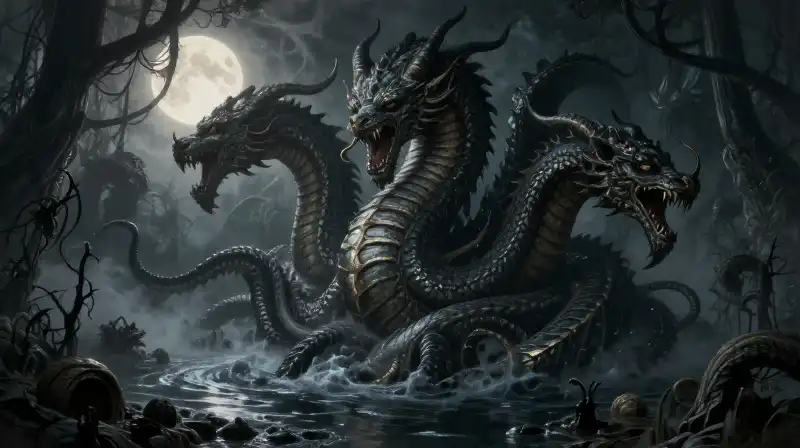
One of the primary functions of the monstrous figure is the enforcement of boundaries—whether those boundaries are the borders of the physical universe or the confines of moral conduct. Figures like Cerberus, the three-headed dog in Greek mythology, are classic examples of this role, serving as the sentinels guarding the Gates of the Underworld 1.
This function of justice and consequence is seen in diverse forms. The Harpy, for instance, was believed to be a wicked servant of justice in Greek lore, capturing men and leading them to Hades 1. Yet, justice itself can be terrifying. Furthermore, the Sphinx, a creature appearing in both Egyptian and other mythologies, embodies an intellectual boundary; its existence is a challenge, designed to kill those who cannot solve its riddle 1.
In some traditions, the boundary is not physical, but spiritual. Fox spirits across East Asia, such as the Kitsune in Japanese and the Kumiho in Korean, often operate as mischievous spiritual entities that can resemble fair spirits 1. These figures maintain a volatile boundary between the human and supernatural realms, reminding communities of the delicate balance between civilization and wild power.
Reflecting Regional and Environmental Anxieties
The unique makeup and nature of a mythical beast often mirror the specific fears and ecological concerns of the community that created it. Folklore is frequently a way of explaining phenomena that defy human understanding—such as severe weather or deep-sea mysteries.
This is evident in how various creatures relate to their environment. In Mayan lore, the Huracán, a thunderbird-type figure, is specifically linked to the violent nature of the Gulf of Mexico 1. Similarly, Scandinavian traditions feature the Kraken, a cephalopod-like sea monster, whose existence symbolizes the overwhelming and crushing power of the deep, capable of dragging entire ships into the abyss (1, 2).
On a more localized scale, indigenous peoples utilize monsters to embody specific regional forces. The Stiff-Legged Bear of Native American folklore or the Yowie of Australia serve as embodiments of local cryptid anxieties and primal forces unique to those landscapes 1. This shows that these monsters are often deeply rooted in geography, becoming a living record of a community’s interaction with a challenging environment.
The Power of Transformation and Hybridity
Few mythological themes are as rich as transformation, which explores the fluidity of identity and the permeability of natural law. The act of shapeshifting often highlights the dangers of the unknown or the capriciousness of fate.
In Greek myth, the figure of Empusa represents a destructive form of transformation, capable of shaping itself to consume the blood and flesh of young men 1. Conversely, the tale of Callisto, a nymph transformed into a bear by Hera 1, explores the tragedy of imposed change. Hybrid creatures, such as the Minotaur (a man-bull) or the Chimera (a composite of multiple beasts), further explore the dangerous intersection of disparate forms (1, 3). These hybrids represent the mixing of opposing forces—reason and instinct, man and beast—which often leads to social or cosmic instability in the narratives.
Transformation is also a vehicle for divine power. In Aztec mythology, Ītzpāpālōtl embodies the fusion of death and transformation, described as a death goddess with a skeletal head and butterfly wings 1. Likewise, Mesoamerican and ancient traditions feature powerful, composite deities like the Zu, a divine creature depicted as a lion-headed eagle 1, or Khepri, the symbolic beetle that pushes the sun 1.
The Living Practice of Regional Myth
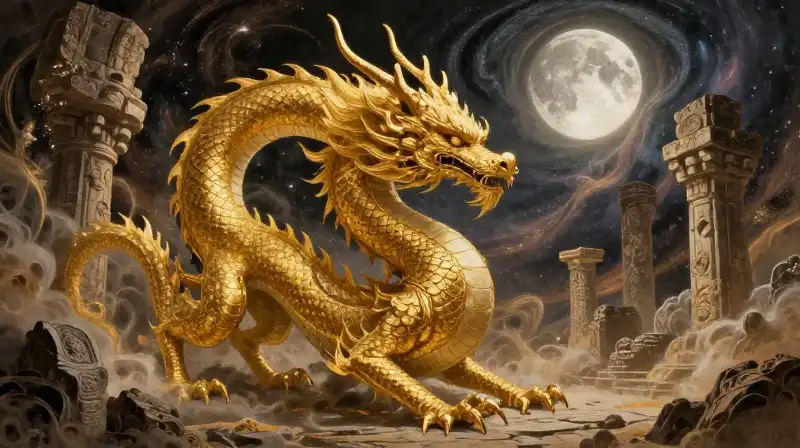
The meaning and utility of these monstrous figures shift dramatically depending on the cultural lens. A monolithic creature like the Dragon, for example, is viewed very differently across continents. In much of East Asia, dragons are generally described in favorable terms, often representing auspicious power and protection, a stark contrast to the depiction of dragons as perilous foes in much of European lore 1.
Similarly, Japanese mythology features highly specific, complex entities. The Ōmukade, a giant man-eating centipede, serves as a concrete warning about danger, while the Kappa, a mischievous water god, illustrates cultural complexity—its meaning hinges entirely on the interaction; it can be both benevolent and violent depending on the circumstances (1, 2). These localized myths teach communities about immediate threats—the dangers of bodies of water, the threats of greed, and the nuances of interaction with the spiritual world.
The Utility of Mythical Beasts in Modern Understanding
Mythical creatures provide invaluable cultural insight, serving as an interpretive layer over deep-seated cultural and environmental truths. They allow communities to explore themes of morality, loss, and power without the constraints of pure realism. These narratives help us understand that fear is often a way of structuring a world that is otherwise overwhelming.
When we examine legendary creatures—from the intellectual demands of the Sphinx to the primal power of the Kraken—we see a shared human process of making sense of the unexplained. These stories are not relics of a past, but living cultural practices that continue to shape how people approach the mysterious edges of existence, whether those edges are the underworld, the deep sea, or the challenges of moral ambiguity.
References
Footnotes
Related Articles