
Celtic Knots: The Evolution of Art from Pre-Christian to Insular

Introduction
Few visual symbols capture the profound continuity of human experience as intricately as the Celtic knot. Far more than merely an elegant border or a decorative flourish, this interwoven art form represents a complex visual language that has bridged epochs and cultures. For communities across the British Isles and beyond, the knot is a living record—a testament to enduring connections, the endless cycles of life, and the intricate relationship between humanity and the spiritual world.
To view a knot merely as an aesthetic curiosity is to miss its true weight. Its history is a narrative of cultural survival and artistic synthesis. It tracks the powerful journey of the people who created it, charting a path from the deep, pre-Christian traditions of the ancient Celts into the profound, complex artistry of the medieval monastic orders, giving rise to the unique Insular aesthetic. Understanding the knot requires looking past its surface beauty to see the spiritual and cultural forces that gave it life.
Deep Roots: The Pre-Christian Landscape
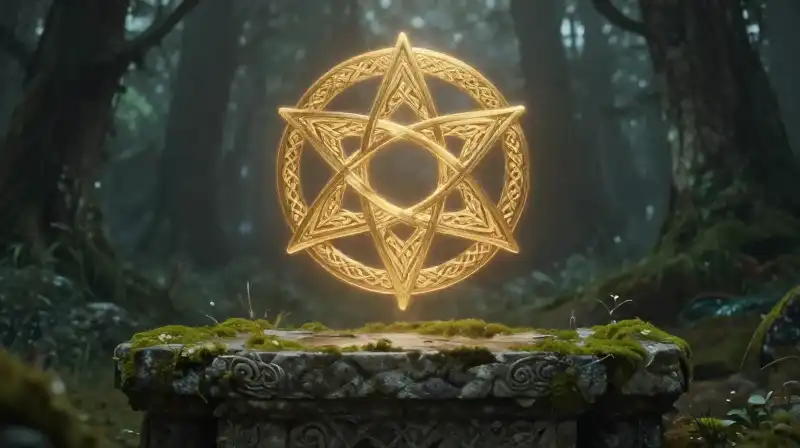
The lineage of the knot motif is ancient. While often associated with the monasteries of later centuries, the knot’s presence is rooted in a much older tradition. Research indicates that the motif appeared in Celtic art well before the cultural influence of Christianity took hold, suggesting a deep-seated connection to pre-Christian heritage 1. The earliest uses of these designs were likely tied to nature, movement, and the interconnectedness of the world as perceived by those cultures.
These early expressions were not defined by rigid geometric rules but by a fluid, organic sense of perpetual movement. The designs acted as a visual affirmation of the continuous flow of existence—a theme that remains central to the contemporary interpretation of the art. These ancient roots provided the essential vocabulary—the complex, interlocking lines—that would later be adapted for profound new narratives.
The Insular Synthesis: Blending Faith and Form
A pivotal moment in the tradition occurred around 450 AD, marking the gradual entry of knotted designs into religious manuscripts and artworks 1. This confluence of Celtic aesthetic preference and the demands of Christian iconography gave birth to a unique style known as Insular artwork. Insular art is defined by its characteristic use of heavily interwoven Celtic knots, marking a brilliant, complex fusion of indigenous Celtic culture and the new Christian faith 1.
This evolution is spectacularly captured in two historical cornerstones. The Book of Kells serves as a primary example, a Latin manuscript celebrated for its masterful calligraphy and the complex Celtic knots that frame its traditional Christian iconography 1. Furthermore, the Lindisfarne Gospels, created on the island of Lindisfarne between 715 and 720, showcase how this art form expanded. These volumes display knot work that brilliantly incorporates Celtic, Germanic, and Irish design elements 1. Together, they demonstrate a clear progression: the knot evolved from simple, ancient designs into the extraordinarily intricate, highly elaborate plaits and interlacings of the medieval period 1.
Beyond Definition: The Meaning of the Infinite Line
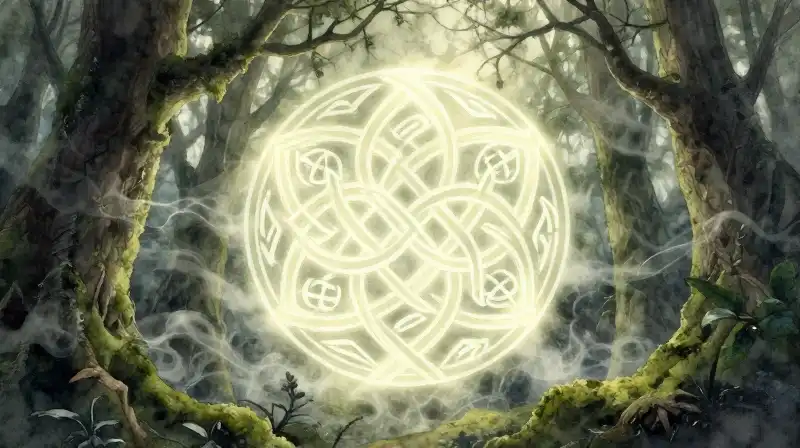
When readers inquire about the meaning of these various knot symbols, they are often seeking a simple definition, yet the tradition offers something much deeper. While some interpretations suggest the knots represent interconnection—a truth found in many cultural symbols—the most profound resonance lies in their physical structure. The continuous, unbroken nature of the line is the core philosophy (1, competitor snippet).
The endless, interwoven quality of the Celtic knot is traditionally seen as a visual metaphor for the endless cycle of life, birth, death, and rebirth. This is not necessarily a strictly religious doctrine but a deeply ingrained philosophical concept present in the cultural mind. The patterns do not have a discernible beginning or end; they simply flow. This perpetual motion speaks to the enduring spirit of the community and the universal truth that life is a continuous, linked process. Whether seen in the Trinity Knot meaning or the symbolic representations used for the soul, the message is one of unity and permanence.
The Persistence of the Tradition
Today, the Celtic knot is far from a museum artifact; it is a vibrant tradition that influences modern design, jewelry, and body art. The motifs continue to inspire individuals who seek a tangible connection to this rich heritage. While modern interpretations sometimes use these designs for purely decorative purposes—like in Celtic sailor knot meaning or contemporary tattoos—the underlying cultural significance remains. These living practices demonstrate that the narrative of interconnection, which began in ancient pre-Christian times, continues to resonate with modern communities looking for symbolic grounding and historical lineage.
A Synthesis of Culture and Resilience
The story of the Celtic knot is one of cultural resilience. It is the story of a people taking their indigenous artistic language—the fluid, continuous line—and successfully adapting it to carry the weight of radically different spiritual and societal forces. The transition from the earthy, ancient motifs of the pre-Christian era to the highly complex, manuscript-defining work of the Insular period is a powerful testament to artistic adaptation.
Ultimately, the true value of the knot lies in its ability to communicate complexity through simplicity. It teaches that life, culture, and faith are not isolated concepts but intricate, interwoven threads. By studying the knots, we do not just learn about a design; we learn how a community finds unity in the flow of history and the enduring cycle of life.
References
Footnotes
Related Articles