
Day of the Dead Skeletons: History and Symbolic Meaning

Introduction
For those exploring the cultural tapestry of Mexico, the skeleton—the *calavera*—is perhaps the most recognizable and complex symbol. Far from a grim harbinger of mortality, the Day of the Dead tradition utilizes images of skulls and skeletons as profound markers of life, memory, and the enduring connection between the living and the ancestors. To understand why skeletons feature so prominently, one must move beyond a simple definition and look at the deep historical currents that flow through the practice. From pre-Columbian Mesoamerican rites to modern *ofrendas* (altars), the motif has continuously evolved, transforming from sacred repositories of life energy into vibrant, playful symbols of remembrance.
The Evolution of Mortality: From Ritual to Celebration
The use of skull imagery in the Americas is not a modern invention. In pre-Columbian Mesoamerican cultures, the depiction of skulls and skeletons held significant ritual weight. The Mexica people, for example, integrated actual human skulls into their decorative motifs, sometimes adorning them with semi-precious stones 1. This usage reflected a deep reverence for the skeletal structure, viewing it not simply as the end of a life, but as a powerful vessel. Some scholars suggest that the Mexica’s ancient food representations, known as *tzoalli*, may have foreshadowed modern traditions like *pan de muerto* or skull-shaped candies 1. It is crucial, however, to note a key cultural distinction: the practices and aesthetics of the ancient cultures were fundamentally different from the contemporary holiday. While the Mexica viewed bones as powerful repositories of life energies, their historical expressions did not possess the playful or humorous tone characteristic of modern Day of the Dead imagery (1, 2). What has emerged as the lighthearted, colorful style we see today is a complex cultural layering.
Understanding the Living Symbol: What Skeletons Represent
In the context of the Day of the Dead, a skeleton is a “lighthearted emblem of death”—a way to reclaim the human figure and embrace the cyclical nature of existence. The concept of the *calaveras* (the general Spanish term for artistic representations of skulls) covers a wide array of materials, including sugar paste, clay, wood, and even chocolate 1. The symbolism operates on several levels. By turning death into art—as seen in the iconic *La Catrina*, a figure popularized by artists like José Guadalupe Posada and Manuel Manilla—the community is engaging in a vital form of satire and remembrance. The skeleton allows for a social commentary, reminding everyone that no matter how high or powerful a person is, death eventually comes for all. These figures are not meant to be feared, but celebrated as the inevitable part of the shared human experience. When you ask, “What do skeletons symbolize in Day of the Dead?” the answer is ultimately that of equality, memory, and the continuity of life.
Making the Offering: The Art and Purpose of Sugar Skulls
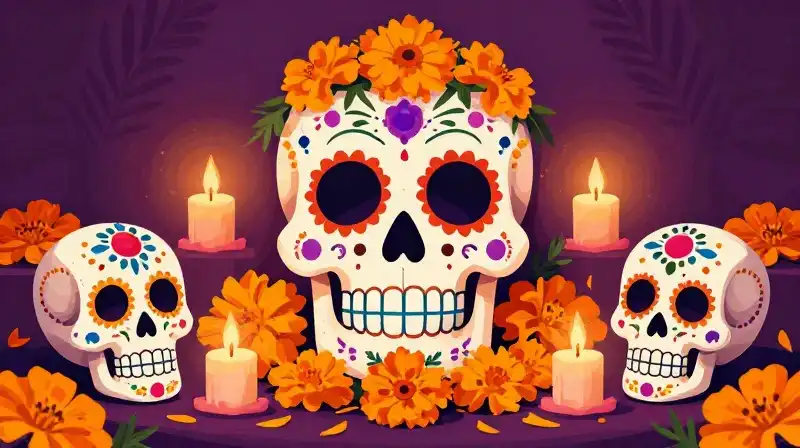
One of the most accessible and recognizable aspects of the tradition is the creation of sugar skulls. These *calaveras* are meticulously crafted to be both visually appealing and edible, utilizing molds and decorative elements like beads or foil to enhance their aesthetic appeal 1. People often ask “Why do Mexicans make sugar skulls?” and the answer lies in the tradition’s ritual transformation. Historically, *calaveras* were once used as commercial gifts for living individuals, but the tradition has evolved significantly 1. In modern practice, placing sugar skulls on the *ofrenda* (altar) serves a specific, respectful purpose. They are offered to the departed—both the honored ancestors and the recently deceased. This act merges the commercial art form with a deep spiritual offering, transforming the act of eating a sweet treat into a deeply rooted cultural ritual.
Timeline and Cultural Context of the Tradition
The contemporary form of the Day of the Dead is a rich synthesis of cultural histories. Researchers suggest that the tradition is complex, containing influences from indigenous Aztec, Mayan, and Toltec celebrations. Simultaneously, the modern visual structure has been heavily influenced by Spanish Catholic traditions 1. This blend of cultures allows the Day of the Dead to occupy a unique space: it is a secular celebration of remembrance that happens to utilize symbols found in deeply religious contexts. The celebration adheres to specific timing, marking the distinct phases of remembrance. Children who have passed away are traditionally commemorated on November 1st. The second day, November 2nd, is dedicated to the acknowledgement and remembrance of adult loved ones 1. This structured timing guides the community’s focus, shifting from the younger generation to the elders as the commemorative period unfolds.
Navigating the Cultural Landscape
Understanding the Day of the Dead Skeletons also involves appreciating the nuanced roles these symbols play within the community. Whether you are looking for “Dia de los muertos skeletons for sale” or seeking a “Dia de los muertos skeleton tattoo,” the meaning shifts based on context. In an artistic or commercial sense, the skull represents beautiful artistry and identity. In a ritual sense, it represents the ancestral bond and the continuous presence of those who came before. The tradition is a powerful lesson in accepting life’s transitions with grace and humor, transforming a fearful subject—death—into a beloved, vibrant, and shared cultural narrative.
References
Footnotes
Frequently Asked Questions
What do skeletons symbolize in Day of the Dead?
In the Day of the Dead, skeletons serve as a lighthearted emblem of death and profound markers of life, memory, and the enduring connection between the living and the ancestors. Ultimately, they symbolize equality, the ancestral bond, and the continuity of life.
Why do Mexicans make sugar skulls?
Sugar skulls are placed on the ofrenda (altar) to serve as a specific, respectful offering to both honored ancestors and the recently deceased. This act transforms the consumption of a sweet treat into a deeply rooted cultural ritual that merges art with a spiritual offering.
How to Observe the Day of the Dead Tradition
Commemorate Children
Children who have passed away are traditionally commemorated on the first day of the celebration, November 1st.
Remember Adult Loved Ones
The second day, November 2nd, is dedicated to the acknowledgement and remembrance of adult loved ones.
Related Articles