
Diwali Traditional Sweets: A Guide to Festive Indian Culinary Culture

Introduction
Diwali, or Deepavali, is celebrated as the Hindu festival of lights, occurring on the no-moon day (amavasya) within the month of Karthika or Karthik 1. This celebration is far more than an illumination of homes; it is a profound expression of devotion and renewal. Central to the spirit of the festival is the worship of Goddess Lakshmi, the deity revered for wealth, prosperity, and fortune. Devotees partake in the rituals of Diwali with the intention of inviting joy, light, and happiness into their lives and communities 1. Within the culinary landscape of this sacred time, traditional Indian sweets—known commonly as *Mithai*—serve as a foundational element of the celebration, embodying the themes of shared abundance and sweet success.
The Tradition of Shared Abundance
The act of preparing, distributing, and sharing sweets among family, friends, neighbors, and relatives is a deeply ingrained practice rooted in ancient Indian culture 1. Diwali is a time defined by communal closeness, and the exchange of festive treats acts as a tangible expression of goodwill and shared prosperity. These confections are not merely snacks; they often take on the sacred quality of *prasad* or *naivedyam* when offered during religious worship 1. The foundational characteristics of these traditional Indian sweets often rely on core, wholesome ingredients like milk, flour, mawa or khoya, sugar or jaggery, semolina, and ghee 1. This reliance on rich, traditional elements is itself a testament to the continuity of culinary heritage. Whether they are delicately dusted powders, molded fudge, or fried delights, these sweets carry the taste of ancestral kitchens, ensuring that the celebration of Lakshmi is sweetened by the collective spirit of the community.
A Regional Mosaic: Diversity in Sweet Traditions
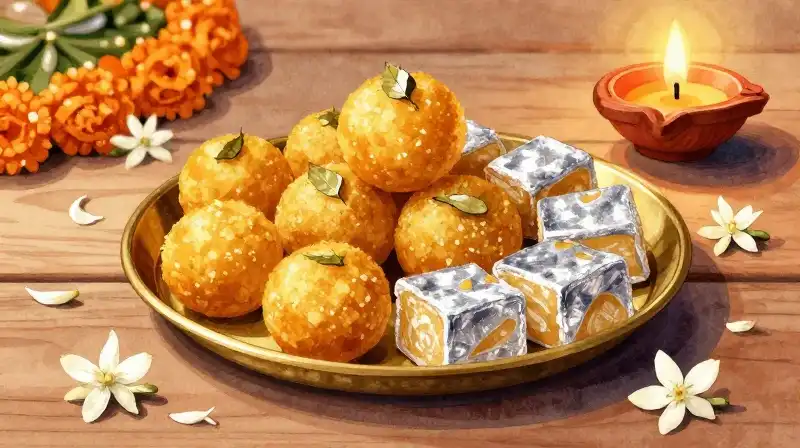
What makes Diwali such a vibrant culinary tapestry is its incredible regional diversity. The names and recipes for festive sweets shift dramatically across India, allowing locals to express their specific regional identity through their preferred *Mithai* 1. Understanding the sweets requires moving beyond a generic definition and appreciating the localized variations. * **Bengali Delicacies:** In West Bengal, the traditions are unique, with sweets made using curdled milk. Famous examples include *rasgulla*, *kalakand*, *rasmalai*, and the intricately shaped *chum chum* and *sandesh*, as well as modern variants like chocolate sandesh 1. * **North Indian Staples:** For those rooted in North Indian traditions, the festive preparation of *besan ladoo* (sweet balls made from gram flour, sugar, cardamom, and ghee) is paramount, particularly during Diwali and similar occasions 1. A classic comfort food for the festival is *gajar ka halwa*, a dish prepared with grated carrots, sugar, and milk 1. * **South Indian Specialties:** In the South, the dessert culture includes *rava kesari*, a popular dish crafted from semolina, ghee, and sugar. This sweet often serves a dual purpose—as a morning breakfast treat and as a *naivedyam* during Diwali worship 1. * **Southern Royal Origins:** The *Mysore pak* holds a fascinating historical significance, having originated in the royal kitchens of the Mysore Maharaja. It is characterized by its use of gram flour, sugar, and a generous amount of pure ghee 1. * **General Indian Confections:** Simple yet celebrated across regions are sweets like *kaju katli* or *kaju burfi*. These are exemplary of Indian fudge, skillfully crafted from cashew nuts and sugar to achieve a signature, mouth-melting texture 1.
The Living Practice: Sweets Beyond the Puja
The tradition of sharing these festive treats extends far beyond the primary days of Diwali. Sweets like *Malpua*, which are beautifully sweetened pancakes, are made during various festivals including Diwali, Navratri, and Holi, and are often served drenched in *rabri* or *rabdi* 1. This shows that the ethos of “celebrating with sweetness” is integrated throughout the annual calendar, making the culinary practice a seasonal rhythm rather than a one-time event. The variety of preparations speaks to a richness of technique—from the fluffy texture of a *Besan Ladoo* to the moist density of *Gajar ka halwa*. The ingredients themselves, often humble and local—milk, ghee, and local flours—are elevated through centuries of refinement into what are now recognized as iconic, mouthwatering confections 1.
Navigating the Diwali Sweets Tradition
For those seeking a deeper understanding of the festival’s culinary side, the traditional sweet made during Diwali is not singular; rather, it is defined by its region. In North India, the mention of *Besan Ladoo* often brings immediate recognition of the tradition 1. However, in West Bengal, the celebration is distinctly flavored by *rasgulla* 1. The tradition of Diwali sweets serves as a powerful symbol of cultural continuity. It represents the synthesis of ancient religious devotion with living, creative culinary practice. As the festival emphasizes bringing light and joy, the distribution of richly flavored, handcrafted *Mithai* serves as a perfect, tangible metaphor for the sweet prosperity one hopes to welcome into the coming year 1.
The Spirit of Connection
Ultimately, the story of Diwali traditional sweets is a story of community. Whether it is the grand, sugar-laden display of a festive box, the simple gesture of a homemade *Kaju Burfi*, or the ceremonial offering of *Rava Kesari*, these culinary traditions underscore the core values of the festival. They signify mutual respect, the sharing of the bounty of the earth, and the enduring link between devotion and the daily lived experience. In a world of swift, manufactured treats, the dedication required to make traditional *Mithai* preserves a culture centered on slow, intentional, and collective celebration.
References
Footnotes
Frequently Asked Questions
What is the traditional sweet made during Diwali called?
Traditional Indian sweets during Diwali are generally referred to as Mithai, but the specific name is defined by the region where it is prepared. Examples of these festive treats include Besan Ladoo in North India, rasgulla in West Bengal, and rava kesari in the South.
What is the tradition of Diwali sweets?
The tradition of Diwali sweets, known as Mithai, involves preparing, distributing, and sharing these confections among family, friends, and relatives. This practice serves as a powerful symbol of cultural continuity and shared prosperity, linking ancient religious devotion with creative culinary practice.
Related Articles