
Día de los Muertos Treats: Iconic Foods, Sweets, and Tradition

Introduction
Día de los Muertos, or Day of the Dead, is far more than a traditional Mexican holiday intended to mark mortality; it is a vibrant, joyful celebration of life and the enduring bond between the living and those who have passed away. Observed annually on November 1st and 2nd, the celebration is fundamentally rooted in the belief that departed souls return briefly to visit their families 1. Instead of observing solemn grief, the community focuses on remembrance, transforming the act of commemoration into a gathering of colors, aromas, and cherished memories (1, 2). Central to this unique cultural practice is the creation of *ofrendas*—elaborate altars—which are meticulously designed to welcome, feed, and entertain the returning spirits.
The Culinary Function of the Ofrenda
The food and beverage offerings on an *ofrenda* are not merely sustenance; they are a crucial component of the ritual, serving as powerful messages of love and welcome. According to the tradition, these offerings—including the deceased’s favorite dishes—are meant to entice the spirits to visit the earthly realm (1, 2). This practice reflects a deep historical blending, incorporating indigenous Mexican spiritual beliefs with the faiths introduced by the Spaniards who settled in the region 1. The foods chosen for the altars, therefore, serve a dual purpose: they honor personal history and reinforce a rich communal heritage.
The Heart of the Celebration: Pan de Muerto
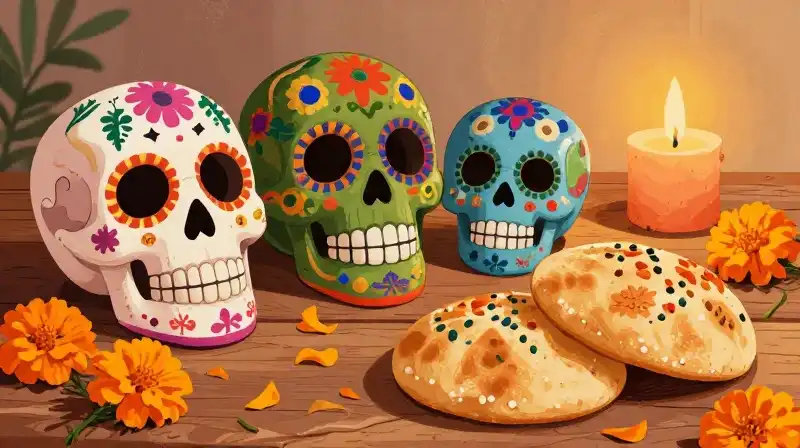
Among the countless delicacies prepared for this occasion, Pan de Muerto holds a central place as the quintessential symbolic treat. This orange blossom-scented loaf is traditionally decorated with distinctive knobs and is meant to serve as a powerful representation of the holiday itself 1. It is a sweet, comforting staple often enjoyed alongside traditional beverages like Cafe de Olla, which is brewed with a rich blend of spices and coffee 1.
The presence of this bread signifies the warmth of the family’s welcome, inviting the spirits to share in the life and traditions of the community. While Pan de Muerto is widely recognized as the primary sweet treat of the day, the cultural breadth of the culinary celebration extends much further, incorporating a wide variety of regional specialties and symbolic desserts.
Symbols of the Ancestors: Sugar and Scent
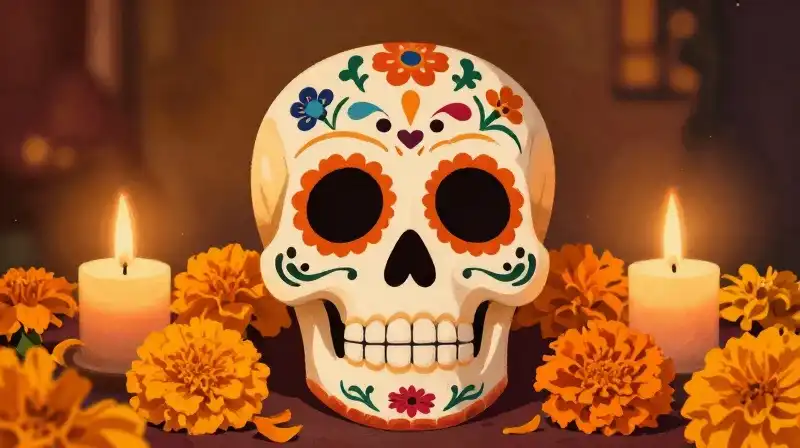
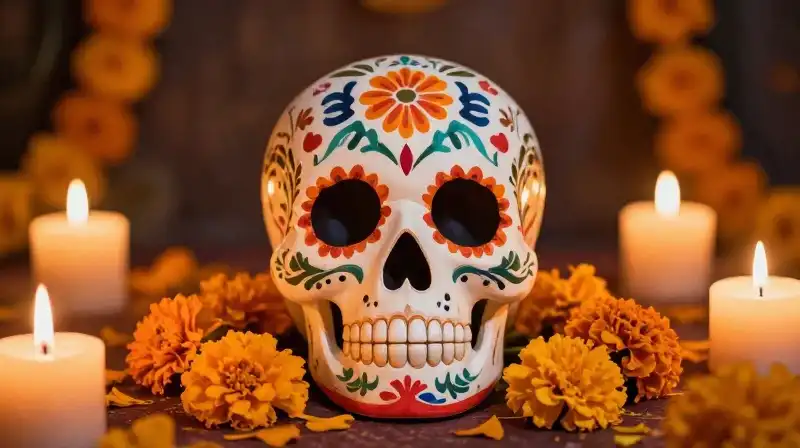
The celebratory atmosphere is heavily influenced by highly symbolic sweets. One of the most recognizable is the sugar skull (calaveras de azúcar). These confections are not merely decorative; they are used to adorn the *ofrendas* and represent the spirits of the departed. Often, the name of the deceased is written directly onto these small, ornate sweets, making them deeply personal tokens of remembrance 1. This personalized use of sweet imagery helps bridge the gap between the abstract concept of death and the tangible memory of a loved one.
Beyond the sugar skulls, other thematic treats contribute to the sensory experience. Calabaza en Tacha (Mexican Candied Pumpkin) and various cookies or sugary snacks are incorporated to enhance the overall celebratory ambiance (2, 3). These sweets are visual and gustatory tributes, pairing beautifully with festive, comforting drinks such as Atole (a warm, thickened drink) and horchata 1.
Beyond the Sweet: Regional and Domestic Flavors
While the sweetness of the celebration is prominent, the tradition encompasses a vast array of savory and regional dishes that tie people to their specific histories. Culinary regionalism is a key feature of Day of the Dead; for example, Corundas, distinctive tamales wrapped entirely in corn leaves, originate from the Michoacán region 1. These regional specialties demonstrate how local ingredients and ancestral cooking methods are passed down and honored during this period.
On a domestic level, the act of preparing the food itself is a profoundly communal activity. The preparation of staples, such as homemade corn tortillas, holds deep significance because it becomes a ritual of honor and memory, allowing families to actively acknowledge ancestors like grandparents 1. Furthermore, the shared process of creating these recipes together is often highlighted as an essential way to initiate family conversations about the cultural and historical significance of the entire tradition 1. This process is as much a cultural practice as the final meal.
A Conversation Across Time: The Role of Preparation
The Day of the Dead is not simply about the consumption of food; it is about the shared act of creation. The creation of recipes—whether they be complex regional stews or simple, beloved sweets—is a powerful act of genealogical connection. The act of gathering ingredients and preparing the traditional menu facilitates vital family dialogues, ensuring that the cultural meaning behind each dish is understood by every generation. This culinary labor is a living archive of the community’s memory 1. This human interaction is why many families choose to gather specifically to make the day’s treats together, solidifying the bond between the living and the legacy of the dead.
The Living Significance of the Tradition
The treats of Día de los Muertos are much more than delicious items to be consumed; they function as tangible links to the past. By meticulously preparing *ofrendas* adorned with favorite foods and symbolic sweets like *Pan de Muerto* and sugar skulls, families are actively participating in a tradition that honors the cyclical nature of life, death, and memory. This is a culture where remembrance is celebrated with a communal table, transforming the memory of those who have passed into a vibrant, edible story of love and enduring connection.
References
Footnotes
Frequently Asked Questions
What are the treats for Día de los Muertos?
The quintessential symbolic treat is Pan de Muerto, complemented by sugar skulls and desserts like Calabaza en Tacha. The culinary tradition also incorporates a vast array of regional and savory dishes, such as Corundas, alongside beverages like Atole and horchata.
What sweet treat is traditionally made for the Day of the Muertos?
Pan de Muerto holds a central place as the quintessential symbolic treat, described as an orange blossom-scented loaf traditionally decorated with distinctive knobs. Sugar skulls (calaveras de azúcar) are also used to adorn the ofrendas as deeply personal tokens of remembrance.
Related Articles