Anu Irish Goddess: Myth, Power, and Natures Mother

Introduction
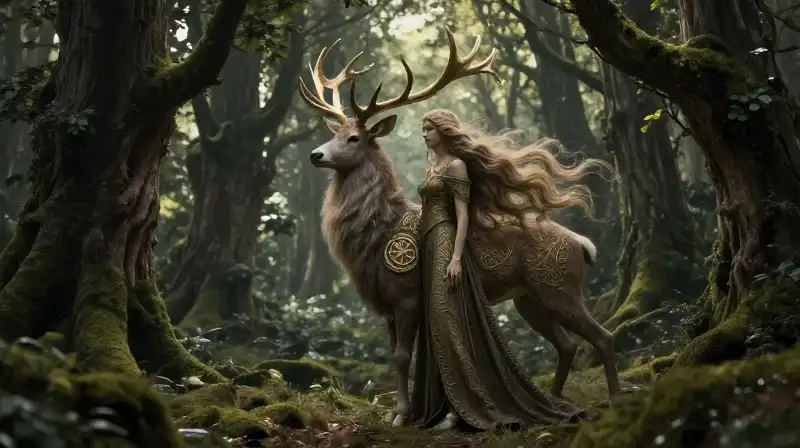
In the tapestry of ancient Irish folklore, few figures resonate with the primal, sustaining power of a divine mother quite like Anu. Whether known as Ana, Anann, or Anand, Anu is not merely a name in a historical text but a powerful symbol of life, abundance, and the wild, enduring feminine energy of Ireland. Her significance is deeply rooted in the cultural landscape of Munster, providing a connection between the mystical past and the spiritual practices of contemporary communities. For those seeking to understand the traditions that shape Irish heritage, Anu serves as a gateway into a mythology defined by nature’s cycles and the generosity of the land.
The Ancestral Narrative and Textual Origins
The earliest glimpses of Anu in the mythological record place her in positions of immense foundational power. According to 1, she is primarily defined in the 9th-century text, the *Sanas Cormaic*, as the “mother of the gods of Ireland,” a figure credited with having “well did she feed the gods.” This establishes her not just as a powerful deity, but as the fundamental provider of existence within the mythological framework. Her titles are intrinsically linked to “wealth, riches, and prosperity,” setting her within the cultural landscape as a goddess governing good fortune 1.
Linguistic Echoes and Mythological Roles
The origins of her name continue to be a subject of scholarly interest. Some linguistic theories suggest that Anu’s name might derive from the Proto-Celtic theonym *Φanon- 1. Furthermore, Anu’s presence is noted in the epic cycle of the *Lebor Gabála Érenn*, where the name Anand is employed as an alternative designation for The Morrígan, demonstrating her association with powerful, transformative aspects of Irish myth 1. While her attributes span the divine and the material, her core identity remains that of a nurturing, foundational force.
The Manifestation of the Divine Mother
To understand Anu’s presence is to understand the landscape itself. One of the most culturally significant manifestations tied to her is the Paps of Anu, or *Dá Chích Anann* (“the breasts of Anu”). This geographical feature—a distinctive pair of breast-shaped hills located in County Kerry—serves as a powerful anchor for the tradition, illustrating how the divine energy is physically woven into the earth (1, 2). Modern interpretations of Anu view her as a revered mother figure, embodying protective and nurturing qualities, with strong ties to the mythical *Túatha Dé Danaan*, the fairy folk 1.
Anu’s Power: Sustaining the Earth and the People
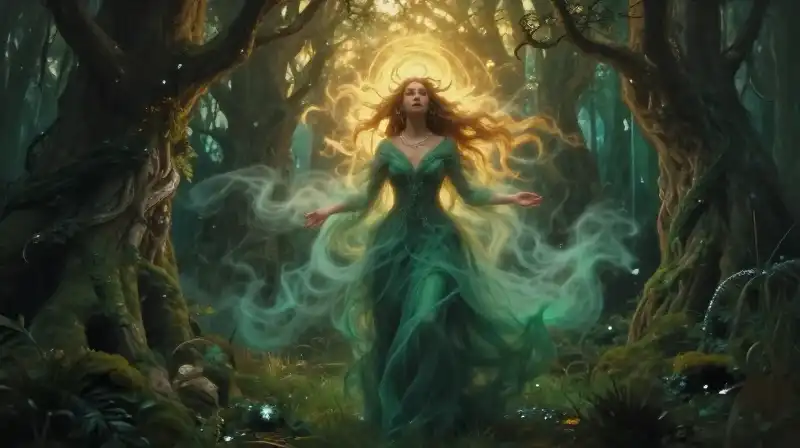
When considering “What is the power of Anu?”, the answer transcends simple magical prowess; it is a power of sustenance and continuity. Modern pagan practice 1 views Anu as an ancient feminine energy that flows through the natural world. She is the force that sustains life in the rivers, the breeze, and the soil 1. This interpretation frames her power as an ecological and existential force—the very wellspring of life itself. This aligns with the belief that she is inextricably linked to the generative forces of the land, giving her the power to ensure prosperity and well-being for those who honor her traditions.
Regional Significance: The Heart of Munster
It is important to note that Anu’s significance is regional, being strongly associated with Munster, Ireland 1. This specificity places her within a particular cultural and geographical context, suggesting that her influence is felt most profoundly within the local traditions and spiritual life of that region.
The Nuance of Danu: Myth, Name, and Tradition
The mythology surrounding Anu is often intertwined with her counterpart, Danu, a relationship that involves both cultural fluidity and scholarly debate. Some traditional texts highlight Danu, while other sources use Anu. Scholars have proposed several theories regarding this connection. One historical hypothesis suggests that the emphasis placed on Danu in some modern texts may be rooted in post-Christian speculation, as she is mentioned sparingly in original Irish writings 1. Another theory posits that the name Danu may have been incorporated when Christian monks began labeling the indigenous deities as the *Tuatha Dé Danann* (“Tribe of the Goddess Danu”) 1.
Alternative Linguistic Perspectives
The link between the names Anu and Danu is also complicated by linguistic possibilities. An alternative scholarly theory suggests that the *Tuatha Dé Danann* may simply translate to “Tribe of Skilled Gods,” which challenges the idea that the name Danu is always the intended meaning 1. This complexity underscores the rich, layered nature of Irish mythological heritage, where names evolve and interpretations shift over centuries.
Anu in the Contemporary World
For modern adherents, Anu provides a focus for connecting with deep, ancient feminine energy. Many practitioners engage with her divine traits—her connection to wealth, fertility, and the natural cycle—through ritual and meditation 1. Her role as a protector and nurturer appeals strongly to those seeking a connection to ancestral wisdom. This connection is often broadened by comparing her to similar mythological motifs found in other cultures, such as the figure of “Gentle Annie” in the Scottish tradition of Alba 1, illustrating parallel themes of powerful, benevolent feminine energy across different communities.
Anu’s Place in Modern Spiritual Practice
Within contemporary spiritual circles, Anu/Danu is actively studied and practiced. Many participants link her divine power directly to the concept of the Fair Folk—the elusive, elemental spirits of the natural world 1. She embodies the “skilled” and “gentle” forces of creation, serving as a powerful archetype for balance and abundance.
Synthesis: The Enduring Presence of Anu
Ultimately, the tradition of Anu is a testament to the persistent power of the feminine in cultural memory. She moves beyond being a character in an ancient story; she is understood as a vital, flowing energy that binds the Irish land, its history, and its people together. While the nuances of her name and her precise textual appearances may shift across scholarly debate, her core meaning remains steadfast: Anu is the essential mother of abundance, the protector of life, and the deep, enduring heart of Irish natural heritage.
References
Footnotes
Frequently Asked Questions
What is the power of Anu?
Anus power is a force of sustenance and continuity that flows through the natural world, sustaining life in the rivers, the breeze, and the soil. She is viewed as the essential mother of abundance, linked to wealth, prosperity, and the generative forces of the land.
Is Anu An Irish name?
Anu is a figure rooted in ancient Irish folklore, mythology, and the traditional cultural landscape of Munster, Ireland. She is regarded as a powerful symbol of the wild, enduring feminine energy and the heart of Irish natural heritage.
Related Articles