
The Horned God Cernunnos: Who He Was and What He Symbolizes

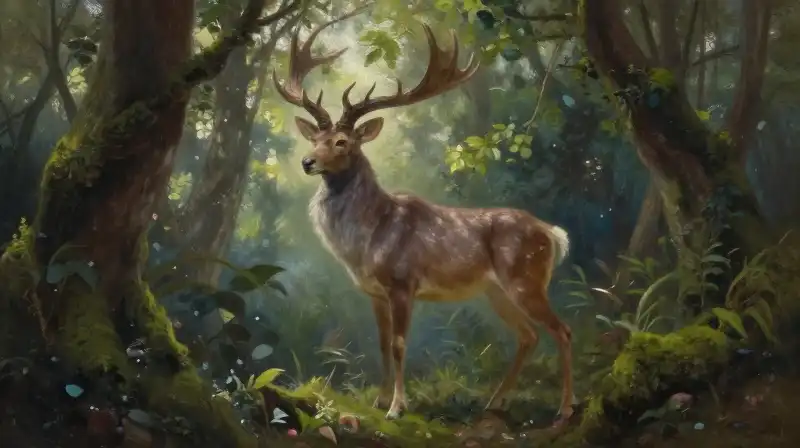
Introduction
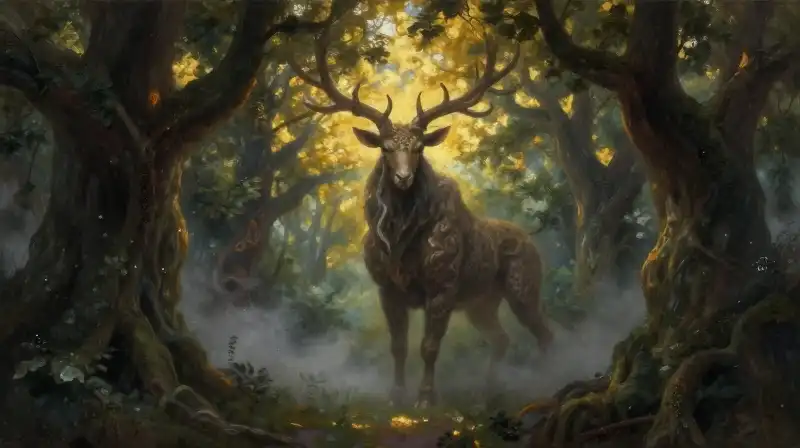
In the vast library of world mythology, some figures are clear and defined, while others remain powerful, ambiguous forces, existing more as archetypes than as documented deities. Cernunnos is perhaps one of the latter. Known globally as the Horned God, he is an enigmatic figure whose powerful symbolism—the merging of wild nature, ancient law, and cyclical rebirth—has captured the imagination of modern esoteric traditions and archaeological study alike. To understand Cernunnos is not merely to learn a definition of a horned figure; it is to navigate the complex space where ancient European iconography meets modern spiritual interpretation. The story of Cernunnos is a powerful testament to the enduring human need to find meaning in the wild, seasonal cycles that shape community life.
The Archaeological Roots of the Horned God
The most concrete historical anchor for Cernunnos is not a specific temple or a surviving ritual, but an epigraphic record from the Roman era. The name and the associated iconography are first explicitly tied to the 1st-century CE monument known as the Pillar of the Boatmen in Paris 1. This artifact provides a vital, if limited, glimpse into the figures worshipped in Gaul. The images found on these monuments reveal a consistent cluster of attributes: an aged, powerful figure, often depicted as having large antlers, frequently shown in a seated or crossed-legged position 1. These figures are not isolated; they are symbolically intertwined with other powerful elements of the wild, such as wild beasts and ram-horned serpents, as well as various fertility symbols 1. It is important to note that scholarly research continues into the precise sound of the name as recorded on the Pillar, with theories ranging from “Cernunnos” to “Cernennos” or “Karnonou” 1. While this iconography was clearly present in Gaul, researchers have found related Cernunnos-type imagery in much wider geographical regions, including the Val Camonica in Italy and on the Gundestrup cauldron in Denmark 1. This wide distribution suggests that the cultural significance of this horned archetype was a powerful, enduring idea that was not easily assimilated even during the Roman conquest of Gaul 1.
The Symbolism of Antlers and Cycles
At the heart of Cernunnos’s symbolism is his association with the cycle of life and the wild. Etymological speculation suggests the name might derive from terms related to “horn/hoof” or “angle/excrescence,” supporting the interpretation of him as a deity characterized by a crowned, deer-like head 1. Because no specific ancient historical record details the exact rituals or veneration practices of the time 1, the modern understanding of his divinity is heavily focused on natural cycles and biological symbolism. In contemporary esoteric frameworks, Cernunnos is viewed as a figure inextricably linked to the seasons 1. His life cycle mirrors the passage of the year: he is seen as a vibrant, youthful Green Man during the growth of spring and summer, but his identity shifts dramatically in the colder months, transitioning into a figure associated with sacrifice and the death brought by autumn and winter 1. This duality allows modern practitioners to interpret him as a complex, multi-faceted entity. He is not just a god of the hunt; he encompasses several roles 1.
Cernunnos as a Cosmic and Natural Force
One of the most profound interpretations of the Horned God is his cosmic function. In certain modern cosmological views, Cernunnos is placed at the center of the “Sacred Centre,” acting as a foundational figure whose root web connects three distinct realms: the earth, the underworld, and the heavens 1. This imagery positions him as a mediator between the known physical world and the deeper, unseen forces of nature. Furthermore, his mythological role extends into the societal structures of his communities. He is often seen as a law-sayer of the hunt and a protector of the entire animal kingdom, embodying the sacred bond between humans and the natural world 1. This deep connection to the preservation of wild life speaks to a tradition that values ecology and the intrinsic spiritual importance of the beasts.
Navigating Modern Interpretations and Practice
Because the ancient practices of the Horned God are undocumented, contemporary interpretations of Cernunnos fall into realms of personal spiritual study and modern folk tradition. It is crucial to recognize that much of what is considered Cernunnos-related worship today is often termed “Unverified Personal Gnosis” or subjective spiritual belief, lacking the definitive, recorded history of other ancient traditions 1. However, this lack of historical constraint allows for a rich diversity of interpretations among modern followers. Different communities have linked him to broader mythological archetypes. For example, some modern followers draw connections between Cernunnos and aspects of Pan, or relate him to figures such as the Irish hero Conall Cernach, based on shared mythical themes involving powerful serpents and defense of territory (2, 3).
The Horned God: Symbol and Meaning Addressing common inquiries into Cernunnos, his symbolism typically revolves around several key themes:
- Wild Fertility: Represented by the cycles of nature and his association with fertile growth 1.
- The Untamed: As an embodiment of the wild, he represents forces that cannot be easily controlled or domesticated 1.
- Duality: He often embodies the tension between life and death, youth and age, the vibrant life of spring and the stillness of winter.
- Protection: He functions as a guardian of the natural order, particularly the creatures within it.
For those who seek to connect with this tradition, the prevailing advice from spiritual communities is to treat Cernunnos as a deity who must be sought out and understood through deep, personal communion with the natural world rather than through simple historical definitions 1.
Conclusion: A Living Archetype
Cernunnos is an archetypal figure who persists because he speaks to fundamental human concerns about our place in the natural order. His enduring relevance lies in his embodiment of duality—the fierce protector and the sacrificial dying figure, the burgeoning life and the necessary decline. Though his ancient, documented rituals are lost to history, the idea of the Horned God continues to evolve, providing a powerful framework for modern communities to reconcile the demands of civilization with the enduring spirit of the wild. Understanding Cernunnos means accepting that the tradition is less a static piece of history and more a dynamic, living archetype that encourages us to view the seasons, the wild, and the cycles of life itself with profound respect.
References
Footnotes
Frequently Asked Questions
Who is the Horned God Cernunnos?
Cernunnos, known globally as the Horned God, is an enigmatic figure whose powerful symbolism merges wild nature, ancient law, and cyclical rebirth. He is often seen as a law-sayer of the hunt and a mediator linking the earth, underworld, and heavens.
What does Cernunnos symbolize spiritually?
Cernunnos symbolizes the merging of wild nature, ancient law, and cyclical rebirth. Spiritually, he embodies duality, representing the tension between life and death, youth and age, while also acting as a guardian of the natural order.
Related Articles