Percy Jackson Mythical Creatures: Archetypes, Origins, and Roles

Introduction
Mythological creatures represent far more than simple antagonists or fantastical beasts; they are powerful cultural archetypes that shape the narratives of human communities around the world. These beings—ranging from the monstrous to the benevolent—often serve as mirrors reflecting the deep-seated beliefs, fears, and moral frameworks of the societies that created them. In traditions from the ancient Greek world to modern interpretations like the Percy Jackson series, these figures persist not merely as figures of fiction, but as vital components of a shared global story. Understanding them requires looking past their physical descriptions to see their profound roles: as embodiments of elemental chaos, as catalysts for moral growth, and as living expressions of ancient heritage.
The Archetypal Origin of Mythical Monsters
At a foundational level, many mythical beings are rooted in “archetypes” that emerge from narratives of chaos and the primal forces underlying civilization 1. In many ancient traditions, creatures are perceived as descendants of the gods or as inhabitants of the primordial chaos, representing the wild, untamed forces that civilization seeks to contain or understand. This concept of the “monster” is remarkably cross-cultural; the archetype is not exclusive to any single tradition. It manifests vividly in Egyptian, Norse, Greek-Roman, Persian, and Cherokee mythologies, demonstrating a persistent human need to categorize and navigate the boundaries between order and chaos 1. However, the narrative function of a monster is often fluid. While many are depicted as malevolent toward demigods or heroes, the definition is broad enough to encompass entities that are neutral or even benevolent. Furthermore, the relationship between a mortal and a monstrous being is rarely binary. Creatures often fulfill complex roles, sometimes acting as essential companions, providing critical aid, and even facilitating communication between the supernatural and the human worlds 1.
The Dual Nature of Myth: Antagonism and Aid
The narrative power of a creature often stems from the tension it creates—be it destructive or supportive. In many tales, the existence of a mythical beast poses a persistent threat to the survival of humanity or the fate of heroes, such as in the case of Cyclical threats in Tartarus, where the demise of a being may only allow it to reform 1. These beings force heroes to confront powerful challenges, driving the plot and forcing moral choices. Yet, the role of the monster as a source of aid is equally significant. Cultural function extends beyond conflict. For instance, powerful creatures like the Ophiotaurus (Bessie) in certain narratives serve a profound purpose: their very survival can demonstrate the importance of moral pleading and intercession with the gods 1. When a hero encounters a beast that does not simply attack, the creature often becomes an agent of guidance, acting as an essential partner in the quest.
Classic Forms and Features of Mythological Creatures
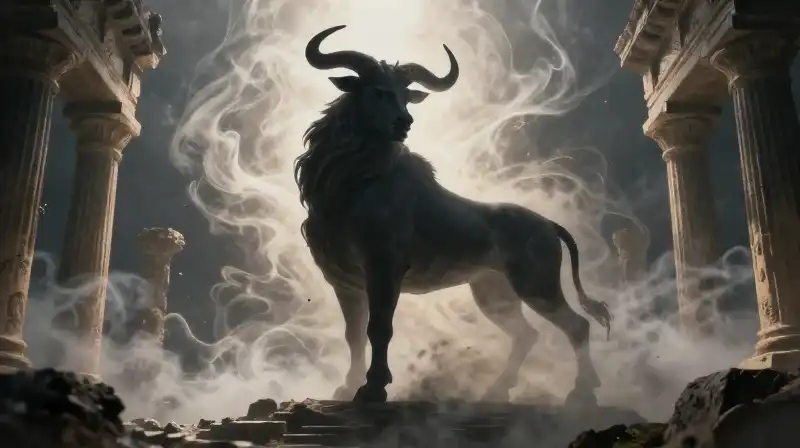
Within the tradition of ancient mythology, specific creatures have been immortalized and studied as symbolic figures. The Hippocampus, often known as “Rainbow” in narratives, is a recurring animal in Ancient Greek art and literature, historically credited with pulling the chariot of Poseidon 1. The Pegasus, another iconic figure, is celebrated as an immortal winged horse that emerged from the mythic figure of Medusa, whose likeness was subsequently immortalized in a constellation 1. Modern adaptations, such as those found in the *Percy Jackson* series, continue to explore these archetypes. The presence of creatures like the Minotaur, Hydra, and Hippocampus in these narratives serves to bring the ancient world to life for modern readers, exploring how foundational myths are reimagined while maintaining their core cultural power. The narratives also explore unique relationships, such as the association between human ingenuity and monstrous power, seen in the connection between the ancient inventor Daedalus and the hellhound, Mrs. O’Leary 1.
Global Variation and the Persistence of Archetypes
The categorization of monsters into regional lists—such as the creatures found in Egyptian, Norse, or Cherokee lore—highlights how the universal “monster” archetype persists across diverse cultural landscapes 1. What one culture might define as a dangerous devour-beast (like Ammit the Devourer) in Egyptian lore, another might view as a neutral, powerful force of nature. This variety is not merely a catalog of differences; it reflects the varied ways that different communities have grappled with the themes of power, fear, and nature. These cross-cultural traditions show a shared narrative obsession: the idea that immense power must be encountered, whether through conflict or through alliance. Whether it is a monstrous entity requiring heroic confrontation or a mystical beast requiring moral understanding, the role of the creature is to illuminate the complexities of human existence.
The Living Practice of Mythology
While myths began thousands of years ago, the tradition remains a living culture, continually reinterpreted for contemporary audiences. The sustained interest in *Percy Jackson* and similar modern adaptations demonstrates that the primal fascination with the mythological monster is enduring. These narratives allow contemporary readers to explore themes of identity, courage, and the nature of good and evil using the same ancient cultural language. For a reader interested in these traditions, the key takeaway is to view the creature not as a character in a simple story, but as a profound cultural artifact. It is a repository of ancient human belief, reflecting our deepest instincts about the forces that lie outside the neatly defined boundaries of our own society.
Synthesis of Meaning
The study of mythological creatures is, ultimately, the study of human storytelling. These archetypes exist because they articulate the boundaries of our understanding—what we fear, what we respect, and what we strive to protect. They are bridges between ancient wisdom and modern imagination, proving that the narratives created by previous generations remain vital tools for helping us understand our own complex relationship with power and the forces that lie just beyond our perceived safety.
References
Footnotes
Related Articles