Myth or Fossil? Tracing the Origins of Creatures in Folklore

Introduction
The question of whether mythical creatures exist occupies a unique intersection between ancient storytelling and modern scientific inquiry. To ask if a dragon, a cyclops, or a phoenix truly lived is to navigate a space where folklore, biology, and human imagination converge. While common dictionary definitions assert that mythological creatures do not physically exist by their very nature 1, the study of the idea of “mythical creatures” reveals much more than a simple absence of animals. It delves into how people interpret their environments, how oral traditions evolve, and how historical artifacts are perceived through the lens of wonder. For those who want to genuinely understand this tradition, the answer is not just a binary yes or no, but an exploration of how these stories function, persist, and sometimes unexpectedly bridge the gap between myth and documented reality 1.
The Line Between Lore and Logic
Scholars distinguish between the concept of mythology and the field of cryptozoology 1. Mythology typically refers to narratives involving figures or phenomena that are understood to be fictional or spiritual in origin. In contrast, cryptozoology is an active, albeit disputed, field that seeks to investigate unconfirmed, disputed, or unknown creatures of folklore 1. While some view the search for biological entities as the sole purpose of cryptozoology, a deeper scholarly approach treats it as a serious study of human narrative—examining the sociological factors that allow belief in unknown beings to flourish and how these stories change over time 1. This perspective shifts the focus from proving existence to understanding the cultural machinery that creates and sustains creatures like griffons, cyclopes, and other legendary beings.
From Fossil Interpretation to Folklore
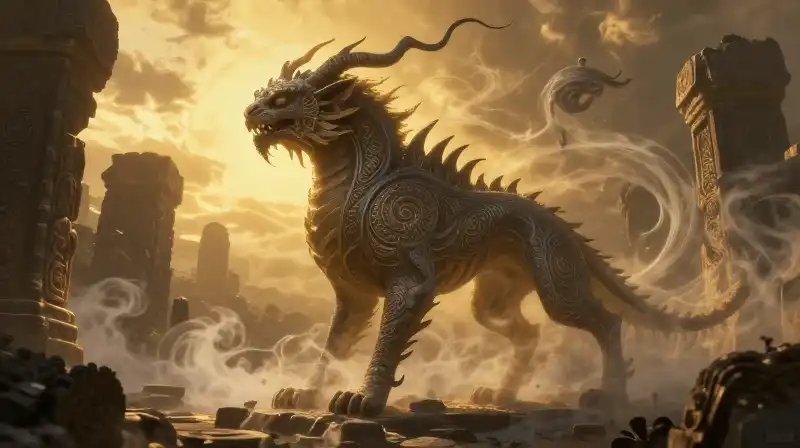
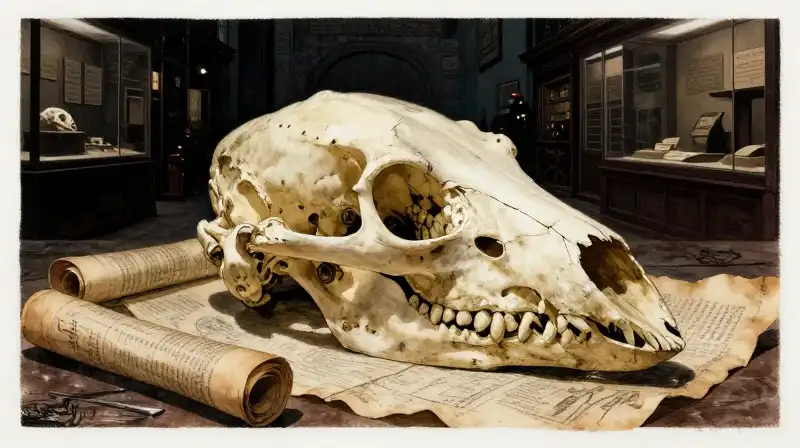
One of the most compelling theories regarding the origins of many mythical descriptors suggests a link between ancient observations of physical remains and the birth of elaborate tales. This theory posits that certain mythological beings may have originated from primitive interpretations of bones and remains. For instance, some hypotheses suggest that the discovery of dinosaur fossils during the paleontological age may have influenced the stories of massive, scaled dragons. Similarly, the discovery of mammoth skulls could have provided a visual basis for mythical creatures described as cyclops 1. The griffon, a creature often depicted with the head of an eagle and the body of a lion, is another example theorized by some researchers to be a mythological amalgam based on misidentified dinosaur skeletons 1. These examples highlight how the “real” and the “imagined” are often separated only by the technology of identification, suggesting that the line between observation and storytelling is incredibly porous.
The Power of Oral Tradition and Material Culture
Ancient communication, which often relied on word-of-mouth, played a significant role in shaping these narratives. Without written records to fix a description, information could be twisted or distorted as it moved from one teller to the next, enriching a core concept into a fully formed mythological beast 1. This is reflected in the modern context of “material culture,” where the concept of mythical creatures sometimes intersects with physical objects. For example, the modern tradition of selling “dragon bones” in traditional medicine stores is noted. While this has spurred curiosity about real prehistoric remains, it is generally clarified that the vast majority of these bones sold today are of common modern animals 1. This distinction reminds us that what we call “material culture” is often a composite of real objects interpreted through a mythological lens, regardless of the true origin of the item.
When Myth Becomes Biology: The Okapi Case
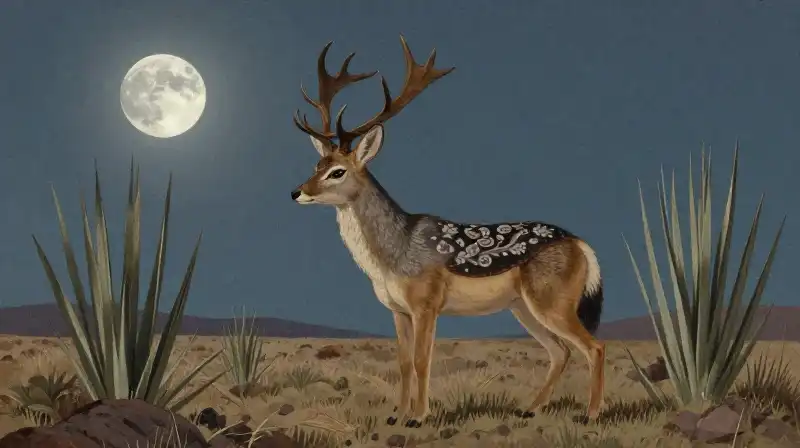
The shift from pure myth to scientific record is not always a sudden transition, and the history of the okapi provides a unique case study of this transition 1. For a time, the okapi was considered a mythical chimera—a creature of folklore. Its formal discovery and subsequent documentation as a distinct, living species demonstrates how traditional beliefs can occasionally be eclipsed and then confirmed by methodical natural history 1. This event underscores a key viewpoint: that the boundary between folklore and established natural science is functional, rather than metaphysical 1.
Environmental Sign and Narrative Confusion
Beyond massive skeletons, the idea of mythical creatures sometimes arises from the misinterpretation of environmental or architectural evidence. Marks discovered on historical buildings, for instance, have occasionally been identified by some as signs left by mythical beasts, such as the Hellhound 1. In these instances, the culture is often attempting to explain inexplicable observations through the lens of the familiar—a creature or force that aligns with the narrative of the local folklore. This highlights a fundamental human impulse: to explain the inexplicable by giving it a character or a story.
The Road Ahead: Research and Understanding
For the reader interested in the existence of mythical creatures, it is crucial to understand the different ways the “question” is approached 1. Some argue that the cryptozoological tradition is more productive when it functions as a parallel study to folklore, focusing on the evolution and interpretation of the narratives without immediately demanding biological proof 1. Conversely, another view contends that when the study of cryptozoological beings ignores rigorous standard zoological methodologies, it slides into the realm of pseudoscience 1. Ultimately, the tradition of mythical creatures serves as a fascinating cultural touchstone. It is a living testament to how humans process the powerful forces of the unknown—whether they find them in the bones of a dinosaur, the marks on an ancient wall, or in the vivid imagery passed down through oral tradition 1. Understanding this tradition means appreciating the story as the evidence, recognizing the deep cultural work of turning natural phenomena and ancient objects into the enduring power of myth.
References
Footnotes
Frequently Asked Questions
Did any mythical creature ever exist?
The history of the okapi provides a case study of how a creature considered mythical or folklore can eventually be eclipsed and confirmed by methodical scientific documentation. This demonstrates that the boundary between myth and established natural science is functional, as creatures of folklore can sometimes transition into documented, living species.
Related Articles