Global Beasts of Myth: Comparing Creatures from Every Culture

Introduction
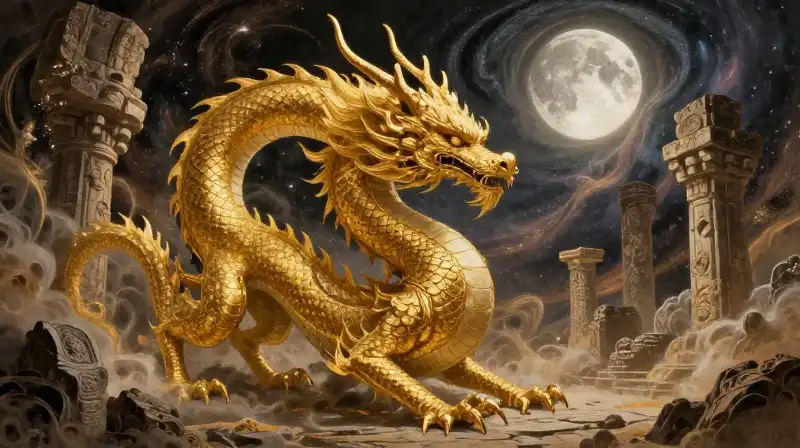
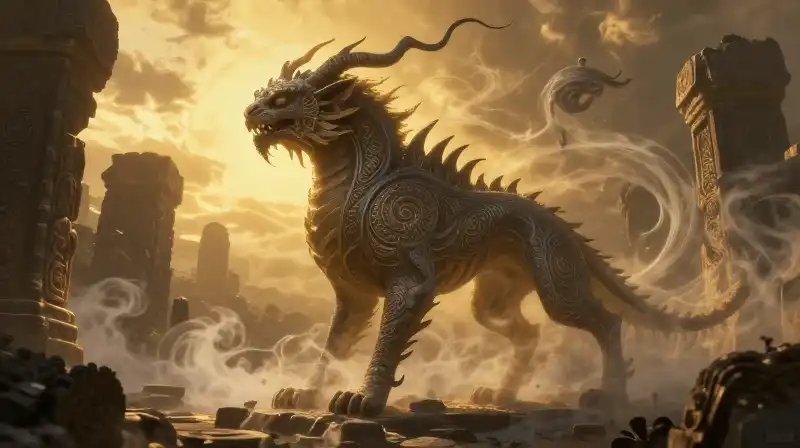
The mythical beasts of global folklore are rarely mere imaginative constructs; they are complex cultural mirrors, reflecting humanity’s deepest fears, oldest spiritual questions, and most enduring relationships with the untamed world. From the serpentine dragons of ancient East Asia to the elusive Sasquatch of North America, these supernatural entities function as powerful narratives that help communities process the boundaries between civilization and the wild, morality and chaos. They are not defined by their physical appearance, but by the role they play in a culture’s story—as guardians of tradition, agents of chaos, or embodiments of the natural cycle. By studying these creatures, we gain insight not just into a list of strange monsters, but into the shared spiritual architecture of human history.
The Geometry of Myth: Tricksters and Guardians
Across diverse global traditions, mythological creatures often take on archetypal roles that challenge social norms. The trickster is perhaps the most prevalent example, acting as a necessary agent of disorder, teaching through deception and unpredictable behavior. In East Asian folklore, the fox spirits—specifically the Kitsune in Japan, the Kumiho in Korea, and the Huli jing in China—are revered as powerful tricksters, comparable to various types of fairys (Source 1, Source 2). These creatures represent the seductive ambiguity of nature. Conversely, many beasts function as powerful guardians or divine monsters, representing forces too great for human governance. These entities often preside over sacred spaces or extreme environments. In Mesopotamian lore, the Zu is a significant divine monster, depicted as a lion-headed eagle (Source 1). In Japan, the Kappa serves a dual function: it operates as a localized water god while simultaneously embodying a mischievous, lecherous creature capable of devouring unsuspecting victims (Source 3). The sheer variety illustrates that a beast’s role is always tethered to its environment; it is a local protector, a cosmic judge, or a source of moral challenge.
Hybrid Forms and the Untamable Wild
A common motif across global traditions is the use of anthropomorphic or hybridized creatures, representing the porous boundary between human consciousness and animal instinct. This hybrid form often speaks to cultural anxieties about humanity losing its way, or the sheer magnitude of nature’s power. The Minotaur, a figure combining the head of a bull and the body of a man (Source 1), remains a quintessential example of this duality. Similarly, the Chimera is widely cited in worldbuilding for its depiction as a combination of disparate animal parts (Source 2). When considering the deep-nature spirits, the Satyr and Faun appear across cultures as figures tied to celebration, revelry, and the wild (Source 1, Source 2). Other nature-aligned figures, such as the Dryads, are broadly categorized as representing the spirit of the wild flora (Source 1, Source 2). Meanwhile, the realm of cryptids—large, human-like hominids—occupies a distinct space in regional folklore. The belief in the Sasquatch (Bigfoot) in North America, the Yowie in Australia, and the Yeti among various peoples highlights a persistent global fascination with the powerful, elusive, and untamed beings hiding just beyond the edge of human civilization (Source 1, Source 2).
Transformation: Shifts in Form and Meaning
Mythological transformation is one of the most profound themes embodied by these creatures, symbolizing change, destiny, or moral reckoning. Creatures are not static; they reflect dynamic processes, whether biological, divine, or moral. Human transformation often carries significant weight. In Greek lore, the nymph Callisto was transformed into a bear by the goddess Hera (Source 1), demonstrating divine wrath manifesting through physical change. A more cosmic form of transformation is represented by Khepri in Ancient Egyptian lore, a beetle revered for its role in pushing the sun across the sky—a creature whose continuous, ritualistic transformation is tied to the cycle of life and death (Source 1). Conversely, some creatures embody predatory transformation; the Empusa of Greek lore is a dangerous, shape-shifting female entity associated with the Underworld who hunts men at night (Source 3). Moral transformation is even more stark in the context of judgment. In the ancient Egyptian underworld, Ammut is a fearsome monster who functions as a judge, consuming those who have lived morally questionable lives (Source 1, Source 2). This beast does not represent random chaos; it represents the inescapable consequences of one’s actions, a definitive embodiment of moral accounting.
Contextualizing Power: How Myths Define Greatness
The question of who the most powerful beast in mythology is lacks a single definitive answer, as power in myth is rarely defined solely by physical strength. Instead, its power is defined by its *influence*—its ability to influence cosmic cycles, determine moral fate, or dominate an entire landscape. For instance, the Kraken of Scandinavian folklore is powerful in its sheer, terrifying ability to command the sea, dragging entire ships into the abyss (Source 3). Its power is one of natural, destructive magnitude. In contrast, the power of the ancient Egyptian underworld figures like Ammut is fundamentally *moral*. To be judged and consumed by Ammut is to lose your life’s essence, demonstrating a power of ultimate consequence. Furthermore, certain regional variations of beasts, such as the Hodag in American folklore—a creature derived from the cremated remains of an abused bull (Source 1)—carry a unique power, representing the unpredictable, almost surreal, consequences of local cruelty and cultural residue. The true power of a mythic beast lies in the belief a community attaches to its function: as a life-giving force, a cosmic regulator, or an unstoppable moral arbiter.
The Enduring Function of Mythic Beasts
Ultimately, the variety of beasts in mythology—from the benevolent celestial dragons to the terrifying sea monsters—provides a comprehensive map of the human experience. These creatures allow cultures to negotiate the gap between the known and the unknown. They give form to forces that are too vast to describe: the indifference of the cosmos, the unpredictability of the wilderness, the complexity of moral choices, and the sheer dynamism of transformation. By recognizing these global beasts, we recognize the shared language humanity uses to categorize the incomprehensible, grounding ancient traditions and cultural narratives in a meaningful, living context.
Frequently Asked Questions
Who is the most powerful beast in mythology?
The article notes that the question of who is the most powerful beast in mythology lacks a single definitive answer because power is defined by influence rather than purely physical strength. Power can be demonstrated by a beasts ability to influence cosmic cycles, determine moral fate, or command an entire landscape.
Related Articles