Jackalope Folklore: Unearthing the Origins of Americas Myth

Introduction
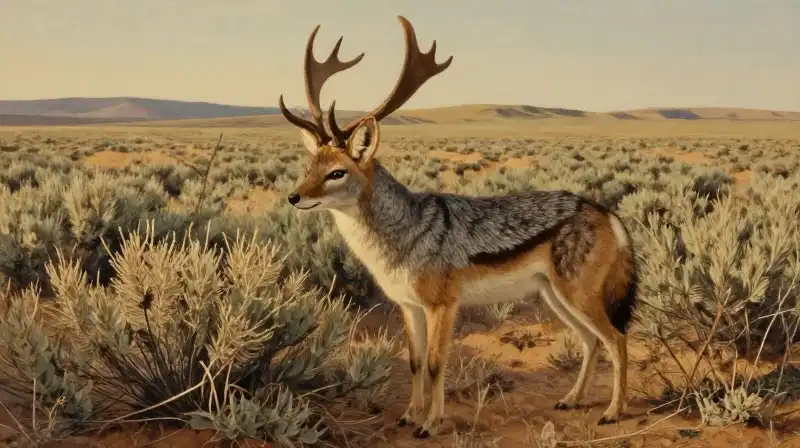
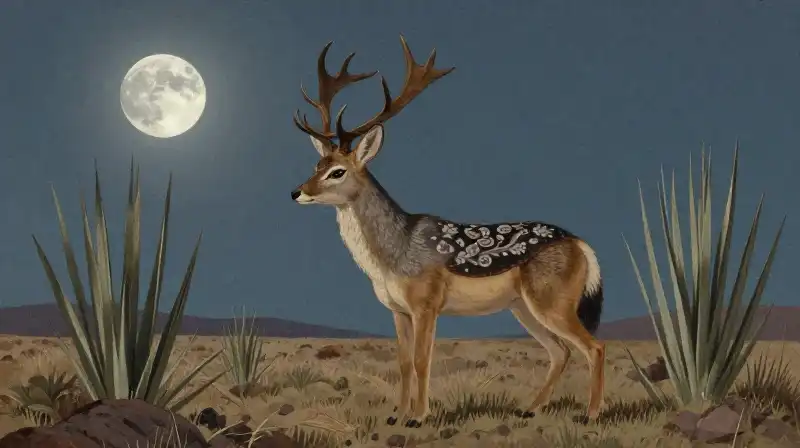
The jackalope, the mythical creature of a rabbit crowned with the antlers of a deer, stands as a quintessential example of the “Fearsome Critter”—a tall tale and cultural motif deeply embedded in North American folklore. It is more than just a humorous exaggeration of nature; it is an enduring symbol of the expansive, sometimes unbelievable, narratives that help define regional identity. To understand the jackalope is to understand how disparate historical traditions, ancient observations, and modern cultural phenomena converged to create an iconic piece of Americana.
This unique beast combines the characteristics of the jackrabbit and the pronghorn, yet its existence across centuries and continents speaks to a universal human fascination with the boundary between the known and the improbable. Far from being a static definition, the jackalope’s legend is a dynamic story, transitioning from a concept rooted in ancient Mesoamerican beliefs to a modern landmark of regional pride in the American West.
The Global Ancestry of Horned Mythology
While the modern jackalope is synonymous with American legends, the concept of a “horned hare” precedes the advent of American wildlife narratives by millennia. Across diverse cultures, the idea of a hybrid animal reflects ancient beliefs about transformation, the acquisition of power, and the structure of time.
In Mesoamerica, early legends of horned rabbits can be traced back to the oral traditions of the Huichol people in Central America (1, 2). For the Huichol, the mythical horned rabbit was sometimes linked to the manner in which deer acquired their horns, an event tied to the cycles of the Mesoamerican calendar (1, 2). This suggests that the idea of a horned hare was not solely a product of North American storytelling but rather a complex cultural idea explored in various traditions.
European scholarship also notes illustrations of this hybrid creature in historical natural history texts. For instance, the 13th-century Persian work Al-Mi’raj and various 16th-century Flemish manuscripts included depictions of the horned hare, suggesting that during periods of global knowledge exchange, the possibility of such a hybrid was debated as a potential real species (1, 3). These early depictions illustrate a historical intellectual curiosity about the unusual creatures that might exist in the natural world.
The Modern Manifestation: Wyoming and Americana
The specific creation of the jackalope as we know it—a creature defined by the confluence of North American wildlife and local narrative—is tied directly to the rugged landscape of the American West. The modern iteration of the jackalope originated in Douglas, Wyoming, in 1932 (1, 3).
The initial claim that led to the legend was quite humble and coincidental. Local resident Douglas Herrick and his brother accidentally mounted a carcass of a jackrabbit that possessed a pair of deer antlers. This event was not initially presented as a miraculous finding, but rather as a piece of taxidermy that was subsequently sold for a small sum of ten dollars (1, 3).
This accidental encounter, however, rapidly spiraled into a popular urban legend. The simplicity of the hoax made it fertile ground for “tall tales,” transforming a piece of questionable wildlife commerce into a national folklore staple. The jackalope swiftly migrated from a local curiosity in Wyoming to become a widely recognized and enduring artifact of American cultural imagination, symbolizing the wild, unpredictable spirit of the frontier 1.
Folkloric Traits and the Jackalope’s Character
In the world of folklore, the jackalope is rarely presented as a purely benign creature. The myths have assigned it specific, often mysterious, behavioral traits that reinforce its status as a truly unique and sometimes dangerous animal. These narratives provide a glimpse into how communities integrate a mythical creature into their everyday fears and beliefs 1.
Among its specific folklore, the jackalope is sometimes portrayed as a hostile entity. Some ancient tales suggest the creature has the ability to mimic human voices or even sing, leading to historical accounts of how local lumberjacks reportedly protected themselves while working near these supposed animals, often carrying iron stovepipes attached to their legs 1. Furthermore, some narratives offer behavioral lore that provides a kind of defense mechanism: a wary jackalope might be depicted as walking backward into its den, using its impressive antlers as a final defense against potential predators 1.
Reality vs. Myth: Biological Explanations and Scholarly Debates
For modern readers, a central question is often asked: Are jackalopes real? The answer, definitively, is that the creature, as a naturally occurring hybrid, is mythical. However, the initial sightings and the persistence of the legend have led to scholarly efforts to explain its origins through biological anomalies rather than pure magic. This attempts to reconcile the lore with known science.
Some scholarly research posits that the legend of the horned hare may have been inspired by sightings of rabbits suffering from the Shope papilloma virus (1, 2). This virus is known to cause tumors that can resemble horns, providing a scientific basis for why people might initially report seeing a “horned” jackrabbit. Despite these scientific attempts to ground the myth, historians continue to debate the creature’s geographical origin. While some argue that its core center of range was indeed Wyoming, others propose that the mythological roots may have existed much further west in regions like the North Country of Minnesota and Wisconsin 1.
The Jackalope in Contemporary Culture
The jackalope has transcended its status as a mere hoax or whimsical story; it has evolved into a genuine component of local cultural practice and regional pride. In communities where the jackalope legend is strong, it serves as a focal point for local tradition. In Douglas, Wyoming, for example, the folklore is marked by specific community celebrations and has even led to the implementation of official hunting licenses for tourists interested in the legend 1. The depth of its cultural significance is such that the Wyoming Legislature has even debated the idea of declaring the jackalope the state’s official mythological creature 1.
For visitors and folklorists, the jackalope is a living tradition. It represents the spirit of the American West—a blend of tenacious local storytelling, historical curiosity, and the way communities embrace their own unique, fantastical narratives. The journey of the jackalope illustrates how a simple, accidental finding can transform into a lasting cultural archetype, moving from a ten-dollar carcass to a potent symbol of regional identity.
In reflecting on this enduring myth, the most valuable insight is not the biological reality of the creature, but its meaning: the jackalope stands as a monument to the power of human narrative. It encourages us to appreciate the rich tapestry of local tales that give shape and character to communities, transforming the ordinary landscape into a stage for the extraordinary.
References
Footnotes
Frequently Asked Questions
Are jack rabbits a myth?
The creature, as a naturally occurring hybrid, is definitively mythical. However, scholarly research suggests the legend may have been inspired by sightings of rabbits afflicted with the Shope papilloma virus, which causes tumors that resemble horns.
Related Articles