The Jackalope Myth: A History of a Hoax and Cultural Icon

Introduction
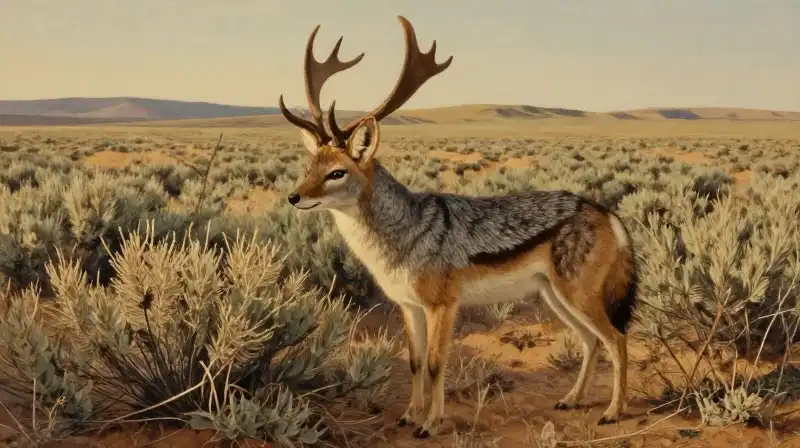
The jackalope, a mythical hybrid of a jackrabbit and an antelope, stands as one of the most enduring and peculiar symbols of the American West. While often dismissed as a creature of pure folklore, its power lies in its cultural weight. For the people of Douglas, Wyoming, the jackalope is far more than a whimsical creature of kitsch; it is a localized brand of identity, a central figure in regional commerce, and the cornerstone of a long-running community tradition (Source 1, Source 3). This is not simply a story about a mythical animal; it is a story about how a human invention evolved into a deep-seated cultural staple, transcending its dubious origins to become a symbol of “unalloyed Americana” (Source 2).
The Birth of a Hoax
The narrative of the jackalope, in its current form, did not spring from deep-rooted ancient lore, but rather from a specific act of human entrepreneurship. According to historical accounts, the widespread myth began in the 1930s when the Herrick brothers conceived of a taxidermy fraud (Source 1, Source 2). They combined the antlers of a deer with the carcass of a jackrabbit, bringing this chimeric creature to market as a genuine wild find (Source 2). This initial act of deception was successful enough that the improbable hybrid caught the public’s imagination. The resulting product was a piece of regional folklore that, despite its fabricated beginning, proved remarkably resistant to skepticism, eventually embedding itself into the regional consciousness (Source 2).
Local Identity: The Culture of Douglas, Wyoming
The myth found its most robust cultural mooring in the small town of Douglas, Wyoming. Here, the jackalope moved from a roadside curiosity to an integral part of the local narrative and its civic life. The community has embraced the absurdity of the myth, turning it into a defining characteristic of the town’s character. This local embrace is exemplified by the issuance of official “Jackalope Hunting Licenses” by the town government (Source 3). While this practice is viewed by locals as an elaborate and cherished inside joke rather than a serious pursuit, it demonstrates how a town can harness a ridiculous story to build a sense of unique local culture (Source 3). The annual Jackalope Days Celebration, held in early June, serves as a public affirmation of this tradition. This event allows the community to celebrate its chosen iconography, reinforcing the myth as a shared cultural narrative—one that matters locally regardless of its biological veracity (Source 1).
A Study in Symbolic Hopping: Global Echoes and Folklore
The story of the horned hare, however, is not confined to the borders of the American West. Scholarly research suggests that the appearance of a horned rabbit or hare has historical precedents across various global traditions, demonstrating a recurring pattern of folklore about impossible mutations. Ancient illustrations in 16th-century European Renaissance natural history texts and 13th-century Persian works feature horned hares, indicating a long history of such imagery (Source 1, Source 2). In North American folklore, the motif also takes on specific regional flavors. Central American Huichol legends, for instance, include narratives where a rabbit is paired with the deer, suggesting a cross-species mythological significance (Source 1). Unlike the Douglas, Wyoming tradition, which is tied to a specific modern commercial hoax, these older traditions weave the horned hare into deeper magical or spiritual frameworks, though they, too, continue to fascinate popular storytellers (Source 2).
The Taxonomy of Myth: Debates and Biology
The confusion surrounding the jackalope often stems from its classification and the nature of its “horns.” Folkloric explanations frequently attribute the creature to magical mutations or impossible cross-species mating between various North American fauna (Source 2). However, academic and folkloric accounts often clarify the confusion between the jackrabbit—a true hare—and the pronghorn, which is classified as an artiodactyl ungulate, not an antelope (Source 2). From a biological perspective, the appearance of horn-like growths on hares has been linked by scholarly research to the presence of certain viral tumors, such as the Shope papilloma virus, which affects rabbits (Source 1). This observation offers a scientific grounding for the myth, allowing the jackalope to exist in a liminal space—a creature that is both a product of a human joke and a potential (if morbid) biological reality (Source 1).
Understanding the Jackalope Myth’s Place Today
The jackalope serves as a powerful case study in how culture is constructed. It began as a clever piece of commercial fraud designed to sell taxidermy, but through the dedicated adoption of a community, it was elevated to the status of a cultural totem. Its contemporary relevance lies not in its biological truth, but in its capacity for storytelling and the collective power of local identity (Source 2). For the reader seeking to understand this tradition, the most valuable takeaway is recognizing the dichotomy between the animal’s reality (a clever hoax) and its cultural existence (a profound local symbol). It is a phenomenon rooted in the shared human impulse to create meaning, even out of an improbable hybrid (Source 2).
Frequently Asked Questions
What started the jackalope myth?
The jackalope myth began in the 1930s as a taxidermy fraud conceived by the Herrick brothers. They created the creature by combining deer antlers with the carcass of a jackrabbit and bringing the genuine wild find to market.
Related Articles