Osiris in Moon Knight: His Role in the Marvel Mythology

Introduction
Ancient Egyptian mythology is a rich tapestry of cyclical life, death, and the eternal struggle for cosmic order. At the heart of this tradition stands Osiris, the revered god of the dead and the original king of the underworld. This figure, who presides over the judgment of souls and embodies the necessary transitions of life and decay, provides a profound cultural anchor. When modern storytelling, such as the Marvel Cinematic Universe, draws upon this deep heritage, it does more than borrow aesthetics; it engages with the enduring themes of power, authority, and the transfer of ultimate rule. For readers seeking to understand the complex layers of this myth within a contemporary fictional context, Osiris in *Moon Knight* serves as a compelling intersection between ancient religious tradition and modern narrative lore.
The Mythological Foundation of Osiris
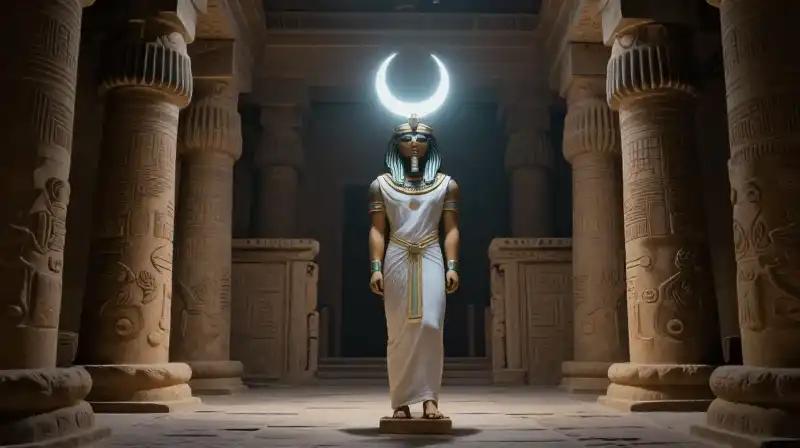
To understand his modern depiction, one must first anchor Osiris in his traditional role. In ancient Egyptian mythology, Osiris is fundamentally linked to the realm of the afterlife. He is depicted as the great god of the dead and the founding monarch of the underworld, responsible for the solemn process by which deceased souls are judged (Source 2). His story is inherently one of tragic upheaval. Legend holds that Osiris was betrayed and murdered by his brother, Set. This act of fratricide necessitated his descent and ascension to the throne of the underworld, a key pillar of his mythological heritage and the basis for his power (Source 2).
Within this framework, the divine ecosystem is intricate. Ammit, for instance, is a culturally significant figure tied directly to the judgment system, described as the entity that devours the souls of the wicked on behalf of Osiris or the broader divine judgment system (Source 2). This establishes a tradition where the preservation of cosmic order relies on figures who maintain the balance between life, death, and justice.
Osiris in the Modern Narrative: The Ennead Council
In the context of the Marvel Universe, Osiris is integrated into an Egyptian-inspired cosmic structure known as the Ennead council. Here, he is positioned as a powerful, yet complicated, figure alongside other mythological entities like Khonshu, Ammit, and Horus (Source 1). His presence moves beyond being simply a god of the dead; he is placed within a complex hierarchy of immense divine power.
While the modern portrayal allows for creative freedom, fan discussions—which reflect a deeper engagement with the lore—suggest that his role is not static. There is considerable speculation regarding the dynamic of divine supremacy. Some narratives interpret his appearance as signaling a profound struggle for control, with theories positing that he may have overthrown the supreme god Ra to claim the ultimate throne (Source 2). This idea of a shift in authority echoes the historical and mythological weight of divine succession, where the transfer of rule—whether pharaonic or divine—is a central theme of cultural shifts (Source 2).
The Theme of Authority and Succession
The narrative concerning Osiris is deeply concerned with how power is attained and maintained. The historical narrative of his death and subsequent rule as the underworld king is a primary example of how authority is established through dramatic transition. In the *Moon Knight* lore, this tradition is translated into political drama among the entities of the Ennead (Source 2). His position as a council leader is often viewed not merely as a granted title, but as a result of political maneuvering, rebellion, or a struggle against a pre-existing higher power (Source 2).
This complex relationship mirrors the ancient concept of cultural succession. By contrasting Osiris’s role with that of Ra, the story explores the nature of ultimate authority. It raises fundamental questions about who holds the most fundamental power in the cosmic structure, whether through traditional right or through force. This exploration allows the audience to see parallels between the political changes within the fictional universe and historical patterns of power transfer, such as the transition of the pharaonic role in ancient Egypt (Source 2).
Nuance and Audience Interpretation
The way audiences engage with these divine figures offers insight into the enduring human need to understand complexity over simple good versus evil. Rather than being presented as a uniformly mournful or simple figure, modern interpretations often view Osiris’s demeanor as solemn or burdened. This reflects his inherent status as a powerful spiritual avatar who carries the weight of cosmic responsibility (Source 2). The creators often use visual cues to deepen this ambiguity. For instance, the use of multiple statues throughout the series has been theorized by viewers to culturally suggest varying levels of power or threat among the gods, particularly contrasting Osiris with Ammit, who holds a significant and hidden position in the narrative’s power structure (Source 2).
The differing interpretations of the characters—whether they are merely grieving, or actively engaged in a covert power struggle—highlight the richness of modern engagement with traditional myth. It is a narrative where doubt and complexity are valued over simple definitions, inviting the viewer to become a participant in the story’s ongoing lore (Source 2).
Synthesis: The Living Power of Myth
Osiris, in both his ancient mythology and his modern incarnation in *Moon Knight*, functions as far more than a character in a television series. He embodies the enduring cultural themes of mortality, judgment, and the cyclical nature of power. Whether he is preserving the tradition of the underworld or challenging the established order of the Ennead, his presence is rooted in a narrative that speaks to the struggle for ultimate authority and the weight of responsibility. The way modern communities interpret his shifting demeanor and strategic position demonstrates how living culture does not remain static; it continually evolves, adapting ancient symbols and profound themes to reflect contemporary concerns about power, change, and the complex reality of cosmic balance.
Frequently Asked Questions
Who is Osiris in Moon Knight?
In the modern narrative of Moon Knight, Osiris is a powerful, yet complicated, figure integrated into the Egyptian-inspired Ennead council. His position within the Ennead is often viewed as a result of political maneuvering or a struggle for ultimate authority against pre-existing higher powers.
Related Articles