Hermóðr in Norse Mythology: God, Hero, and Odins Quest

Introduction
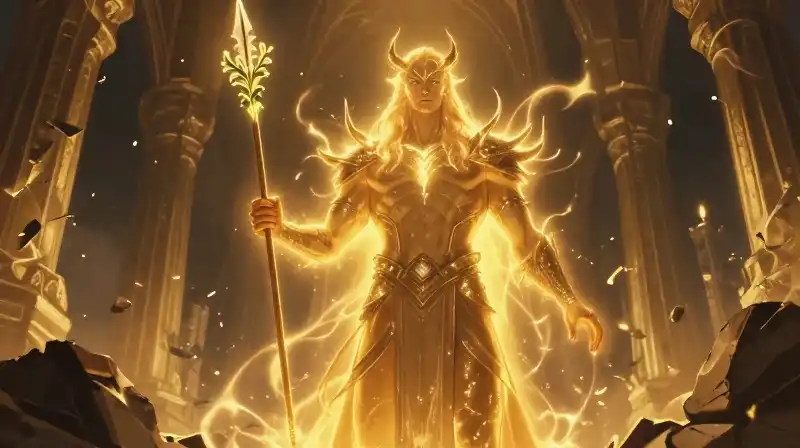
In the rich tapestry of Northern European folklore, few figures are as intriguing or as complex as Hermóðr. He is not merely a warrior of the shield but a conduit—a figure that navigates the porous boundary between the mortal world and the celestial realm. While the name itself suggests a fierce identity, possibly translating to “war-spirit” or “fury of war” (1, 2), his narrative arc is far more nuanced than a simple divine attribute. Hermóðr’s story speaks to profound themes of quest, lineage, and the agonizing nature of fate, offering a glimpse into the complex relationship the cultures that created him held between the living and the dead. To understand Hermóðr is to look not just at a character in mythology, but at a shifting point where various traditions—from the saga writers to early Anglo-Saxon poets—meet and diverge.
The Quest for Baldr and the Underworld Passage
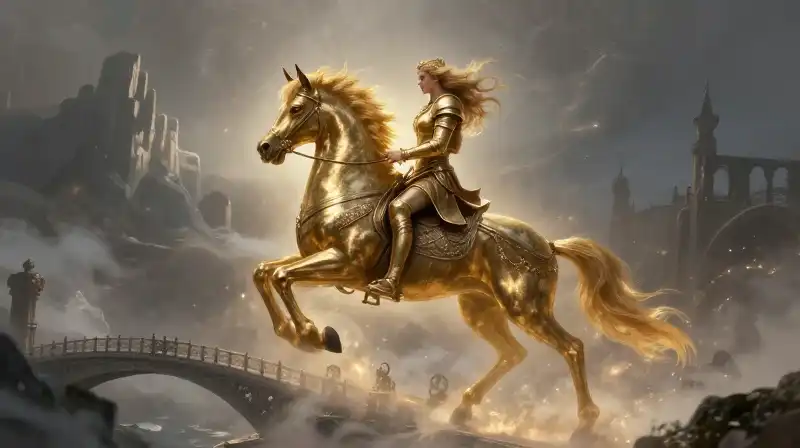
The most vivid account of Hermóðr’s role comes from the prose traditions of Norse myth, particularly the Prose Edda (1, 2). This narrative places him squarely in the role of a desperate petitioner, traveling to the deepest reaches of the world. His journey takes him to the underworld, a destination navigated upon the steps of Odin’s divine steed, Sleipnir. Hermóðr seeks out the death goddess Hel, pleading for the return of his brother, Baldr. This journey is fraught with cultural significance. He must traverse desolate, deep valleys and pass through the gold-covered Gjöll bridge, which is guarded by the maiden Móðguðr 1. The act of traveling to Hel represents a monumental crossing of the threshold between life and death. The condition for Baldr’s release is deeply poignant, requiring that all creatures, both living and dead, weep for him—a critical narrative element that underscores the profound grief and pervasive sense of loss within the culture surrounding Baldr’s passing 1.
A Study in Ambiguity: God, Hero, or Servant?
One of the most fascinating aspects of Hermóðr’s cultural presence is the scholarly debate surrounding his exact nature. Primary sources do not provide a consistent answer, suggesting that the figure might have functioned differently across various communities or literary traditions. In the Prose Edda, the narrative often presents him as a son of Odin and the brother of Baldr (1, 2). However, the definitive manuscript, the Codex Regius, takes a different stance, referring to him as *sveinn Óðins*—“Odin’s boy” or “Odin’s servant” 1. This subtle but crucial distinction shifts his role from family member to divine extension or retainer. This ambiguity is echoed in the Poetic Eddas 1. Here, his function becomes even more varied. In the poem *Hyndluljóð*, he is presented as a mortal hero who receives his weapons and armor directly from the Highfather. Meanwhile, another poetic mention in *Hákonarmál* shows him appearing alongside Bragi in the halls of Valhalla (1, 2). These contrasting portrayals—god, mortal hero, servant, brother—suggest that Hermóðr may not represent a singular deity, but rather a flexible archetype used by authors to embody key attributes: fierce travel, connection to Odin, and the proximity of the divine to the human experience 1.
Northern Parallels: Echoes in Old English Tradition
The influence of the Norse concepts of quest and warrior-lineage extends well beyond the Scandinavian peninsula. Old English literature features a parallel figure, Heremod, sometimes interpreted as a Danish king 1. Old English genealogies establish Heremod as a descendant of Wodan (Odin), which some scholars suggest reveals thematic parallels between the two major traditions 1. In the monumental poem *Beowulf*, a king also named Heremod is featured, described as a ruler who endured long, arduous journeys while exiled. This narrative focus on profound travel and personal quest aligns thematically with the mythological journeys of the Norse Hermóðr. This cross-cultural comparison demonstrates how shared themes of powerful, traveling figures—be they gods or kings—served to ground cultural narratives in the broader heroic landscape of the Viking Age (1, 2).
Understanding the Tradition: Questions Answered
The figure of Hermóðr naturally leads to questions about his power and his connection to specific traditions.
What is the significance of the “war-spirit” interpretation? While his attributes are often linked to war, the “war-spirit” translation moves beyond mere combat. It suggests a spiritual embodiment of conflict, fate, and necessary struggle—not just as a fighter, but as a participant in the cosmic balance of life and death. His quest is a battle against fate itself.
How do you pronounce Hermóðr? The name is typically rendered with a specific stress and long vowel sounds. A common anglicization is simply “Hermod,” but the original Old Norse pronunciation is closer to [ˈhermˌoːðz̠].
What is Hermóðr’s power? Across various texts, his power lies primarily in his divine connection and his ability to transcend boundaries. Whether he is a servant or a son, he is a trusted traveler through the highest and lowest realms, giving him authority over the liminal spaces of the Norse cosmos.
The Enduring Cultural Meaning
The scattered and nuanced references to Hermóðr across primary sources—from the detailed prose of the Eddas to the heroic verse of *Beowulf*—do not signify a fragmented myth, but a figure capable of shifting form to meet the needs of different cultural perspectives. He exists simultaneously as the grieving brother, the mighty warrior, and the servant of the Allfather. Hermóðr’s story, ultimately, is a reflection of the culture’s deep engagement with the concepts of mortality and divine involvement. He reminds the reader that even the gods and heroes are subject to profound journeys and difficult choices. By traversing the gold-bound Gjöll bridge and reaching the gates of Hel, Hermóðr embodies the human struggle to navigate an inescapable fate, making him a powerful, living symbol of the perilous quest for meaning.
References
Footnotes
Frequently Asked Questions
What did the Vikings call Jesus?
The provided article does not mention Jesus, therefore, it does not state what the Vikings called him.
How do you pronounce Hermod in Norse mythology?
While a common anglicization is simply Hermod, the original Old Norse pronunciation is typically rendered with a specific stress and long vowel sounds, closely approximating [ˈhermˌoːðz̠].
Related Articles