Corfu Mythology: Poseidon, The Phaeacians, and the Odyssey

Introduction
To understand Corfu is to understand a narrative of profound cultural layering, one where the ancient shores of the Ionian Sea are etched with stories of gods, seafaring empires, and enduring human resilience. While the modern island is a hub of lush landscapes and historic architecture, its deeper identity is rooted in rich traditions, particularly those found in its mythology. These myths are not mere tales; they are the cultural bedrock that explain the island’s origins and its defining role in the grand tapestry of Greek history.
At the heart of Corfu’s mythic heritage lies the interplay between the sea’s powerful forces and the legends of ancient migrations. The narratives center around powerful deities like Poseidon and the mysterious Phaeacian people—beings who, in ancient Greek memory, represented a utopian society of sailors. These stories—which span from the legendary journeys of Odysseus to the intense historical pressures of the medieval era—give the island its profound spiritual and cultural weight, transforming it into a place where legend feels as real as the stone walls of its ancient temples.
The Phaeacian Legacy and the Shores of the Odyssey
Corfu’s mythological significance gained immense international renown through its pivotal role in the *Odyssey*. According to 1, the island of Scheria, which is historically linked to Corfu, served as the legendary homeland of the Phaeacians. These ancient seafaring people are described in Greek narratives as inhabitants of a highly cultured and utopian society.
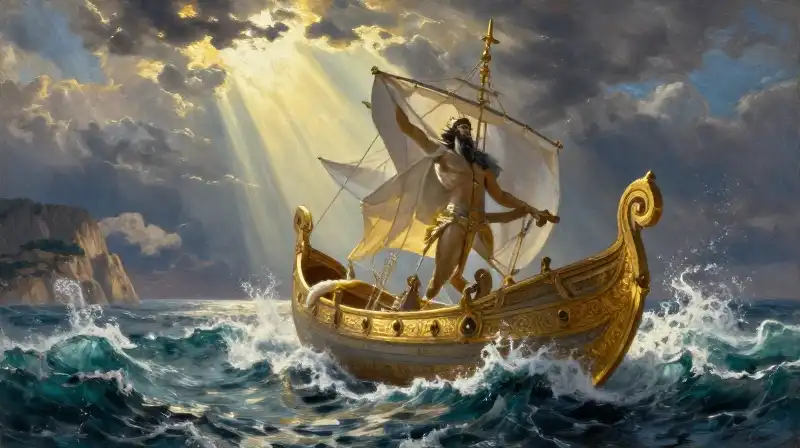
The most famous mythical connection stems from Homer’s epic poem, where the hero Odysseus washes ashore on these islands after his tumultuous journey home from Troy. This arrival narrative—a story of shipwreck, miraculous discovery, and the subsequent hospitality extended by the Phaeacians—serves as a vital part of the island’s cultural narrative regarding safe harbor and the mysterious nature of the deep Mediterranean.
However, the island’s mythical connections run deeper than just Odysseus. For generations, the Phaeacians themselves represented a cultural feature in ancient Greek narratives, serving as a touchstone for idealized seafaring life. This sense of a perfect, mythical arrival echoes in other classical myths, such as the legends involving Jason and the Argonauts, who sought refuge on the island during a storm orchestrated by Zeus, 1. This narrative thread establishes Corfu not just as a setting, but as a culturally significant locale of sanctuary and divine intervention.
Poseidon: Myth’s Origin and Punitive Power
No discussion of Corfu’s mythology is complete without addressing the powerful, dual presence of the sea god, Poseidon. His connection to the island is complex, serving both as its mythological progenitor and as its mythological nemesis, 1 and 2. The island itself derives its name from the nymph Korkyra, who is intrinsically linked to Poseidon through mythology. According to 1 and 2, this nymph’s own myths involve the god’s deep affection for her.
In the cultural imagination, Poseidon embodies the fickle nature of the sea. He is celebrated as the divine origin of the island’s name, yet he is also presented in the same myths as the god capable of inflicting devastating punishments. One key story highlights this duality: in certain accounts, Poseidon is the angry deity who transforms the Phaeacians’ ship into stone as a form of retribution, 1 and 2. This persistent motif—the balance between divine life and divine wrath—reflect a fundamental relationship between the people and the powerful, often unpredictable, environment of the Aegean.
The Deep Layers of Antiquity and Cultural Resilience
The legends of Poseidon and the Odyssey, while central to the Greek imagination, only represent one strand of the island’s incredibly deep cultural history. Archaeologically, Corfu is a site of tremendous depth, extending well beyond classical Greece. 2 indicates that the island’s cultural heritage stretches back into the Paleolithic Era, testifying to its ancient habitation.
During later ancient periods, the island cemented its role as a vital economic and religious center. Evidence of its importance as a Phoenician commercial hub is confirmed by archaeological excavations, 2. Furthermore, the religious life of the island was powerfully anchored by structures like ancient temples dedicated to Artemis, which stand as material proof of its role as a major religious and cultural center in pre-Byzantine history, 2.
This rich history of spiritual sites and commercial importance was accompanied by periods of intense cultural pressure. The Medieval era saw significant shifts, particularly when rulers attempted to impose Catholic doctrine over the island’s existing Orthodox faith, 2. Similarly, under Venetian rule, while prosperity brought new architectural symbols, it simultaneously introduced intense pressure to replace existing cultural and religious structures, 2. The survival of its identity through these foreign overlays speaks to a deep-seated cultural resilience that is interwoven into its very history.
Historical Threads of Cultural Survival and Identity
The cultural endurance of Corfu is not solely demonstrated in its ancient ruins or its adherence to ancient myth, but also in its practical history. For instance, during periods of conflict, the island’s ability to form political alliances and provide military support, such as its century-long alliance with Athens before its eventual conquest, demonstrates a long tradition of strategic survival and community solidarity, 2. This commitment to strategic strength reflects a community-wide understanding of the necessity of self-preservation.
The transition to the modern Greek state in 1864 marked a period of cultural normalization. This era solidified the Greek language as the official tongue, marking a significant shift in the cultural landscape and reinforcing the island’s connection to the broader Hellenic world, 2. This historical journey—from a site of Phoenician trade and mythological Phaeacian refuge to a bastion of Orthodox faith and resilient cultural identity—defines what it means to be Corfiot today.
Defining the Legend: Clarifying the Myths and Heritage
The local and global search for the “legend of Corfu” often encompasses various elements, but it is helpful to clarify which myths are most central to the island’s cultural tradition. While some narratives attribute visits to the island to legendary figures such as Hercules—such as his quest for Geryon’s cattle—it is important to note that this particular connection is considered less prominent in the specific local mythology compared to the Poseidon/Phaeacian narratives, 1.
The most dominant mythological tradition revolves around the arrival narrative of the Phaeacians, the transformative power of Poseidon, and the archetypal journey presented by the *Odyssey*. For a reader seeking to genuinely understand the local traditions, it is this combination of seafaring epic and powerful divine duality that forms the deepest cultural context of the island, going far beyond a simple list of gods.
Reflections on Corfu’s Enduring Cultural Meaning
What these ancient myths teach the people of Corfu today is not just about stories; it is a lesson in navigating powerful forces. The legends of Poseidon and the Phaeacians serve as potent metaphors for the relationship between humanity and the unforgiving but beautiful Mediterranean—a relationship defined by reverence, fear, and resilience. The cultural tradition is ultimately one of survival; whether surviving a mythological storm sent by Zeus, or surviving the pressures of medieval foreign doctrine, the island has consistently maintained its core identity.
To understand Corfu through this lens is to appreciate that the history of its culture is not a static relic, but a living dialogue between ancient sea stories and the modern Greek experience of identity. The myths remain the vital narrative that connects the modern life of the island to the millennia of seafaring, artistic creation, and spiritual persistence of its people.
References
Footnotes
Frequently Asked Questions
What is the Greek mythology associated with Corfu?
The islands mythology centers on the arrival narrative of the Phaeacians and the archetypal journey from the Odyssey. Furthermore, the powerful duality of Poseidon, who is both its mythological progenitor and nemesis, forms a central part of its cultural narrative, along with legends of Jason and the Argonauts seeking refuge during a storm orchestrated by Zeus.
What is the legend of Corfu?
The core legend of Corfu centers on the interplay between the powerful sea god Poseidon and the Phaeacian people, who are described as inhabitants of a utopian society of sailors. This heritage is most famously represented by the arrival narrative in the Odyssey, where the hero Odysseus washed ashore on the island of Scheria.
Did Odysseus visit Corfu?
Yes, the article states that the hero Odysseus washes ashore on the island of Scheria, which is historically linked to Corfu, after his tumultuous journey home from Troy. This arrival narrative is described as a vital part of the island’s cultural significance and its pivotal role in the Odyssey.
Related Articles